
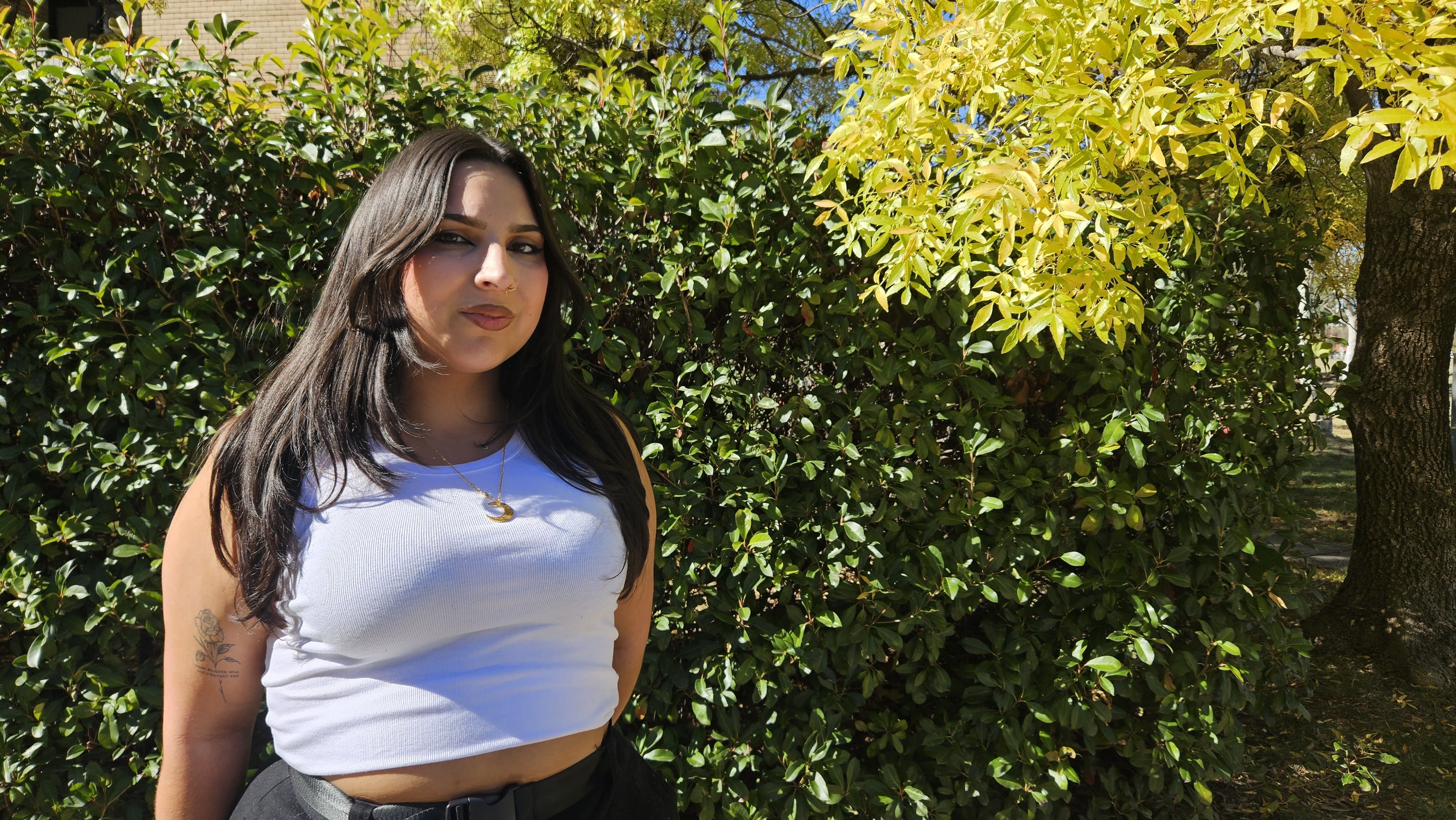
Domestic and family violence (DFV), labelled by the government as a national crisis, affects many Australians. But for LGBTQ+ people, who are disproportionately impacted, their experiences are often silenced by stigma, invisibility and systemic failure.
Jazmeen Payne, a proud queer, second-generation migrant and victim-survivor, is working to change that. As a Board Director for the LGBTQ Domestic Violence Awareness Foundation, she is one of the leading voices behind a growing movement to raise awareness, equip services, and empower survivors, starting with her own story.
“Over 60% of LGBTQ+ people will experience domestic or family violence in their lifetime,” she says. “I, unfortunately, am one of them.”
Jazmeen’s journey into advocacy began not in strength, but confusion. Like many LGBTQ+ victim-survivors, she didn’t recognise her experience as abuse until it became undeniable.
“I didn’t know my former relationship was abusive until the very end,” she recalls. “I finally spoke to a helpful frontline service, and I finally started being more honest with my friends and family. That’s when it all blew up.”
Throughout her career, Jazmeen has worked and volunteered in organisations that address gender-based violence. But that knowledge hadn’t prepared her to recognise abuse in her own queer relationship.
“Many LGBTQ+ people don’t [recognise it],” she explains. “That’s because we do not speak about DFV as if it’s something that can happen in our communities.”
The lack of public discourse is mirrored in service systems that often fail to support LGBTQ+ victim-survivors. When Jazmeen sought help, she was let down. Services didn’t know what to look for. Worse, at first, she wasn’t even seeking help for herself.
“My abuser convinced me I was the problem,” she says. “That I needed help. That’s one of the most insidious aspects of coercive control.”
Gaslighting, emotional manipulation and the erosion of self-worth can make abuse difficult to recognise. These dynamics, already poorly understood in heterosexual relationships, are even less visible in LGBTQ+ contexts. In same-gender couples, for instance, myths of mutual aggression or assumptions of emotional safety can obscure power imbalances.
“It had to become more overt before services could identify it,” Jazmeen says. “They didn’t know how to recognise coercive control in LGBTQ+ relationships.”
That invisibility is a key focus of LGBTQ Domestic Violence Awareness Day, which falls each year on May 28. The day is a rallying cry for inclusion, understanding and action. Jazmeen says the day is both deeply personal and politically urgent.
“It’s a day for LGBTQ victim-survivors to feel seen and heard,” she says. “And to recognise that DFV shows up in different ways for different people, depending on their identities and communities.”
In 2025, the Foundation will launch the second module in its ‘See, Hear, Believe‘ eLearning series, this time aimed at everyday people in communities and workplaces. The free course will help participants recognise red flags, respond safely, and connect people to support.
“This year is about highlighting this incredible new resource,” says Jazmeen. “Because we all have a role to play. Survivors could be our friends, our siblings, our coworkers.”
Despite growing recognition, systemic change is slow. Services often lack the competency to work with LGBTQ+ clients, especially those who are also trans, gender diverse, First Nations, or from migrant backgrounds. Jazmeen says small shifts, like asking for pronouns, introducing your own, or understanding coercive control, can make a big difference.
She also warns against the harmful myths within LGBTQ+ communities themselves. In lesbian, queer and sapphic spaces, for instance, the idea that non-cisgender men are inherently “safer” partners can prevent survivors from identifying abuse.
“Just because it doesn’t look like how DFV is portrayed in the media, based on heterosexual dynamics, doesn’t mean it’s not real,” she says.
In her work with the Foundation, Jazmeen is committed to changing that narrative. By equipping services, educating communities, and sharing her truth, she hopes to create a world where fewer LGBTQ+ people are let down, where more recognise the signs, and where support is not only accessible, but also affirming.
To other LGBTQ+ victim-survivors, she offers a simple message: “You are not alone. Your experience is valid. You deserve to be safe and loved, always.”
If you or someone you know is experiencing domestic and family violence, support is available:
- 1800RESPECT: 1800 737 732 | www.1800respect.org.au
- QLife: 1800 184 527 | www.qlife.org.au
- 13YARN: 13 92 76 | www.13yarn.org.au