
by Tobias Ostini, Alison Kennelly, Ben Devlin & Maeve Hallett.
The 2024 ACT election saw a surge in support for independent candidates. Half way to the next election, support for independents is only increasing.

What is an independent?
In the ACT an independent is an elected member of the Legislative Assembly that represents neither a major nor minor party.
They are typically community focused and operate grassroots campaigns to garner support.
Independent members sit on the crossbench alongside members of minor parties.
Which independents currently hold seats?
In the ACT Legislative Assembly there are currently three independent members.
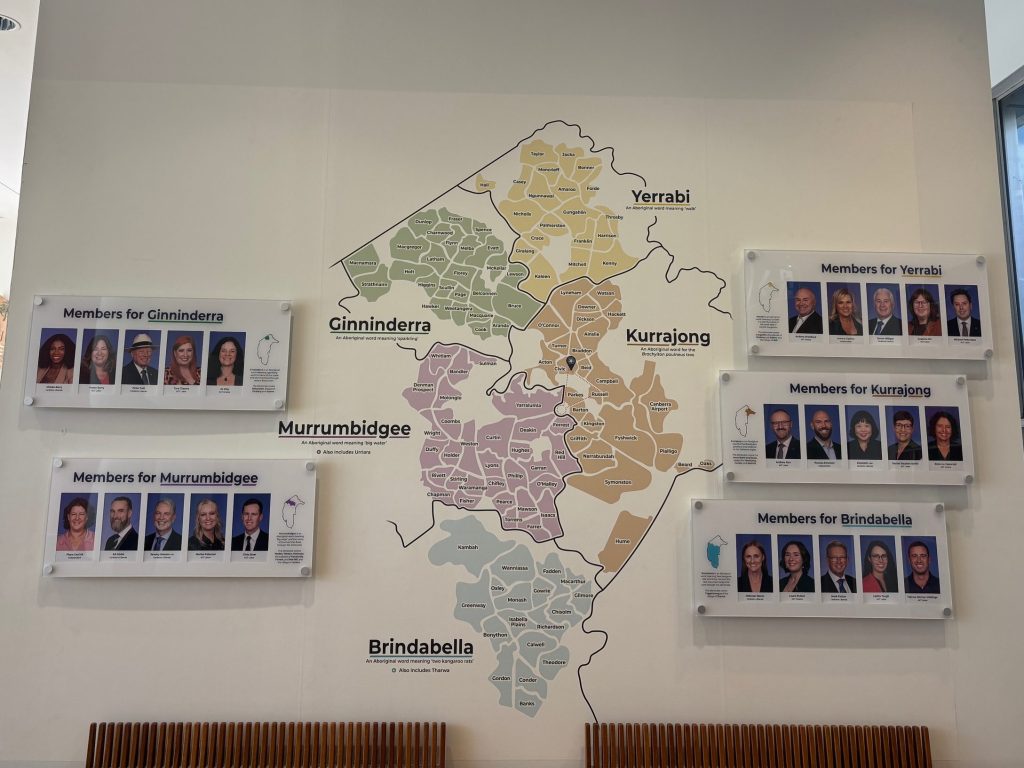
Fiona Carrick represents the seat of Murrumbidgee and ran on a platform of supporting affordable housing and improving public spaces and community facilities.
Speaking to The Owl she said that independents can “advocate for members of the community, community groups, as we see fit on the issue and we don’t have to be aligned with any ideology.”
Thomas Emerson represents the seat of Kurrajong and ran on a platform of representing Canberran’s who feel forgotten and pushing for greater government accountability.
Speaking to The Owl he said “there are a lot of people who don’t feel that the system is working for them.”
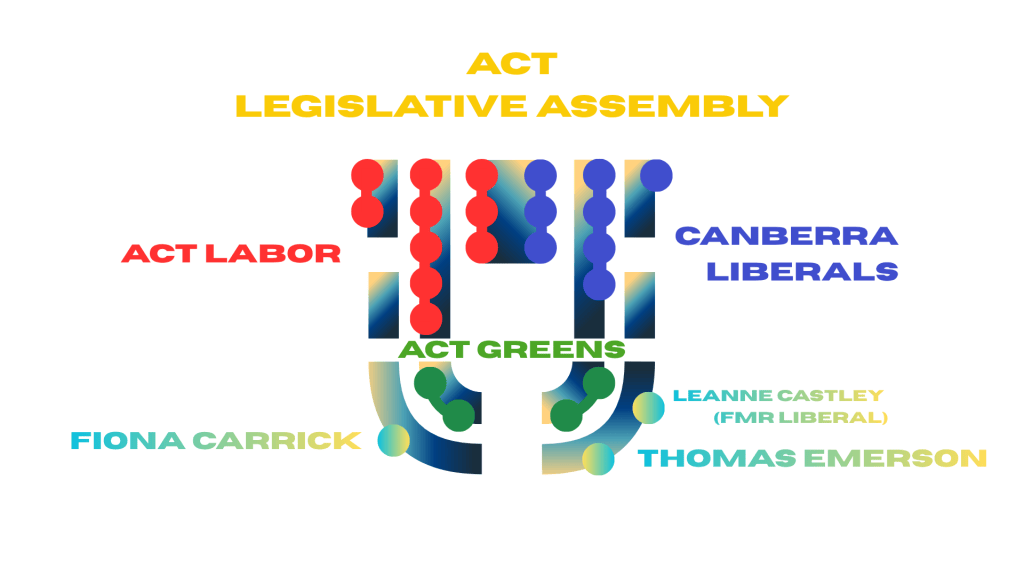
Finally, Leanne Castley represents the seat of Yerrabi and was originally elected as a member of the Liberal Party in 2020. Citing toxic workplace culture, she left the party in June 2026 and sits on the crossbench.
Now an independent, Castley, the former Liberal Party leader, still represents values closely aligned with those of the Liberal Party.
Carrick and Emerson were elected at the 2024 ACT election. They were the first independents elected to the ACT legislative assembly since the 1998 election. Their election followed the success of David Pocock who at the 2022 federal election became the first independent Senator to represent the ACT.
What’s Canberra’s history with independents?
The two most notable independents before the 2024 election were Michael Moore and Paul Osborne.
Moore was elected at the ACT’s first election after gaining self-governance in 1989. Originally a member of political party Residents Rally, Moore later sat as a member of the Michael Moore Independent Group which became Moore Independents. He sat in the assembly for four terms, before resigning at the 2001 election.
Moore famously supported Liberal leader Kate Carnell in forming government following the 1995 election.
Paul Osborne was elected at the 1995 election. Originally a true independent he formed the Osborne Independent Group running two candidates in each seat at the 1998 election. They won two seats total. Osborne himself, and Dave Rugendyke.
Moore and Osborne were vastly different independents. Moore was socially progressive and ran on platforms including cannabis decriminalisation and legalisation of sex work.
In contrast, Osborne was socially conservative. His focus was on preventing both the legalisation of euthanasia and decriminalisation of abortion.
What impact have independents had?
While their election is significant Carrick and Emerson have been limited in their ability to affect ACT’s governance through their first terms. This may not remain the case forever though.
The Greens and Labor hold enough seats between them to pass bills without the support of independent or Liberal members. This arrangement was formalised in a long running confidence and supply agreement.
However, on the 16th of September, ACT Greens Leader Jo Clay announced that the Greens would be ending the agreement. They did confirm they would still support Labor in passing the budget.
With the formal agreement between the Greens and Labor no more, independents have been given an opportunity to assert influence over Labor’s minority government.
What could we see in the next election?
While the next ACT election is too far away to say who will be running, there are some indicators.
Neither Carrick nor Emerson appear to be losing momentum or drive. It would come as little surprise if both held on to their seats.
Following the success of Carrick and Emerson, other community independents are likely to put their hands up to run.
Due to ACT’s five representative multi-member electorates the quota to be elected is just 16.67%.
With the electorates of Murrumbidgee and Kurrajong represented by Carrick and Emerson, and the edition of Castley in Yerrabi, two electorates remain without an independent. These are Ginninderra, in the city’s north and Brindabella, in the far south.
Castley has said she intends to run again at the next election however it is not yet clear if she will remain independent.

Aspiring community independents will see these two, as well as Yerrabi, as targetable seats.
There are already community groups pushing for more independent representation. Voices of Belconnen and Gungahlin are one of these grassroots organisations. they are working to get community independents elected in Ginninderra and Yerrabi. The group ran community consultation before selecting candidates to ensure they find candidates who align with their needs.
Speaking to The Owl, Voices of Belconnen and Gungahlin’s Leigh Cox said “our mission is to reconnect people who have fallen out with the party system.”
While the ACT has had an era of political stability, politics is more complicated than ever and big changes could be coming.
Watch The Owl’s full analysis of the ACT political landscape here: