

Canberra’s city planners imagined a capital of order and civility, but on the edge of Yarralumla a different kind of community thrived decades ago — informal, resilient and working class.
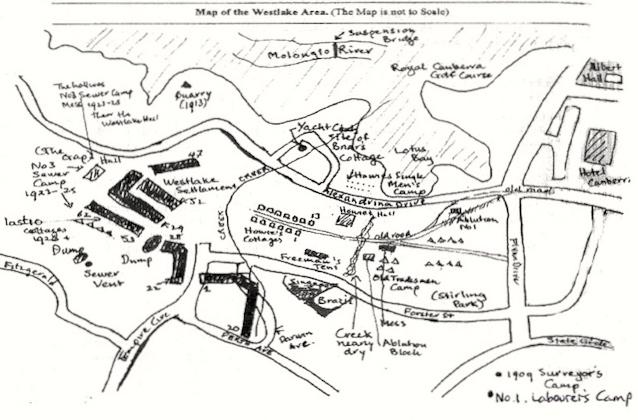
Initially intended to exist for only a few years, the suburb of Westlake turned into a thriving community adorned with dozens of cottages, a town hall and even a tennis court.
As Canberra grew from blueprints to building sites, Westlake at one point was home to around 700 people — roughly one-fifth of the city’s population at the time.
Designed to house the workmen who would build Provisional Parliament House and other essential government buildings, what started as a makeshift campsite quickly became a community with its own rhythm and rules.
Families arrived with little more than a few tools, hope for a new life and a willingness to endure hard conditions.
These are some of their stories.
The beginnings of a capital city

During its fledgling years in the 1920s, Westlake resembled a camping ground, filled with improvised dwellings made of canvas and hessian, their interiors lined with newspapers for warmth.
Gradually, cottages replaced tents to house working men and their families.
Each was a plain 25-by-25-foot timber square set on piers with two bedrooms, a kitchen, a living room and a small bathroom.
While the residents had access to electricity and cold running water, Canberra winters were nonetheless brutal.
Eva Warren was born in Westlake in 1944 and remembers the cold seasons well.

“The taps would freeze solid,” she says.
“Mum always left a bucket of water in the kitchen overnight because you couldn’t turn the tap on in the morning. Dad would get up first to light the fire before work so we could get dressed in front of it.”
Furniture was modest: a fuel stove, a dresser and a table, an ice chest before refrigerators went on the market.
These simple homes looked out over what is now the Canberra Yacht Club and Stirling Park.
Janet Grubb lived in Westlake until she was eleven and looks back on her time there fondly.
“Our house was number 47 and we could see the Hyatt and West Block offices from our front yard,” she says.
“There was a sleep-out at the front, another at the back, a chip heater for hot water, and a copper pot in the laundry.”
Making a home from ‘temporary’
For a community that was never meant to last, Westlake was stubbornly domestic.
Gardens flourished, front yards ran to colourful flower beds, backyards produced vegetable plots and fruit trees. Families kept guinea fowl, chickens and even the occasional goat.
“It was a free kind of place,” says Janet.
“Everybody knew everybody.
“Nobody had much – no cars, no money – but it didn’t matter. We were all the same.”
Deliveries came by cart.
“There was a milk cart that came around,” Janet remembers.
“And a lady who sold lovely cakes. My brother grew vegetables to sell, and our neighbour, Mrs Dreikovic, had a cow. Sometimes we’d buy milk from her.”

Eva recalls that self-sufficiency was part of the culture of Westlake.
“Neighbours would come to our gate on a Saturday and buy lettuce, tomatoes and eggs from Dad’s Garden,” she says.
“Some of the migrant families who moved in later had ducks, rabbits and chickens, almost like little farms.”
“Everyone shared what they had.”
The women of Westlake

The work of Westlake’s women rarely made the official records, but their labour kept the suburb alive.
While men laid bricks, dug tunnels and poured concrete, women ran households without the convenience of modern appliances.
On laundry day, copper pots boiled for hours, sheets were rinsed in concrete troughs before being hoisted to a sagging line propped with a pole.
Roles were set by the expectations of the time: to marry young, raise children and run a household.
Many women earned extra money for the home by taking in boarders, cleaning for others or sewing.
During the war years, women stepped into essential jobs like teaching, clerical work and nursing — often for lower pay than their husbands and far less recognition.
Janet remembers her mother working for the Department of Industry, cleaning offices across the river.
“She’d leave home at five in the morning, walk across the golf course to work and be home by 7:30 to see us off to school,” Janet says.
“Then she’d go back in the evening from five to nine.
“I still think – how did she do that?”
Community life revolved around the hall, which doubled as both a social hub and a baby health clinic.
Mothers would swap advice over tea while infants were weighed and given cod liver oil, said to prevent rickets.
The Canberra Community News even ran ‘Home Notes’ columns for Westlake women, offering recipes for cheap, hearty meals like barley broth and potato soup.
In the evening, when children were asleep and chores had been completed, dances filled the community hall.
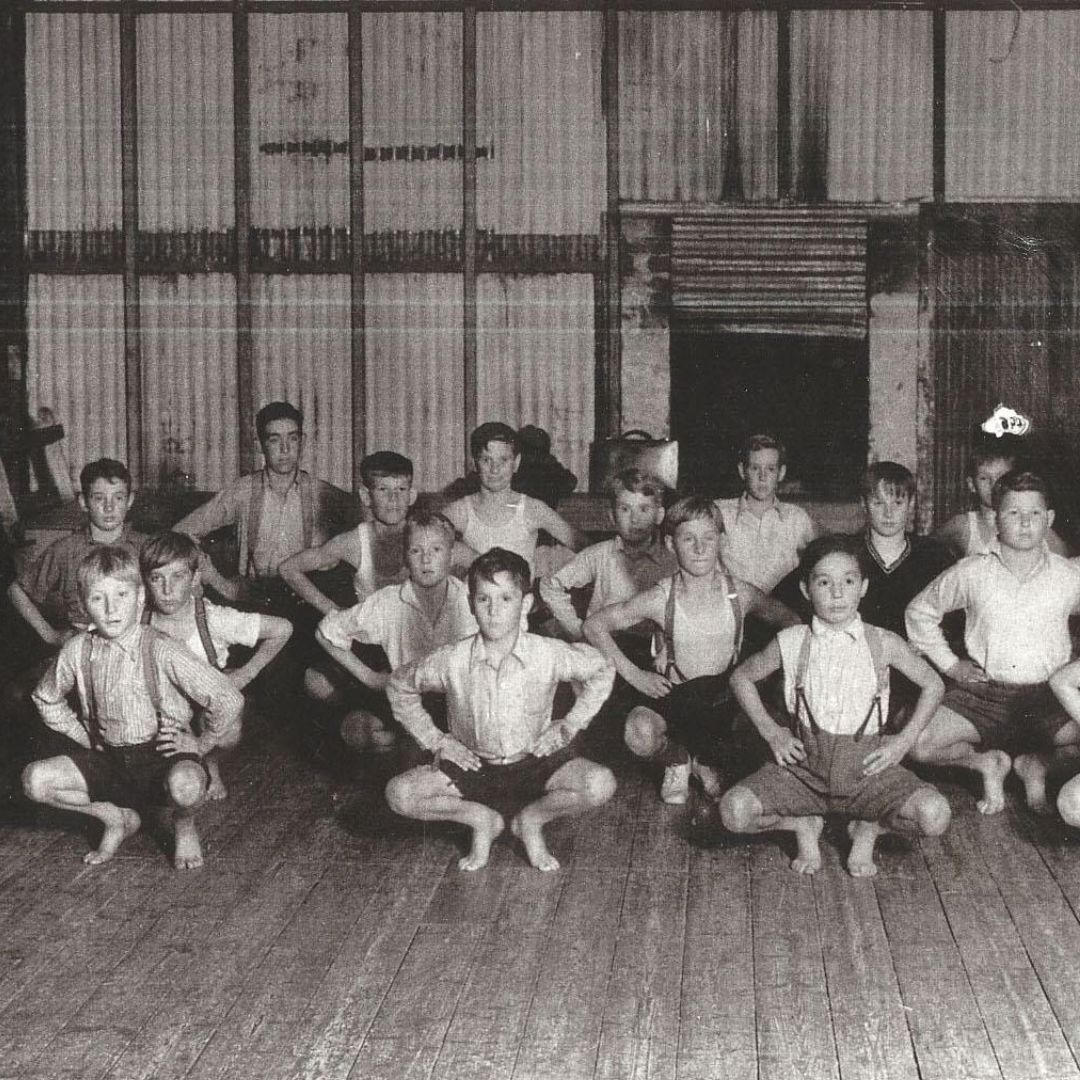
“The hall was where everything happened,” Eva says.
“There were dances, concerts, church services. When I was little, the department would send out teachers during school holidays to run games and activities.”
The women organised fundraisers, Christmas parties, and even taught the local children to dance.
“Mrs Anderson played the piano and taught us dances like the Highland Fling,” Janet says.
A childhood in the hills

For Westlake’s children, the suburb was a wide playground.
“We played hopscotch on the road because there were no cars,” Janet remembers.
“We skipped ropes, rode our pushbikes, and swam in the river until someone got a leech and we all jumped out screaming!”
Eva’s childhood memories echo the same freedom.
“The road was our playground — the boys played cricket with the garbage bin, and the girls played hopscotch or jacks.
“The river and the golf course were wonderful.
“My brothers made money diving for lost golf balls or collecting beer glasses at the racecourse to get the deposit back,” she laughs.
“Children walked or caught the bus near where the American Embassy now stands to schools in Manuka and Telopea Park.”
The trip into the city for Saturday matinee movies was a group adventure.
“We’d all go to the Capitol Theatre,” Janet says.
“Walk up together, catch the bus, watch the pictures — the whole crowd of us.”
Class and community
From the beginning, Canberra was sharply divided by class.
Public servants and professionals lived in brick suburbs like Forrest and Ainslie, while working-class families were tucked away in “temporary” settlements like Westlake, Causeway and Molonglo.

Eva remembers this distinction following children beyond the suburb as well.
“Some people at school looked down on Westlake kids — called it the slums,” she says.
“But once you came home, you felt safe.
“It was a happy place.
“Neighbours kept an eye on you.
“If I was misbehaving at the other end of Westlake, someone would say, ‘I’ll tell your father when he walks past tonight!’”
Despite modest means, the community built a rich social life.
There were card nights, raffles, and Saturday dances.
Sport also bound people together: cricket for the men, tennis and hockey for the women.
The tennis court near the hall was community-built, planks donated and earth levelled by hand.
The vanishing of a suburb
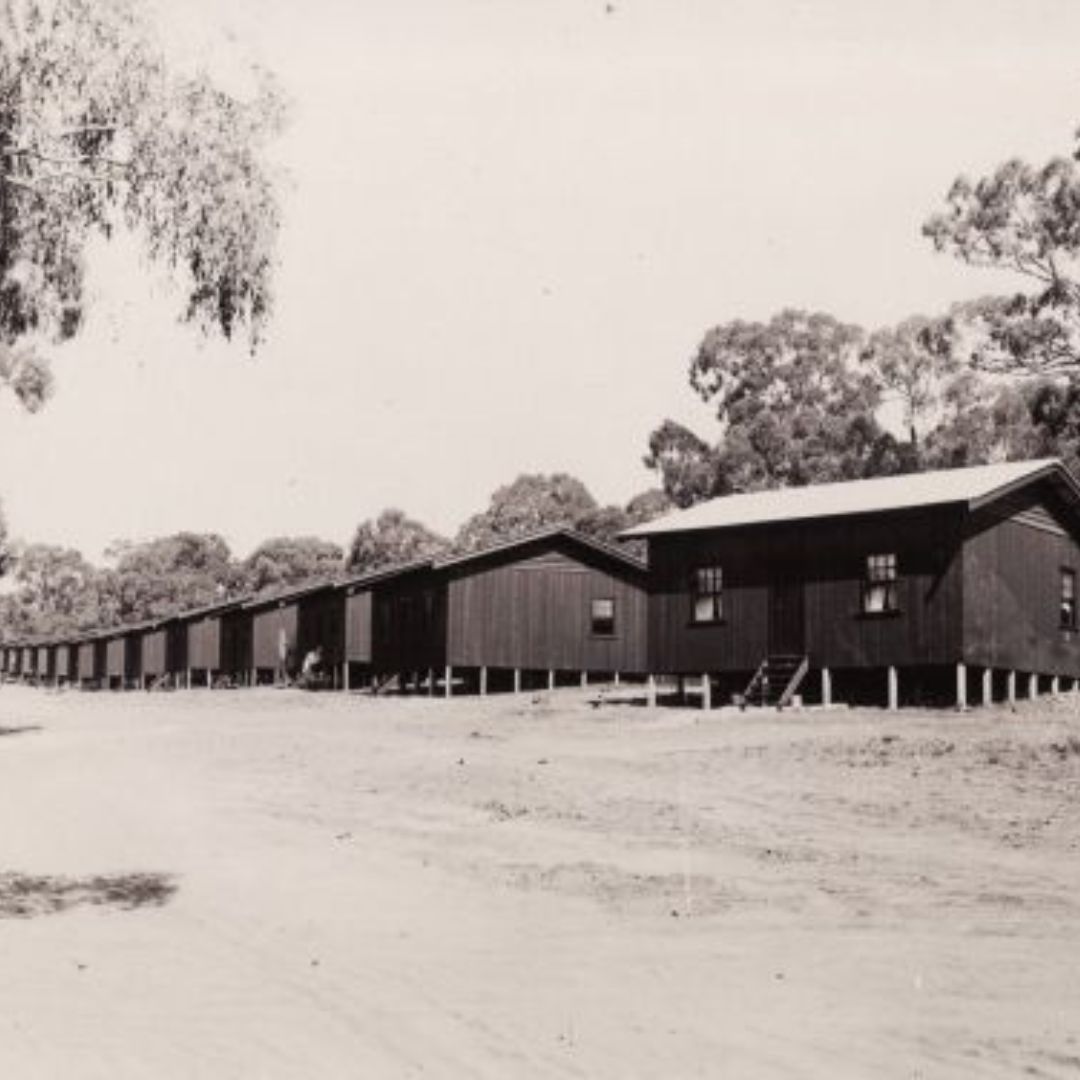
As Canberra’s permanent suburbs expanded, Westlake’s fate was sealed.
By the time Lake Burley Griffin was filled in the 1960s, half of old Westlake’s territory lay beneath water and the rest had gradually been erased.
As the capital matured and embassies dotted the area, cottages were sold and hauled onto the backs of trucks. Some are still standing in Queanbeyan, others in Oakes Estate.
Families who had been in Westlake for decades were relocated — some to Ainslie, some to Acton, others to Yarralumla.

“I hated leaving,” Janet says.
“It was such a free life.
“Everyone was the same, no one had much, but it didn’t matter.”
Eva’s family moved to Acton in 1956 after her father’s death, a few years before Westlake was permanently dismantled.
She remembers that, for most residents, the move felt inevitable rather than cruel.
“People think it was dreadful they took our houses away, but everyone knew Westlake was temporary.
“It was a wonderful place to grow up, but families were happy to get new brick homes in Yarralumla or O’Connor.”
Today, only fragments remain — a sewer tower, the odd fruit tree, and concrete slabs where children’s names are still faintly etched.
When Janet returned years later, she found almost nothing of her old home.
“Everything was gone — the trees, the gardens. Only a little creeper we named Vinca was still there,” she says.
“My brother’s ashes are buried in the backyard where we grew up.”
Remembering Westlake
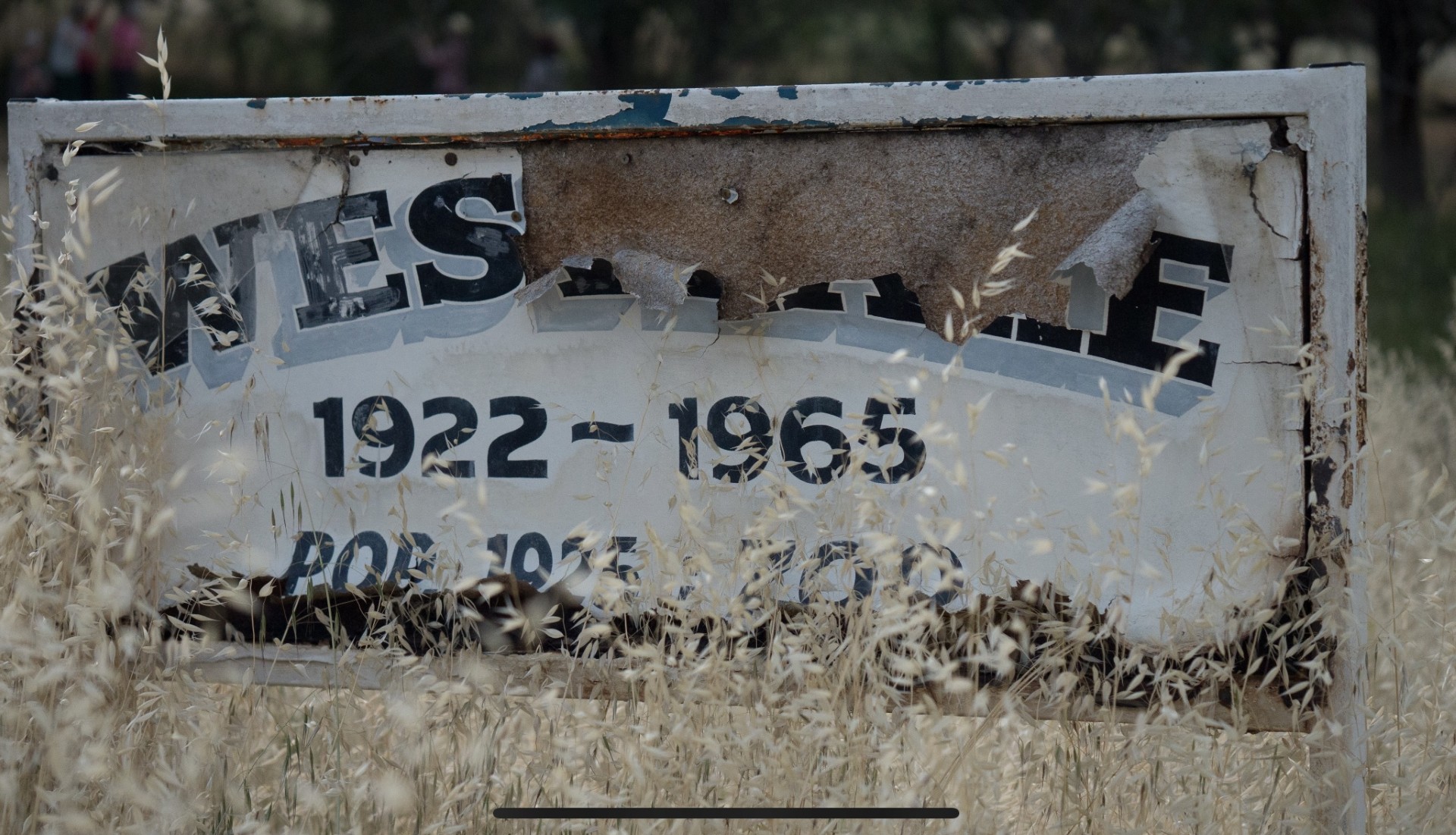
Stirling Park, the bushland that hides the traces of Westlake, is quiet now.
But its story complicates Canberra’s tidy origin myth.
It restores the workers — the carpenters who glued the Speaker’s Chair together, the sewer workers who rode buckets down shafts — to the centre of the city’s history.
The long-gone suburb stands as a reminder that cities are made by people whose names rarely make history books.
Brick by brick, their work built the bones of the capital — from the Hyatt Hotel to Parliament House itself. Their gardens, dances, and games filled a gap in the city’s official history that no monument has yet replaced.
It also asks us to pay attention to erasure.
Whose stories get remembered with plaques and preservation measures, and whose fade back into the bush?
Former residents like Janet Grubb and Eva Warren still have regular meetups with their old school friends, reminiscing about a ghost town that was once their home.
When they return to walk where tents and cottages once stood, they see not just a park — but a world as it was in their time.
Original photos by Sarh Grieb