
Laura is no stranger to teacher placements
With over half a dozen under her belt, she has gained experience in a diverse range of cities, centres, and schools.

But despite each placements’ differences, walking out on the last day of placement, she often feels the same.
“I was exhausted. I was so tired. Joints that you didn’t know you used often were being overused so much. It’s quite taxing.”
With the global teacher shortage casting dark shadows on the educational landscape, the truth has never been more obvious.
We need teachers.
So why is it so hard to become one?

What do you want to be when you grow up?
It’s a question that haunts many of us, as we weigh up endless possible careers.
Maybe you want to be an astronaut, a chef, a dancer.
Maybe you never want to work a day in your life.
Or maybe, you have absolutely no idea what you want to be.
Laura, however, has known what she wanted to do ever since she could walk and talk.
“I always wanted to teach.”
Combining her love of children and travelling, Laura set off to explore the world.
Boarding schools in China, volunteering in Nepal, teaching conversation in Japan, and even being a tour guide in the Aussie outback; no stone was left unturned.
But Laura’s dream of becoming a proper, qualified teacher was yet to be fulfilled.
Fast forward a couple decades — filled with kids, marriage, and casual teaching on the side — Laura is finally completing her Graduate Certificate of Education in Early Childhood Studies. In other words, the final piece of the puzzle before she can, at last, have her dream job.
The light at the end of the tunnel is so close, but after several conversations with Laura, an ugly truth began to rear its head.
The road to teaching, albeit necessary, is unreasonably challenging
From Laura’s experience, in order to make it to the other side, “you have to really want to do it.”
With such rampant demand for the endangered career, though, you would think the process of becoming a teacher wouldn’t be so hard.
After all, the government is practically on its knees, begging people to join the profession. From the recent ‘Be That Teacher’ campaign, to 10% pay rises, nothing is off limits in the desperate attempts to reduce the 4000 teacher deficit.
On the surface, teaching has become a highly-incentivised, rewarding career.
But, only by talking to real student-teachers can one truly understand the barriers blocking entrance to the profession.
Let’s start with the elephant in the room: placements
At most Australian universities, undergraduate students must complete at least 80 days of placement. This equates to about four months of unpaid work.
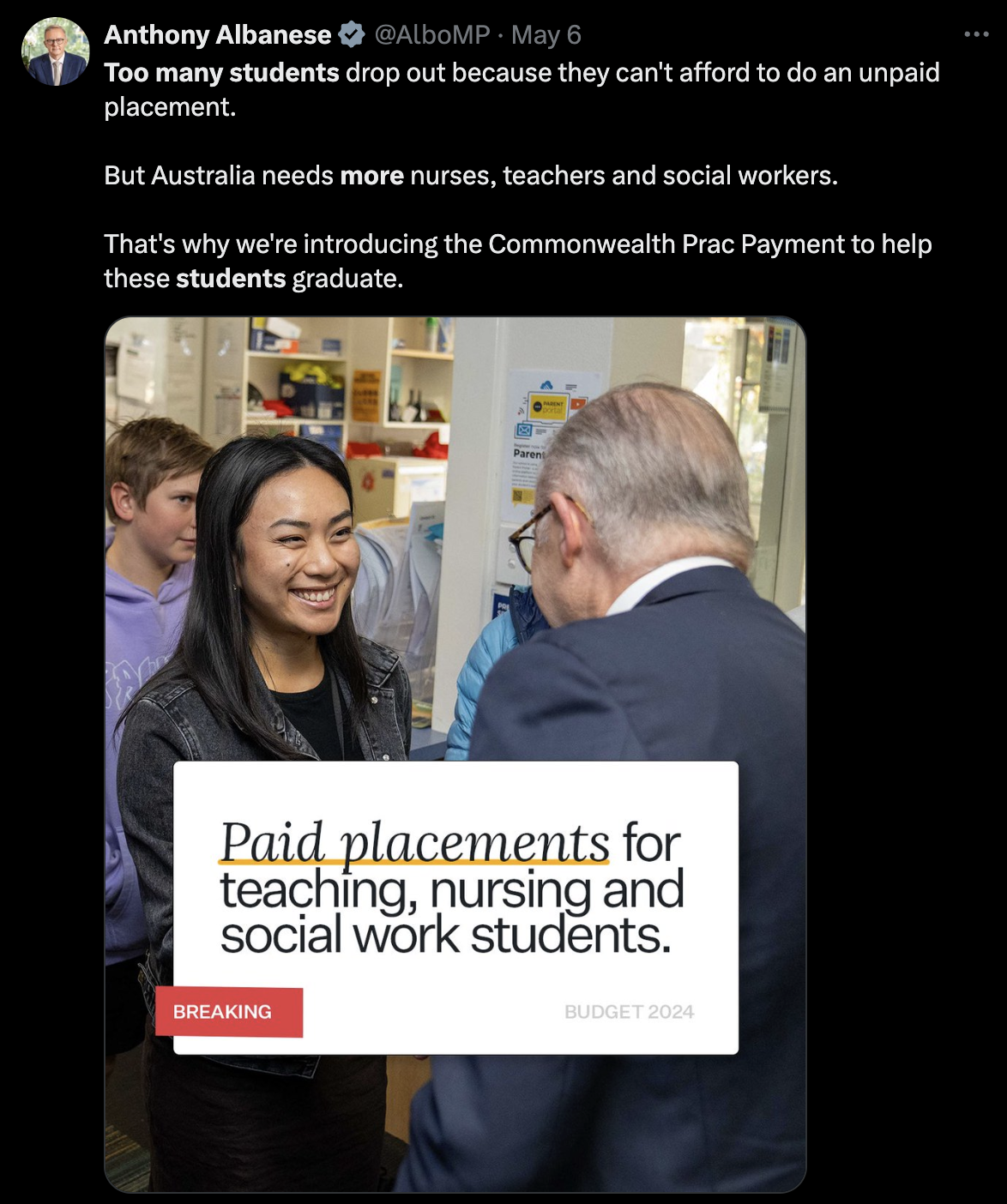
The Albanese government recently promised paid placements by July 2025. But for a measly $319.50 a week, or $8 an hour, this is completely unliveable in the cost-of-living crisis.
How can someone be expected to take months off work, when the median weekly rent has skyrocketed to $627?
Regardless of the financial strain, pracs themselves are their own beast to be tamed.
Earlier this year, Laura completed a placement in an early learning centre.
Walking out on the last day, she could feel the exhaustion in her bones.
“You’re not doing much, you’re not walking miles — but it’s quite taxing, going up and down, and being on the floor. I guess it’s long-term fatigue.”
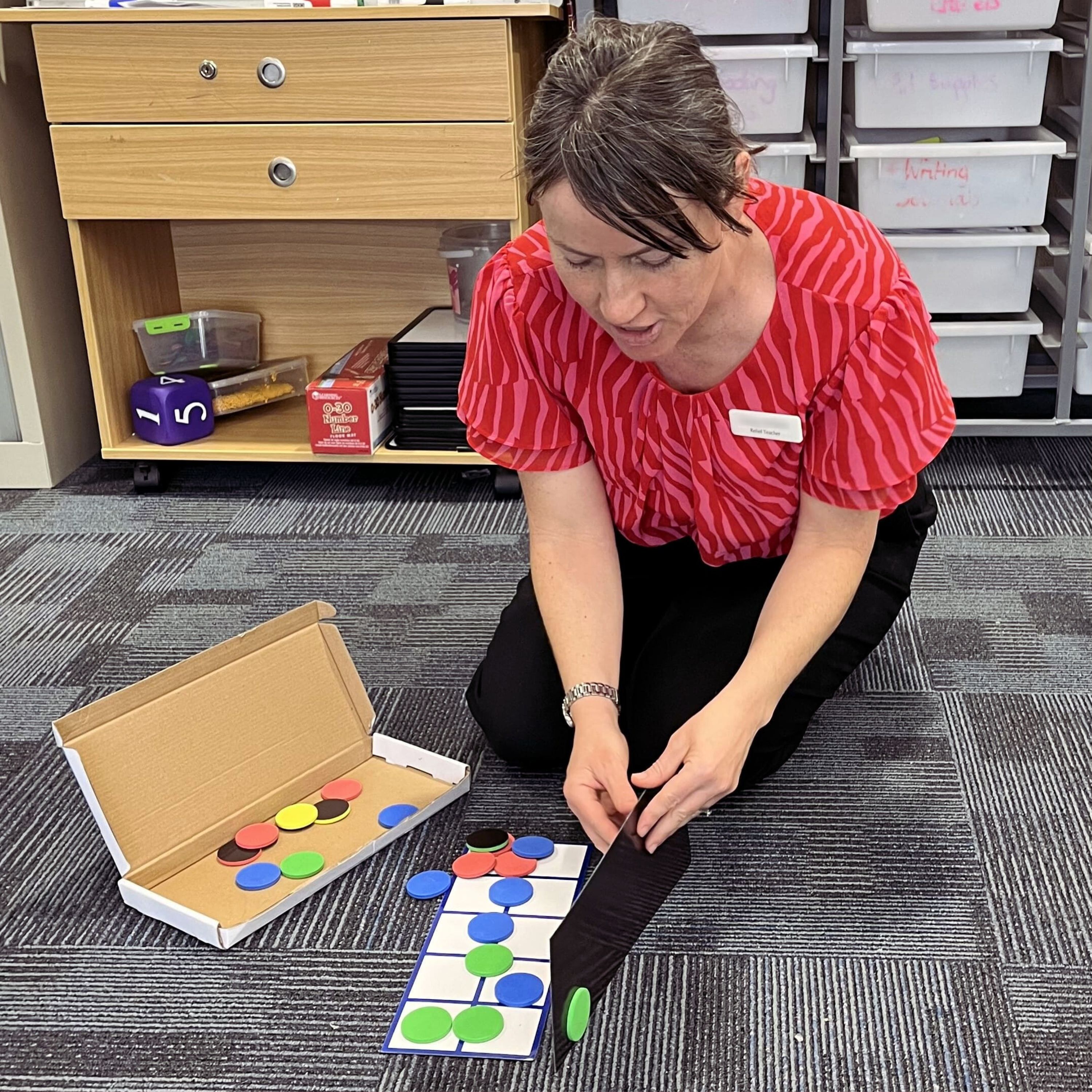
Not to mention, spending at least eight hours each day talking to children and staff, whilst simultaneously completing university assessments, provided its own cognitive struggles.
“Mentally, you’re constantly on.”
Leaving her placement, sometimes after dark, Laura would spend the rest of her night planning for the next day.
“You go home and you don’t just switch off. You’re finding resources, you’re creating resources, you’re writing up your uni report.”
Comparing placements to her experience as a relief teacher, Laura feels it can sometimes be more cumbersome than actually teaching.
“You’re being judged. You’re being assessed the whole time. There’s that pressure to make sure you’re doing the best you can, and presenting yourself the best you possibly can.”

She’s not alone in her experience.
First year undergrad, Mina, recently underwent her first placement. Despite updating the preferences for nearby schools, “I was given a service that was still very far from my residence.”
This is a common occurrence for many, as “there are not enough services able to take on placement students”.
That being said, placements aren’t all that bad
For Mina, they are a great way to get a sense of the job, and a foot in the industry.
“With only one placement under my belt, I have found it to be a really positive experience”.
Laura agrees they are a necessary part of the course.
“You have to be in the thick of it to know exactly if it’s what you want to do.”
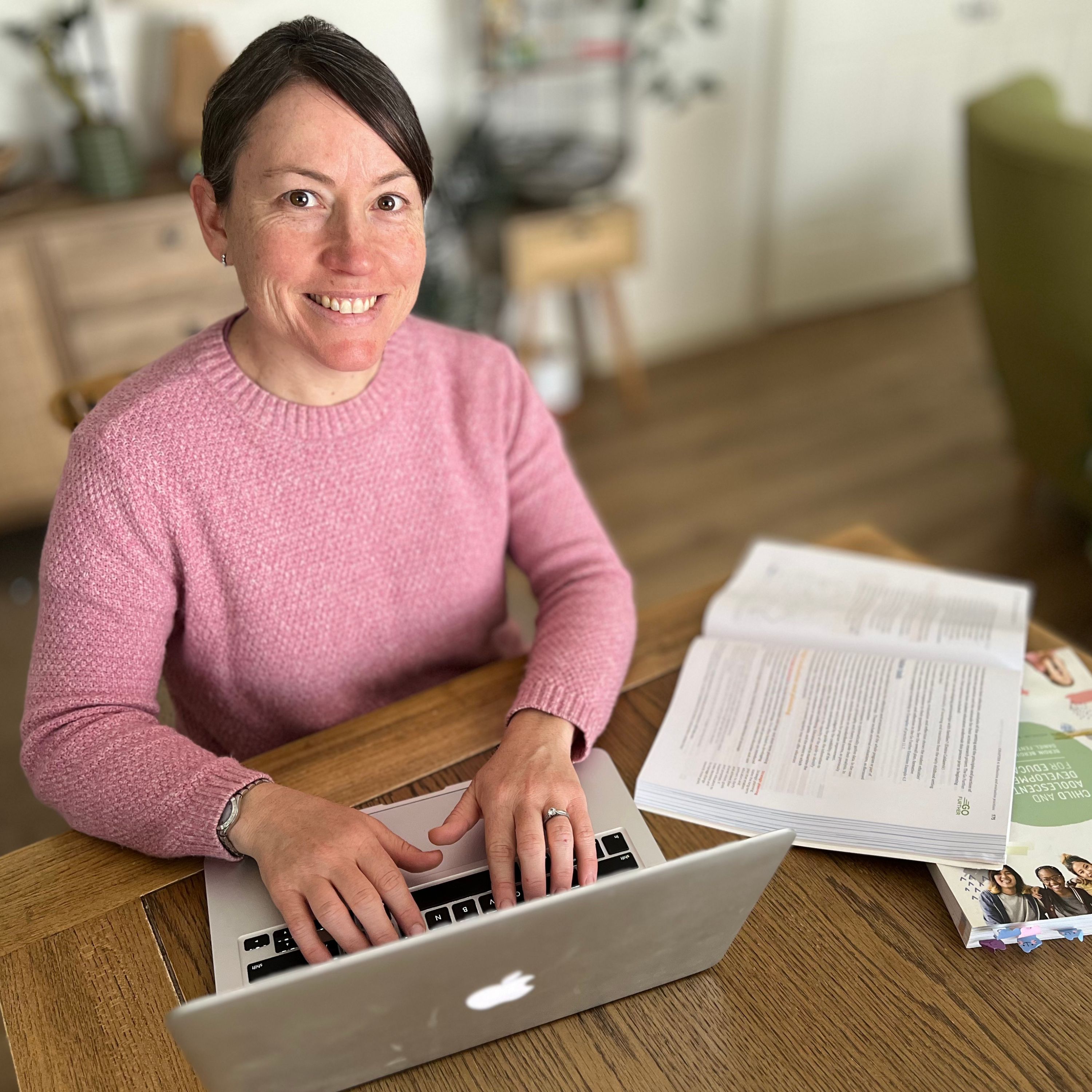
Nonetheless, placements are just one thing to consider before signing up for a four-year education degree.
“Something that would put people off these days is the bad press that teaching is getting,” says Laura. “It would almost put me off now.”
“There’s an erosion of respect.”
Stories of abuse, poor behaviour, and burnout flood the media, with former education minister, Stuart Robert, even going so far as to label some teachers “duds” who “can’t read and write”.
While it is important to point out flaws in a system, this so called ‘teacher bashing’ shines the job in a sour light. How can we expect people to commit to something with such a negative reputation?
In order to fix our teacher shortage, Mina believes turning this around is vital.
We need to “shift the public’s perception of primary teachers and early childhood educators from babysitters to professionals.”

Thinking of becoming a teacher? Here’s what you should know
Despite the constant waves of backlash, Laura, Mina, and many more would agree teaching is an incredibly rewarding profession.
From stories of the classic ‘light-bulb moment’, to knowing you have shaped the future leaders of the world, there is no doubt teachers have one of the most gratifying and influential jobs on the planet.
While starting out can be challenging, Laura wants aspiring teachers to remember “Rome wasn’t built in a day”.
“You don’t need to do it all. Small steps. Build up your repertoire, but don’t put too much pressure on yourself because there’s already so much, isn’t there?”
It is also vital to surround yourself with the right people and role models.
Laura recalls a key piece of wisdom she still remembers today.
“Find your marigold.”
Infusing her avid gardening knowledge, Laura explains how marigolds are the perfect companion plant — when situated next to other plants, they repel pests, allowing the garden to thrive.
In the turbulent teaching space, finding a colleague or friend who always has your back can help push you through the tough times.
“It’s so easy to get dragged down by negativity. Find someone who’s positive, who will pick you back up and dust you off,” says Laura.

At the end of the day, teaching isn’t for everyone
But for some, it might be the perfect fit.
From Laura’s experience, “you’ve got to make sure it brings you joy.”
Because despite the road to becoming a teacher being rocky at times, that is how you know it is all worth it.
Photos by Alison Kennelly