

As house prices continue to rise across Australia, the dream of buying or even renting a home is becoming increasingly unrealistic for the average Australian.
People are currently facing the dilemma of having to ask themselves a serious question; should they take out a loan and buy a house, or hold onto their savings?
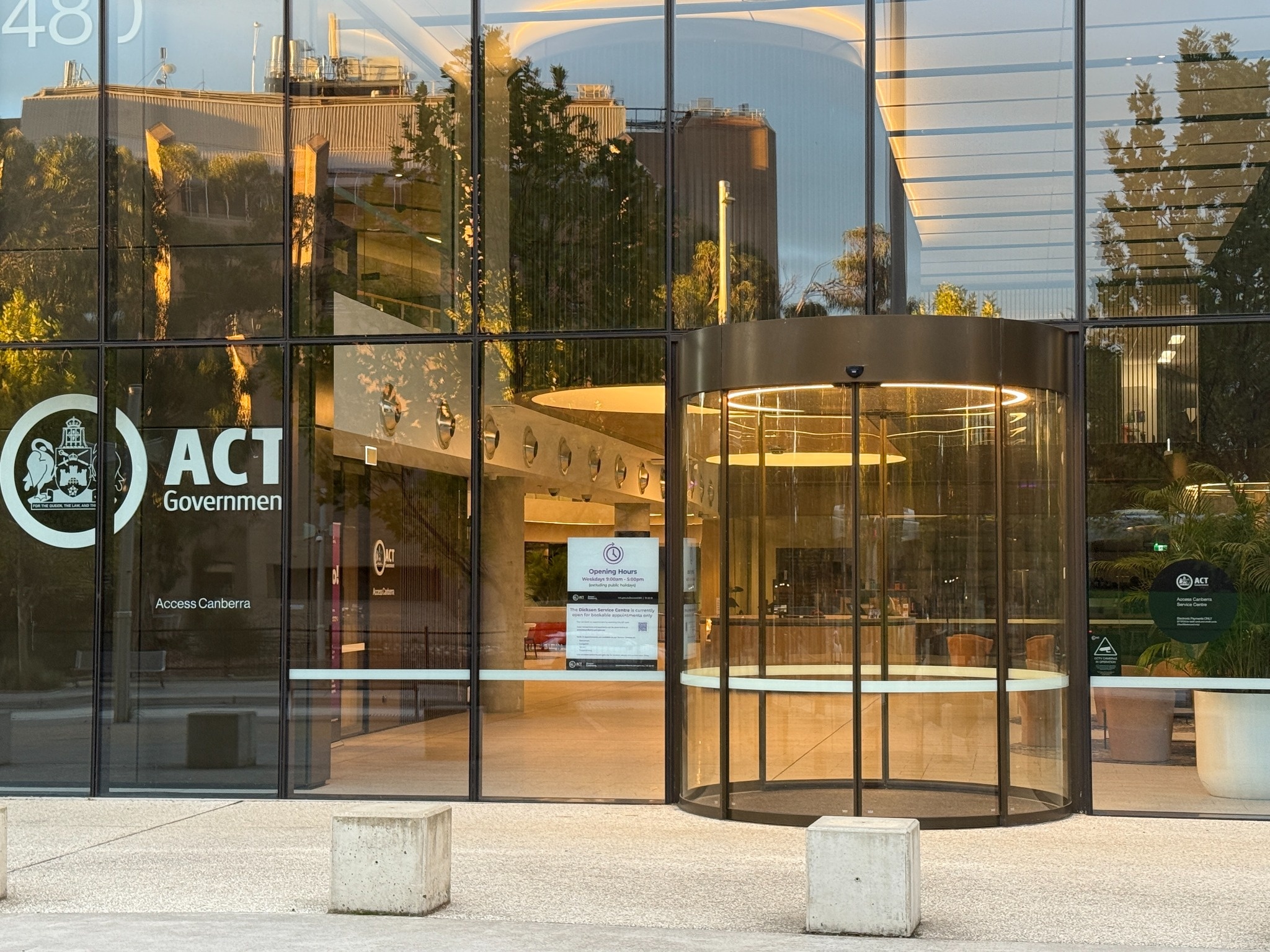
Since it’s clear that bringing in an expert to explore these issues would definitely be helpful for readers, to have an open conversation about the matter by visiting a relevant organisation involved in real estate or in authorising and overseeing actual construction projects, Access Canberra seems to be the appropriate agency to approach.
While there’s an upcoming election in Australia on May 3rd, candidates are trying to convince citizens with various promises to bring housing prices under control.
Teresa Kenny, who works in the Access Canberra Environment, Planning, and Sustainable Development Directorate within the ACT Government, plays a role in managing approvals and resolving issues related to new property developments in the ACT. I sat down with her to further understand why house prices are rising in Australia.
Q: Australia previously had an interest rate cut — does this align with the problem of buying houses?
A: With the interest rate cuts, I heard the news of Trump’s tariffs — it would be possible for rates to go down within a few months because the economy will deteriorate a bit, especially with how expensive everything was getting.
This means that those cuts will definitely benefit anyone with a mortgage. However, then the problem is that if it continues for an extended period, it could actually bring further interest rate cuts. But it will also mean that housing prices could be driven even higher.
Q: Will housing prices rise further in 2025 to 2026?
A: Definitely — it’s always going to increase in cost. It’s just the thing with our economy and how it’s based on economic development. People and companies try out many potential businesses, hoping that it will always grow, and I think that applies to housing too — in the context where landlords are increasing prices and people trying to sell don’t really want to go down.
I think people often see it a lot — depending on the suburb, especially in Canberra, with land value and housing, the closer the area is to the city, the higher the prices will go.
A lot of people, when they try to sell, don’t really want to settle or drop the price. There are certain houses that have been on the market for a while — one was there for almost a year, keeping the same cost. With that kind of mindset, I don’t think housing will ever go down. It’ll just keep going up at the current rate.
Q: What are the new real estate-related policies introduced by the Australian government?
A: With the policies, there was a commitment to build 1.2 million homes over the next five years. We’re starting to see this in our current legislation, particularly when it comes to development applications — things like multi-units and dual occupancy — to try and get more living space within a single block of land, which will result in higher-density housing.
The new legislation is trying to increase housing supply, especially in response to the demand from population growth.

Q: Will there be any solution to this specific issue?
A: Housing prices would start to go down if fewer people were demanding housing. In this case, population growth in Australia over the past few years, combined with a small number of houses available, means that despite ongoing efforts to increase housing supply, demand still far exceeds what’s available.
The time it takes to build a house in Australia, in particular, is quite long from the sounds of it. Most developments usually have about 48 months within their lease to build a house. If they buy an empty block of land, it can take another two years to build — at least in the ACT.
Q: Did the COVID pandemic have an effect on property prices?
A: I would say that COVID played a role in the changes to property market values. We have higher interest rates now, and that shift happened around the same time. But I keep in mind that correlation doesn’t mean causation — even if there is a correlation, it might not necessarily be what caused it. In fact, since around 2020, average house prices definitely went up.
Q: Since property prices are going up, is rental pricing also increasing a lot?
A: Landlords will start to charge more because it depends on how much they themselves, have to pay — for example, ACT Revenue tells them how much they should be paying in land tax or rates.
They’ll try to match that cost, and other landlords will charge a similar amount, which keeps rents around the same level so people can get competitive prices — but in the end, they tend to match each other.
Q: Is there a lot of new home construction happening in Canberra right now?
A: There are a lot of homes being built, and we have what we call Greenfield suburbs for all the new areas. There’s a lot of development ongoing — for example, I work on development applications and help with the process each week.
We receive over 30 applications on average, and if we include exemption declarations as well, that number can be around 40 — some weeks even 50. Not all of those are for single residences or residential properties; some can be for things like car parks, childcare centres, or a mix of road development projects.
Original Photos by Robin Lee