
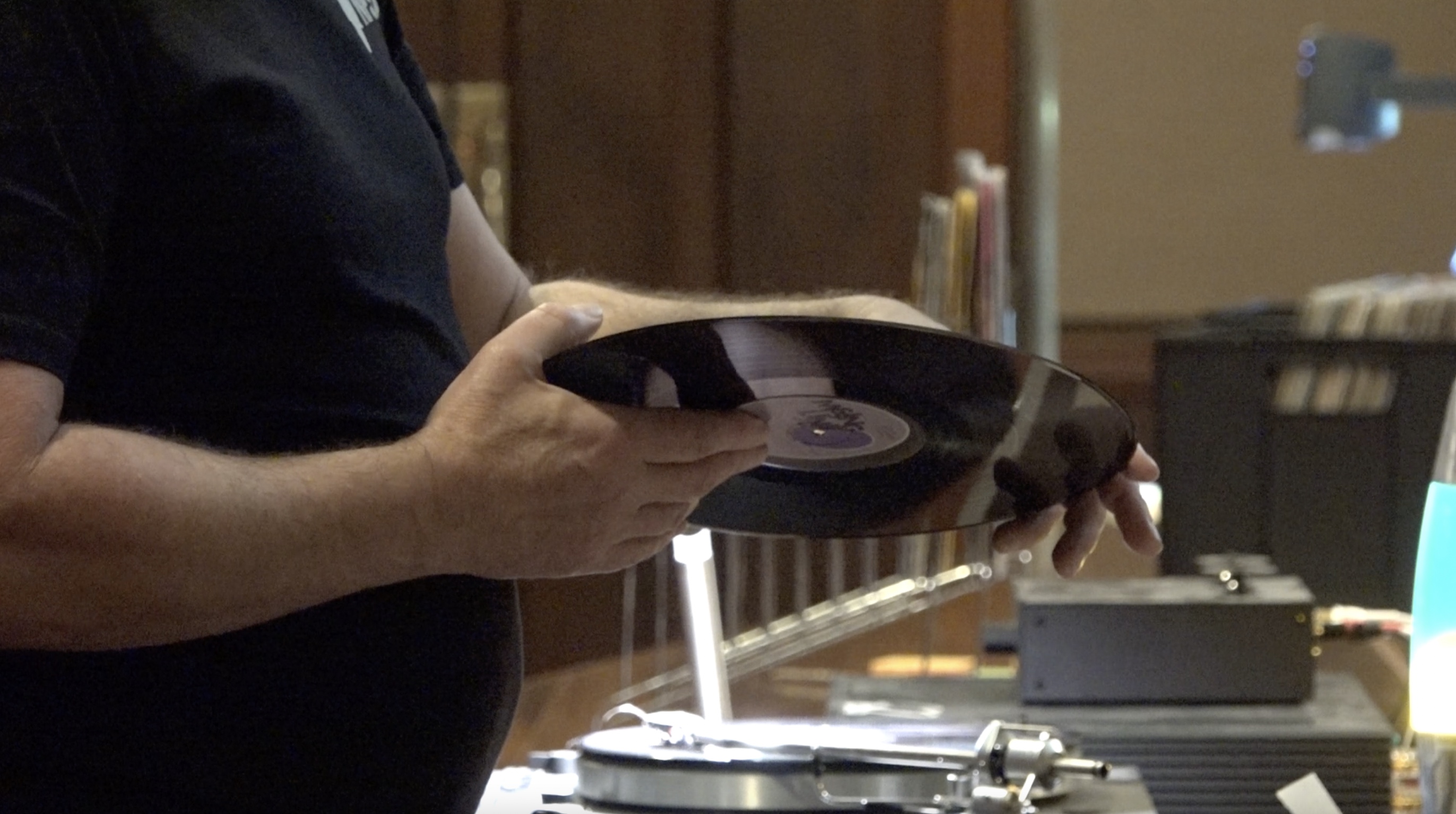
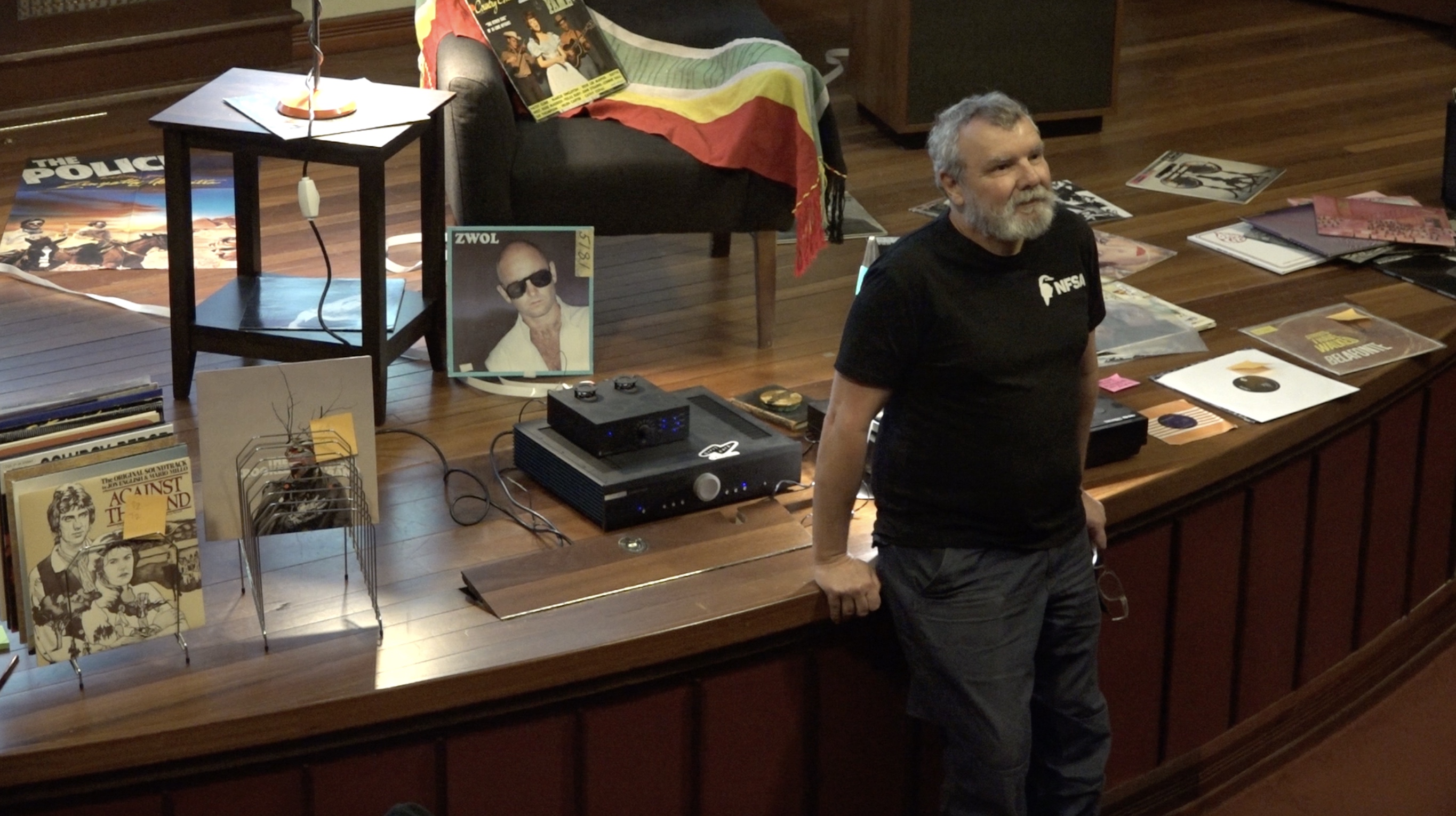
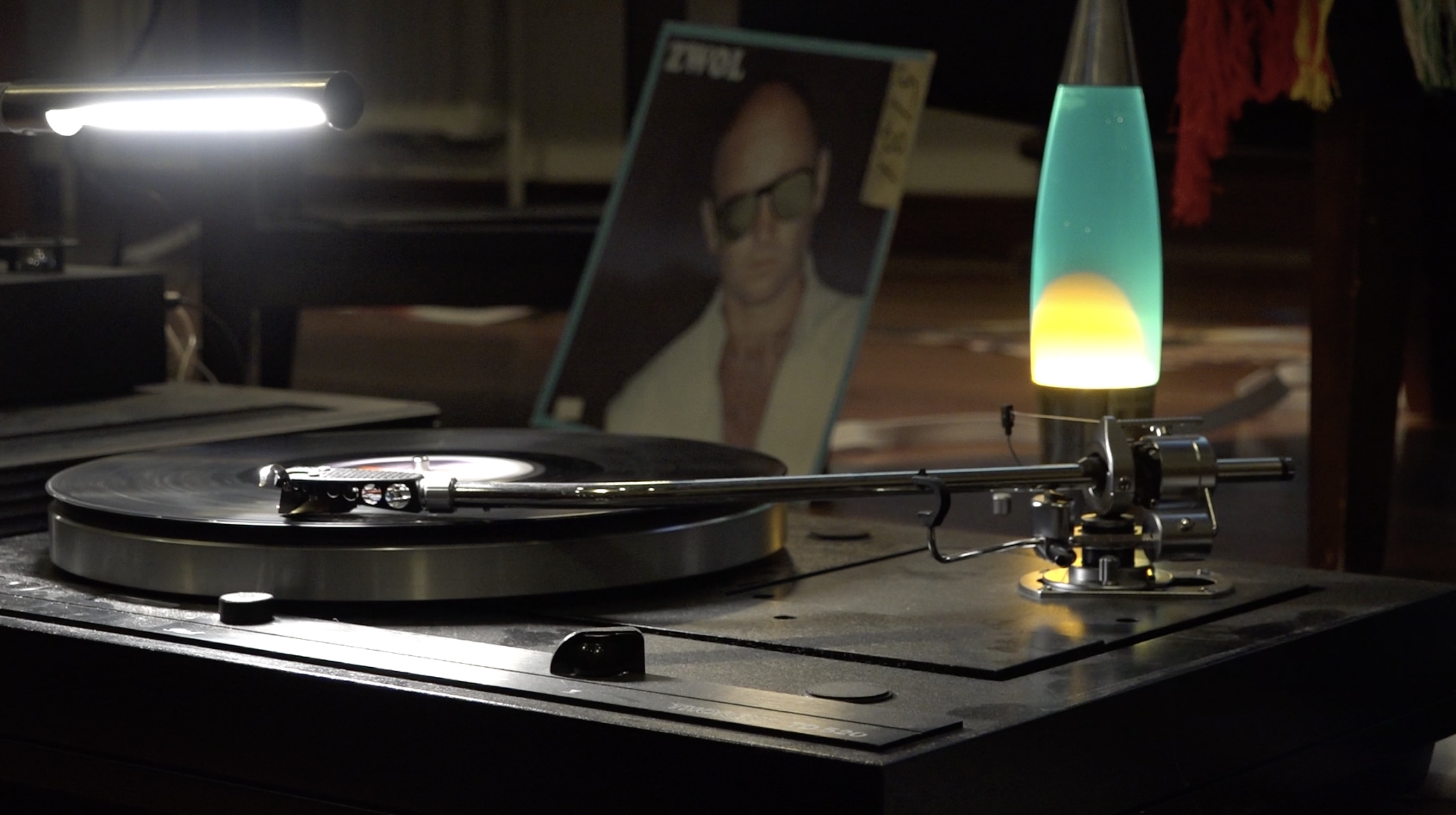
As the needle drops down onto a classic black vinyl at the National Film and Sound Archive (NFSA)’s monthly Vinyl Lounge, the crowd settles into their seats, ready to hear the track.
The host of the event, Thorsten Kaeding, moves over to the side and leans up against the textured wall.
His attention, unlike the rest of the crowd, is not focused on the blown up album cover projected on the screen.
Thorsten’s eyes instead flit from person to person, watching people take in the song.
He sees someone closing their eyes, letting themselves get fully immersed in the music.
Someone else is mouthing along to the words. The person next to them is smiling.
Once a month, music lovers gather at the NFSA and bring in a vinyl to share with the crowd.
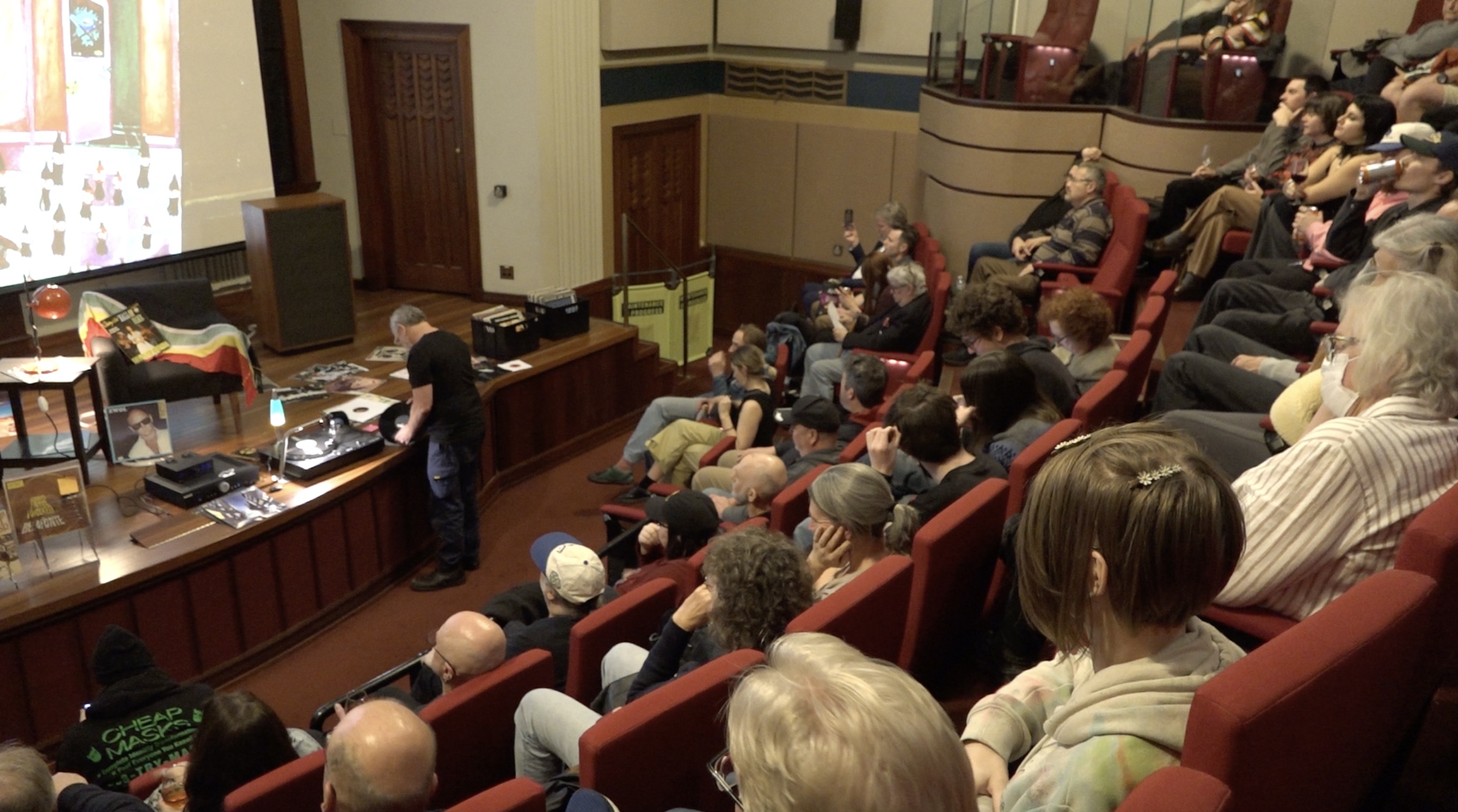
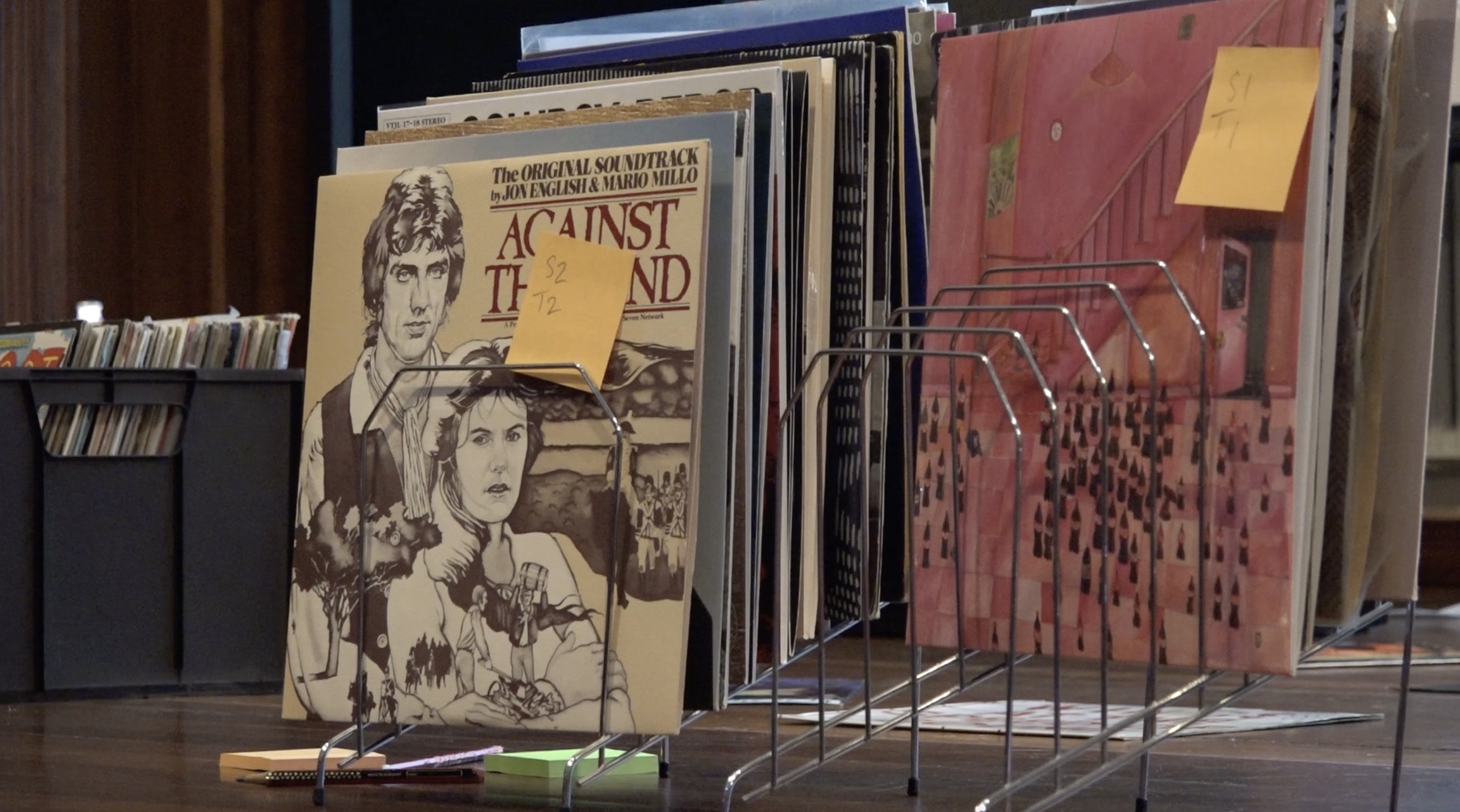
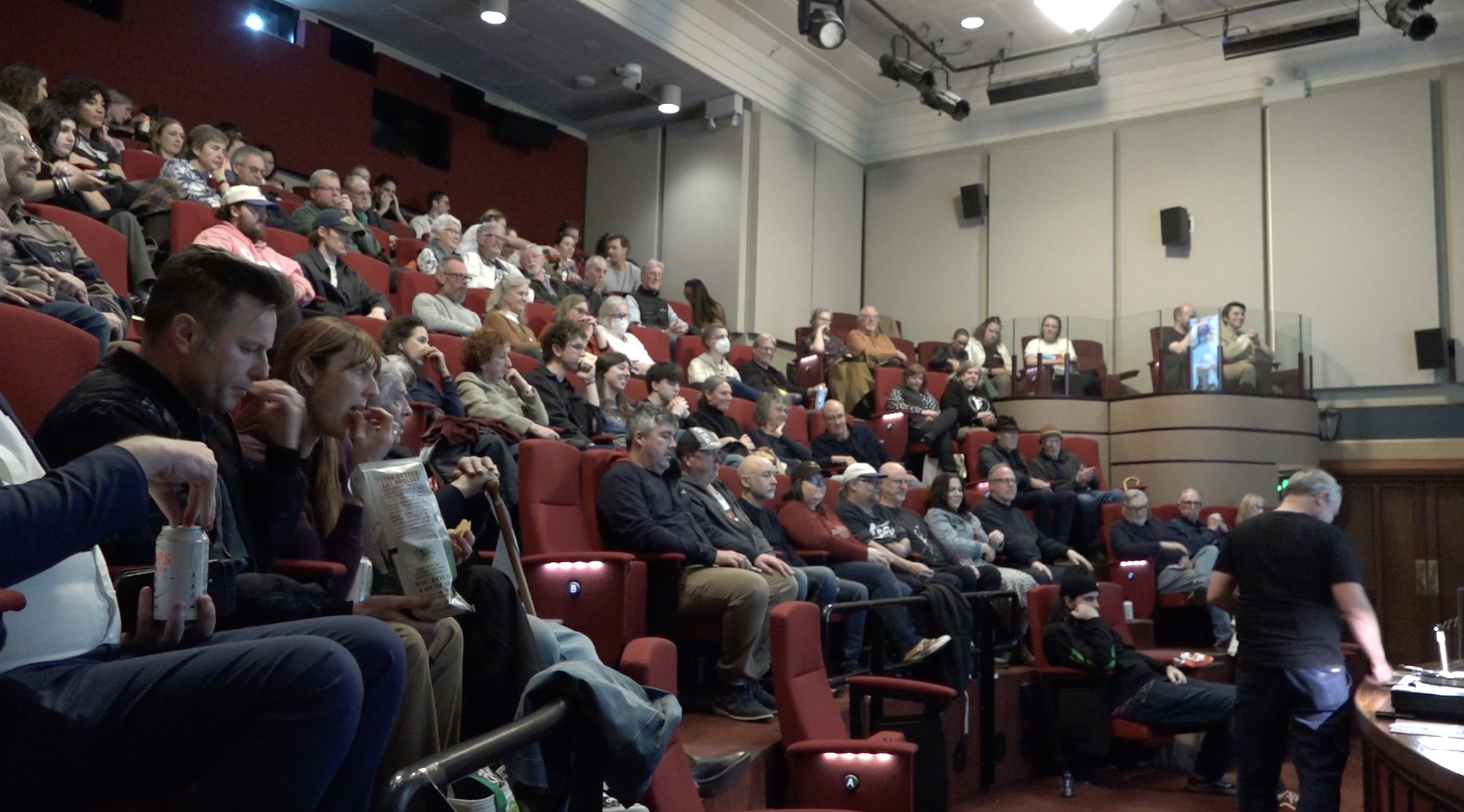
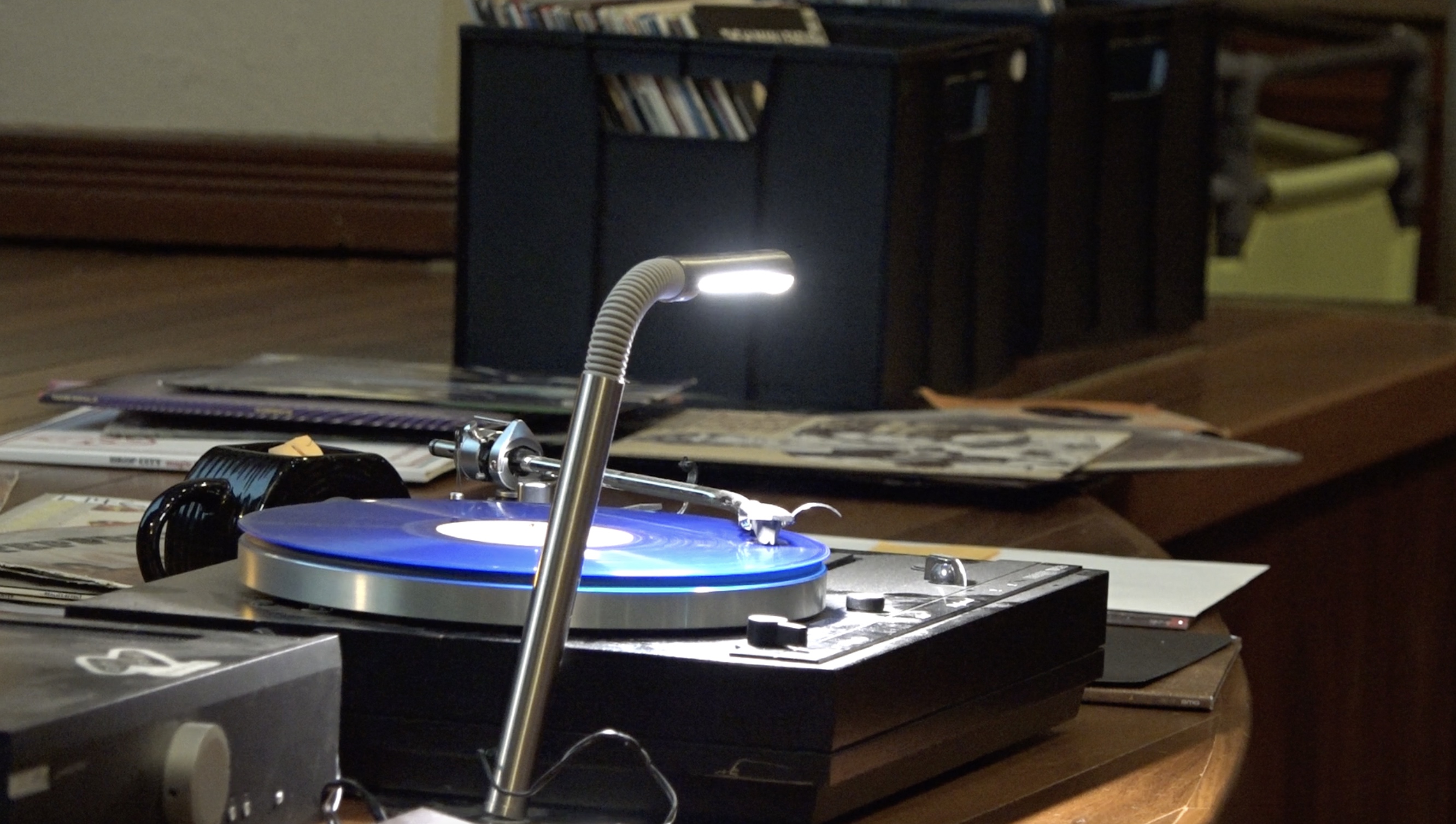
NFSA Senior Curator in Collection Acquisitions Programs and Vinyl Lounge host, Thorsten Kaeding, immerses himself in music.
“I listen to music everyday. I think like most people music does a couple of different things for me. One is background to life and the other is to take your mind somewhere else and get to a better place.”
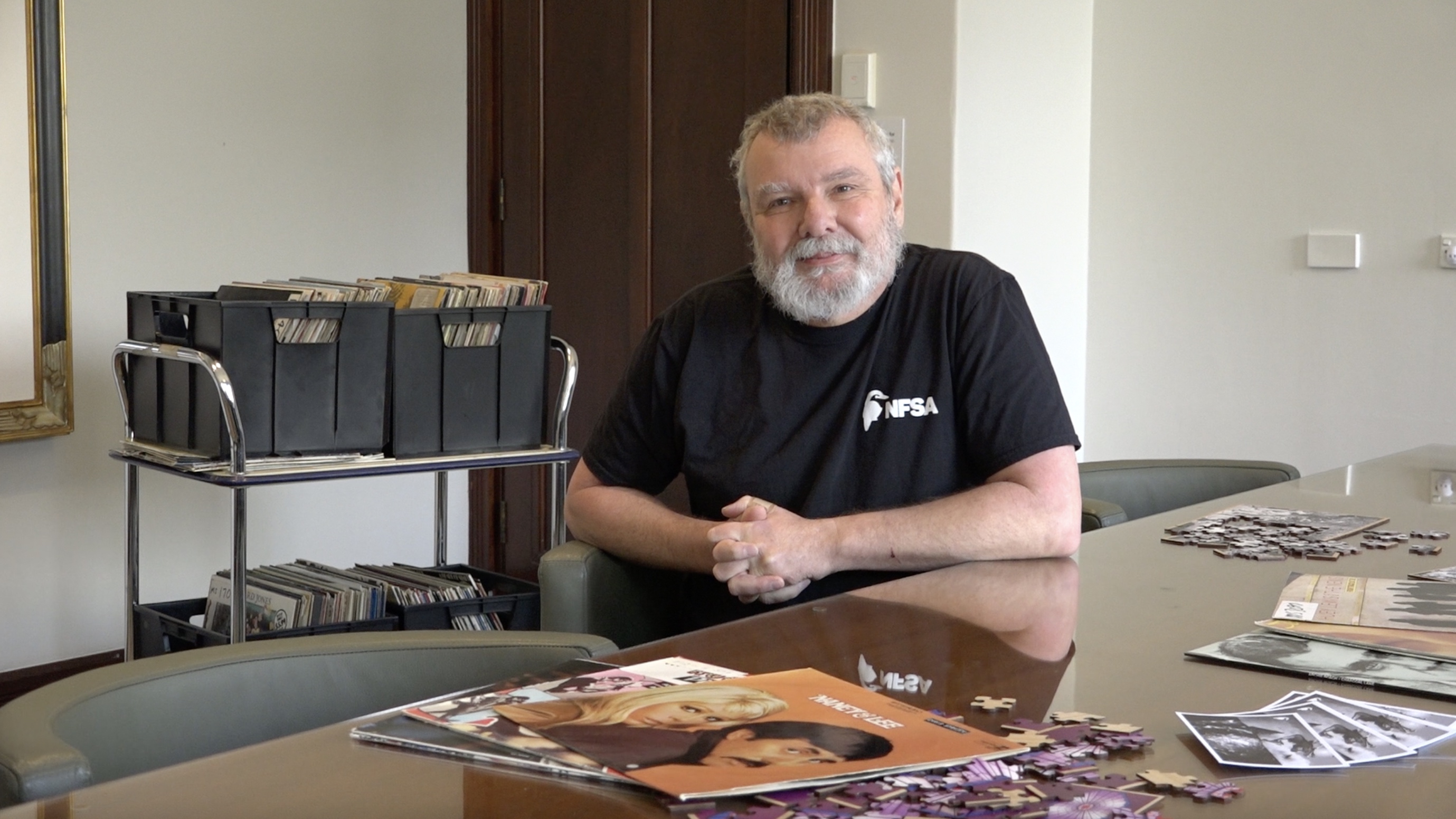
Music, while often used for entertainment or the background noise at an event, has so much more power than many of us realise.
Music and emotions are strongly connected, with the beat and tempo of a song having the ability to alter someone’s mood.
A quick search on music streaming platforms like Spotify reveals playlists with names like ‘Songs that will 100% make you cry’ or ‘happiest songs of all time’, showing this is a universal experience.
Regardless of the emotion, music can be matched to it.
“It’s really interesting the way people and myself use music to compliment what’s happening for good or bad. People in sad moods listen to sad music … it’s a way to validate those emotions and help deal with them,” Thorsten says.
Before a record is played, the owner shares why they wanted to bring the song in.
Being host to the event for over 13 years, Thorsten has heard numerous stories behind why people have brought in their music.
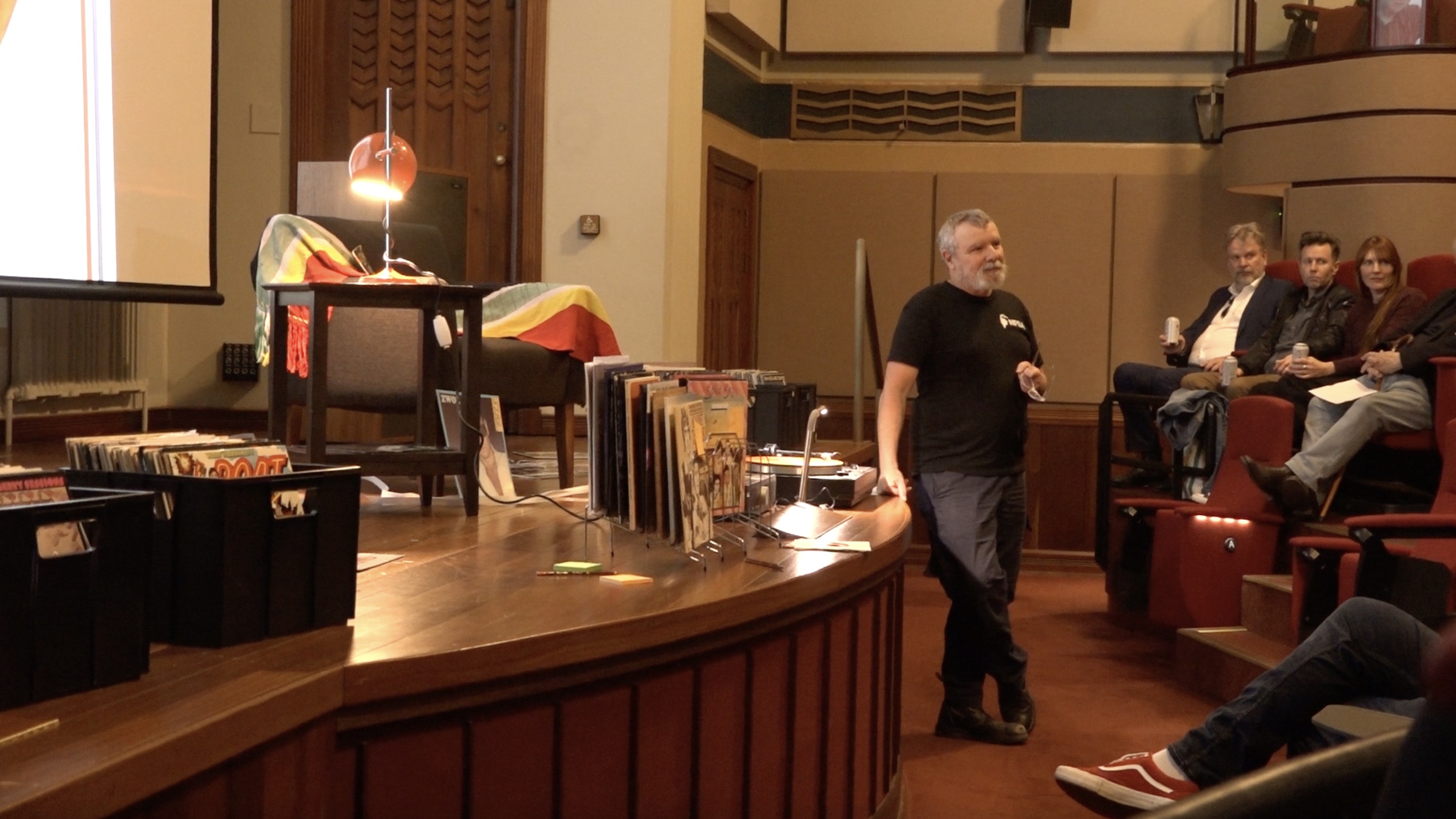
“Some of them are nostalgia, some of them are people bringing in music from the collection of their parents or grandparents who may have passed away, so they have really strong connections to family, friends or a time in their life,” he says.
“What we hear over and over again is stories about people and why they’re connected with this music – because it reminds them of someone or a time in their life with their family.”
Not only does the Vinyl Lounge offer Thorsten a chance to hear some new music, but as the host it means he gets to witness, sometimes unintentional, responses to each song.
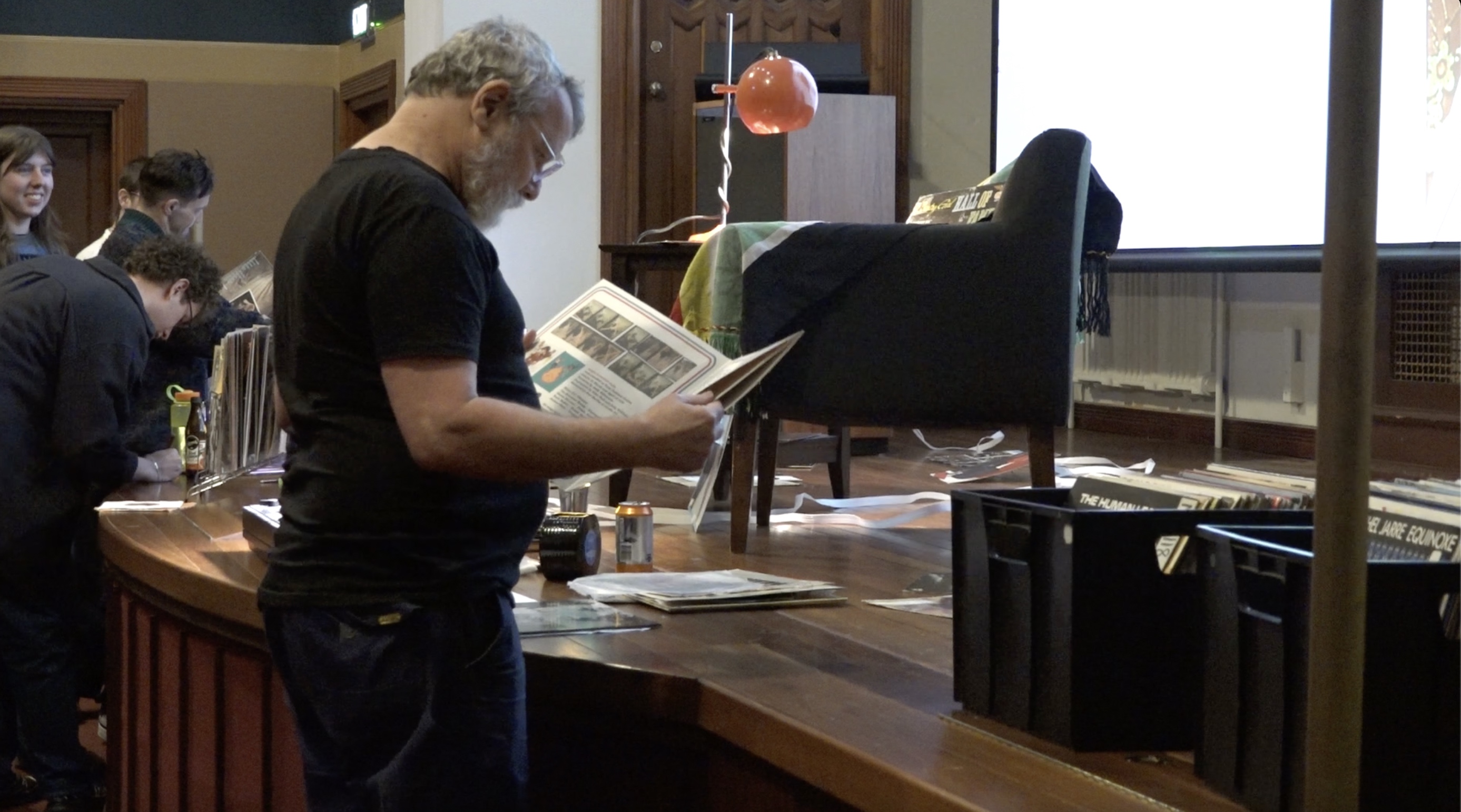
“One of my favourite parts about Vinyl Lounge is when the music plays, I get to go off to the side and watch the audience and how they’re listening – whether they’re closing their eyes or singing along.”
“You can see people being surprised, or moved or shocked by what they’re listening to.”
Thorsten has seen many people’s emotions change based on a song that’s playing – something that he’s also experienced on a personal level.
“I think it happens all the time – mostly in a good way. Those feelings of every once in a while, just sheer joy at hearing something or remembering something whilst listening to music,” Thorsten says.
“I think music has the ability to do that almost every time.”
Dr Sandra Garrido, senior research fellow at the University of Sydney, has studied the effect of music on emotions, and says there’s a number of theories that explain the connection.

“There’s physiological responses that cause an emotional response, so things like entrainment, which is when your physiological systems synchronise with the beat and then that has an effect on your physical arousal levels like how alert or how sleepy you feel.”
“Then there are more cognitive mechanisms which are to do with memories we might connect the music with, or things we know about the artist or what the lyrics mean to us.”
So while it may seem like our emotions are changing independent of our conscious, the body is constantly adapting based on external stimulants – like the tempo or beat of a song.
If you’ve ever found yourself tapping along to a song without realising it, that’s entrainment at work!
“Our bodies automatically synchronise with a beat when we hear it … if you hear a beat you can’t help tap your foot or nod your head in time with the music … our internal systems (breathing, heart-rate) tend to synchronise with an external beat,” Dr Garrido says.
“There’s even some research suggesting the way our neurons are firing also tends to synchronise with an external beat and because that happens it has an impact on the emotions we’re experiencing.”
For as long as possible, people have been curating lists of songs that work well together, often because they have an undercurrent of the same emotion.
Whether it be a favourite song, something full of nostalgia, or lyrics that ring true to a situation, music provides a useful tool to process emotions.
“If you’re dealing with really intense emotions, sometimes … it can be more helpful to focus on the thoughts behind the emotions you’re experiencing and try find music that perhaps directs your thoughts in a more helpful direction,” Dr Garrido says.
“Sometimes emotions are just too intense in the moment and at that point distraction or tapping into something that will help you feel calmer can be good, but ultimately … music can be used to shift your thinking or to process what you’re going through.”

Sometimes though, no matter how upbeat a song is, you may find your emotions remain the same. This comes back to the physiological and cognitive responses.
Often the cognitive mechanism overrides the physiological.
“Let’s say there’s a really upbeat song that’s quite energetic but the last time you heard it was at the funeral of a friend,” Dr Garrido explains.
“The physiological response to the music might be to make you feel energised, but the cognitive associations you make with the song can override that energising effect of that music.”
The memories we connect with music and songs can also be explained by the ‘Darling They’re Playing Our Tune Theory’, coined by J.B. Davies in 1978.
This theory is when “particular songs come to be associated with a moment or memory in our mind, so when you hear that particular song it triggers memories of that emotion and can take us back to the emotion we were experiencing at the time,” Dr Garrido says.
It’s one of the cognitive mechanisms of the brain linking a memory with music.
Listening to music in a large crowd not only broadens the variety of music an audience member is exposed to, but it can also create amplified emotions and different psychological reactions.

Within our brain we have mirror neurons, which are behind our capacity for empathy.
When we see someone experiencing an emotion – let’s say a friend is upset and crying – the neurons trigger our face to unconsciously mimic or reflect their facial expressions.
This change can induce a weaker state of the emotion your friend is experiencing.
“When we are in a group of people and we’re listening to music, those processes are happening; you’re around a lot of people expressing their emotions to the music and our brains are picking up the cues … and reflecting them,” Dr Garrido explains.
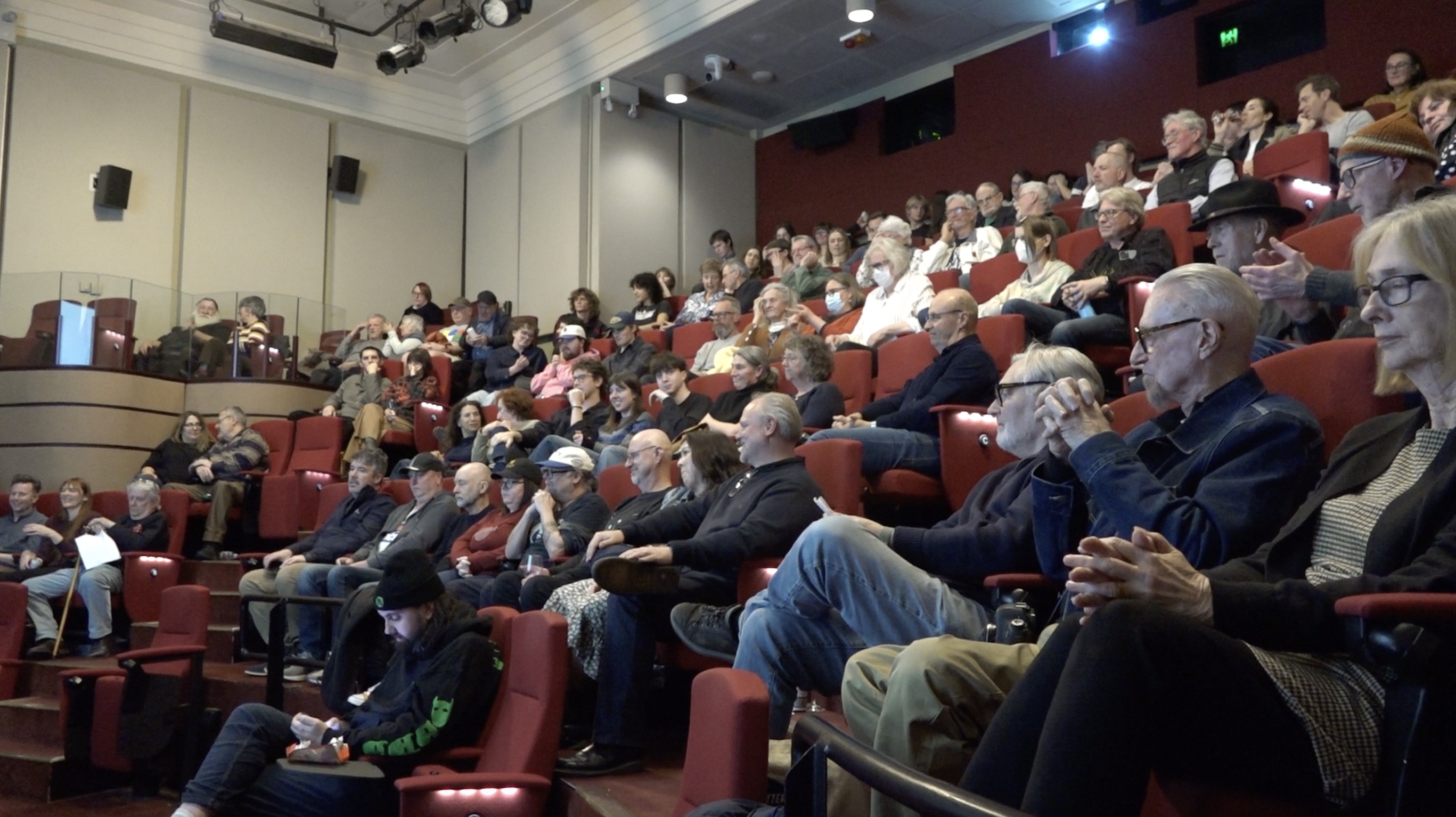
“We tend to often experience bigger emotional responses to music when we’re listening to it in a group.”
Thorsten believes the Vinyl Lounge has become a supportive community which leads to those mirrored emotions.
“People have a really strong desire to share what they love with other people, music in particular. The amount of times you hear a song … and go ‘I need to have someone else listen to this’, there’s a power in sharing music that’s a really strong drive for people [to come].”
There’s still so much more research to happen in this space, but it’s clear the relationship between music and emotions runs deep.
In fact Dr Garrido and a team of researchers have developed an app called Moody Tunes that invites you to find which songs help you feel better as you listen to the music you love in Spotify!
Not only do you get to track your relationship with music, but the data can go towards Dr Garrido’s research.
So, the next time you’re listening to a song, pay close attention to how you’re feeling, because you might find, as Kiki Dee says, you’ve got the music in you.
Original photos by Tia Priest-Willimott