
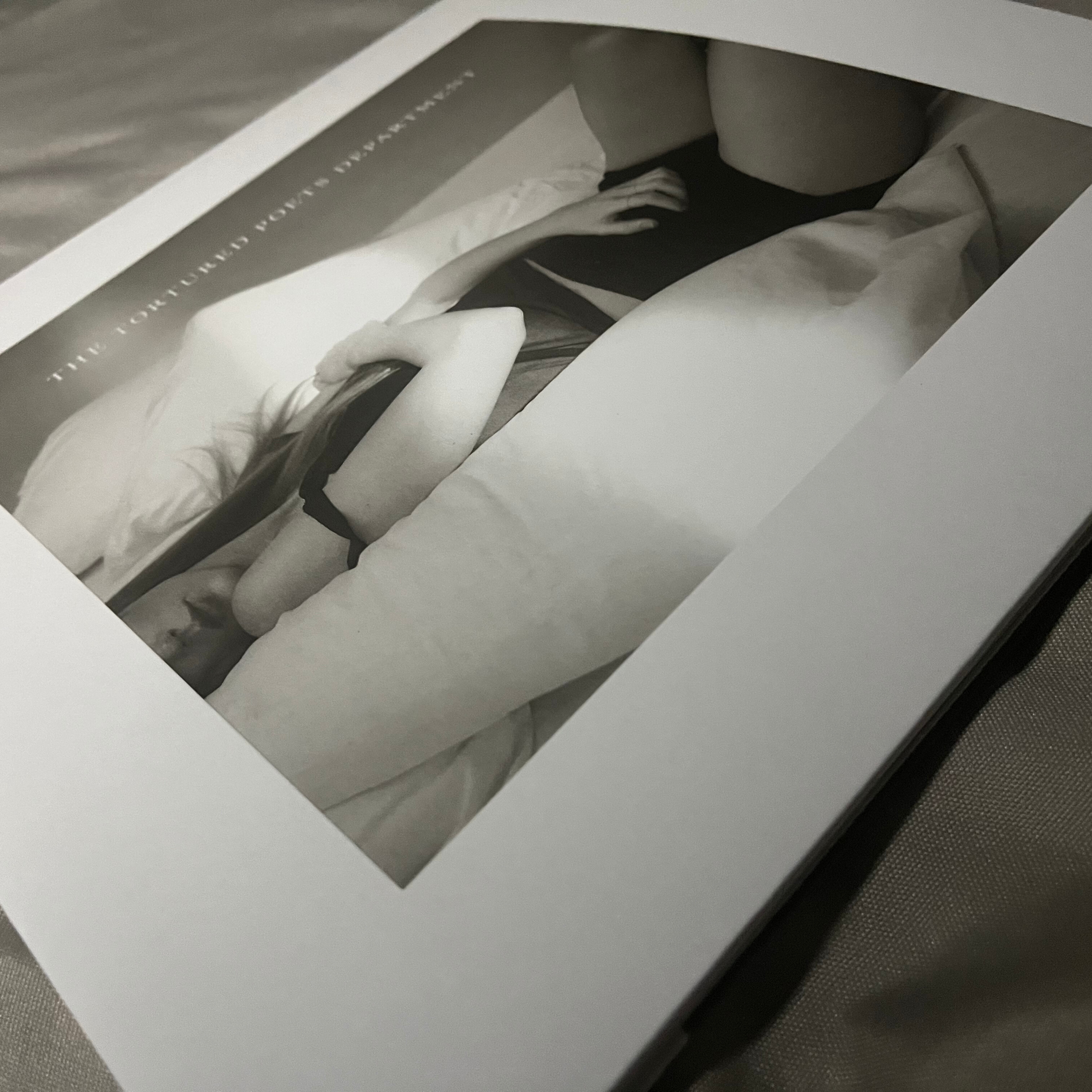
‘The Tortured Poets Department‘ (TTPD) is the eleventh full-length studio album from Taylor Swift. It’s been only 18 months since the release of her last album, ‘Midnights’, and she’s managed to churn out over three hours of music in the interim and taken on the world in her recording-breaking ‘Eras Tour.’
Despite all that Swifties have been spoiled with, this album was still eagerly awaited due to the unique and unprecedented place she’s come to occupy in the cultural zeitgeist.
There was certainly a lot of expectations riding on this album.
It’s Swift’s first body of work after getting out of a six-year relationship with ex Joe Alwyn and it appears she’s used this project as a kind of cathartic release. It has a bit of a different edge to it than what we’re used to with Taylor’s music, and seems almost designed to confuse people who aren’t ready to listen to what she’s saying.
In a summary poem written into a booklet that comes with the vinyl copy, Swift calls it a “debrief, a detailed rewinding/for the purpose of warning/for the sake of reminding.”
There are numerous ways we can take this statement, but one thing’s for sure, Taylor retreads a lot of inner turmoil over the past year, from relationship losses to an overwhelming level of worldwide fame.
TTPD is a very self-aware album. Its a project that sees the global superstar grappling with the widening gap between ‘Taylor Swift’ the artist and ‘Taylor Swift’ the phenomenon.
While I certainly expected this album to focus on lost love I was quite surprised that a great deal of the songs on TTPD actually appear to be about Swift’s very public and short-lived relationship with Matty Healy, the frontman of British pop-rock band The 1975. Her relationship with the polarising singer-songwriter led to one of the biggest PR nightmares of her career and saw her cop a lot of criticism from even some of her most diehard fans.
In the several tracks that are quite obviously about Healy she talks of a self-sabotaging artsy guy archetype that swept her up in a whirlwind romance just to leave her ‘Down Bad’ and even more heartbroken after the end of her long-term relationship.

But if there’s one thing that’s abundantly clear on this album, it’s that Swift is finally sick and tired of everyone who thinks they know what’s best for her, even if making her own decisions lead to bad outcomes.
There’s a dawning realisation that despite all the granular and over-worked detail she has put into sharing her intimate thoughts and personal life, a lot of it appears to have flown over everyone’s heads. Taylor is quite obviously showing a lot of venom here for those who have claimed ownership of her art and life, especially in tracks like ‘Who’s Afraid of Little Old Me?’ and ‘But Daddy I Love Him.’
TTPD is the most nihilistic and angry Swift has ever been which may come as a surprise for those aware of the history behind her sixth studio album ‘Reputation.’ Even though much of that album revolved around dealing with toxic industry drama and a deep desire for revenge, it’s obvious that she’s filled with hope about the deep love she’s finally found. There’s a feeling that romance can still save her.
In TTPD however, we only see small glimpses of a starry-eyed Swift in songs like ‘The Alchemy’ and ‘So High School’ which are the only two love songs in an album otherwise filled with anger and hopelessness.
There is no resolution here, there’s little hope. She still tries to find love but often to the detriment of her own sanity. It’s a conversation about having to face reality, lost love, mental illness, loneliness and even addiction.
From the reactions I’ve seen thus far, it appears TTPD is one of Swift’s most polarising albums and I can certainly see why. Her songwriting is captivating in places and extremely flawed in others. She’s produced some of her best work to date on this record, but it’s sprinkled amongst some tracks that desperately needed a critical eye to glance over them.
While I don’t think TTPD is on par with some of her more polished albums like Folklore, 1989 and Red it’s certainly her most challenging, complex and ambitious piece of work.
‘All’s fair in love and poetry’
‘Fortnight’ is a decent opener painted with a Post Malone feature that sets up both the timeline and stakes of the upcoming two hours.
I love you, it’s ruining my life
Track 1, Fortnight
This prologue lets us know exactly what Swift’s frame of mind is coming into this project and from here we see her assemble an archetype of two ex-lovers that have left her feeling hopeless and broken.
This album represents an unprecedented level of vulnerability from Swift which comes out in some of her most heartbreaking lyrics in ‘loml’, ‘So Long, London’ and ‘The Smallest Man Who Ever Lived.’
‘loml’ is one of the best clear-cut ballads on the album, even if the piano chords are a bit basic. It’s moving and compelling, delivering us a story of a failed romantic relationship with the person she thought was her soulmate. There’s something quite beautiful about its simplicity and starkness with Swift’s breathy, dramatic vocal delivery painting us a vivid picture of ‘phantom lovers’ dancing on a terrace whose relationship was doomed to fail.
‘The Smallest Man Who Ever Lived’ is equally a standout. This time we see Swift take aim at Healy with a no-holds barrage of verbal fists. Taylor’s anger and sense of betrayal is all too evident in the bridge, which, dare I say, may sit up there in the Swiftie Hall of Fame with ‘The Other Side of The Door’.
"And in plain sight you hid,
But you are what you did,
And I'll forget you but I'll never forgive,
The smallest man who ever lived"

- Track 14, The Smallest Man Who Ever Lived
Also making a prominent feature in this album are Swift’s own tortured feelings about her public image. ‘Guilty As Sin?’ sees her crucified by the public for her decisions in her personal relationships and ‘Who’s Afraid Of Little Old Me?’ paints a similar image, in a way that is probably a bit too theatrical.
The Taylor in ‘I Can Do It With a Broken Heart’ is a bit more fun and sarcastic, leaning into her ‘1989’ pop days while portraying herself as a shimmering zombie on a world tour, smiling as she slowly dies inside.
‘Clara Bow’ really shines as the best example of Taylor’s exploration of pubic scrutiny. Using the namesake of the 1920s silent era film star, whose personal and romantic life faced so much public attention that it drove her to be institutionalised. There’s also some poignant commentary on the never-ending industry search for the ‘next big thing’, especially when it comes to female artists. It’s very interesting concept to think about, because if that’s true for Swift at the top of her game, what does it say about everyone else?
‘Florida!!!’ is one of my favourites on TTPD and might just be the best musical collaboration she’s done with another artist. We get some high-camp melodrama with a feature from Florence Welch (Florence + The Machine) who has great musical chemistry with Swift. They’re able to match each other both in volume and presence, complimented by some bombastic percussive beats in the background.
Taylor Swift needs an editor …
There is a lot of meta-text and tongue-in-cheek writing on this record, so there is certainly an argument to be made that those dismissing the lyrics are simply not digging into what Swift is trying to say here.
Some of the critiques I’ve seen of the writing on this album ironically seem to be feeding off the purposeful melodrama in the lyrics, and illustrating Swift’s point for her.
Like with all satire, you run the risk of people not being in on the joke, and in some ways it’s the worst time she could’ve released an album given the height she’s reached in her career.

But even if we’re taking a good faith approach to analysing Swift’s writing here, it’s painfully obvious at how clunky the lyrics and song structure are at certain points.
Swift is in dire need of an editor or at least someone on her production team to tell her “no.” There are a couple of songs on the record where the lyrics are just so jam-packed that it would probably have worked better as literal poetry instead of a musical piece.
Perhaps Taylor is trying to adapt to producer Jack Antonoff’s melodic cadence by giving us this sprawling delivery of manic thoughts that ultimately come out as unpolished in places.
The lyrics on the title track, ‘The Tortured Poets Department’ are probably the worst example of this type of disorganised songwriting that Swift has been dabbling with since Midnights. The lyrics read like an attempt at delivering a chaotic ‘slice-of-life’ situation that you would expect to hear in a Phoebe Bridgers song.
The problem is it just doesn’t seem to work for Swift’s musical aesthetic.
Without even hearing the way Swift delivers the following lines, written down it appears clunky and awkward.
“You smoked and ate seven bars of chocolate,
We declared Charlie Puth should be a bigger artist,
I scratch your head, you fall asleep
Like a tattooed golden golden retriever”
– Track 2, The Tortured Poets Department
… And to take a break from Jack Antonoff
The most painfully obvious thing I’ve taken away from this album is that Swift’s partnership with Jack Antonoff is not yielding the same results it used to.
Antonoff clearly has a signature style that mostly pulls from atmospheric 80s pop-synth music and while that’s not in and of itself a bad thing, it’s become a predictable instrumental formula that’s not built to challenge Swift or pull her out of her comfort zone.
TTPD seems to be suffering from the same numb rhythm that we felt creeping in, in some tracks on ‘Midnights.’ Antonoff produces around half of the songs on this record, with the rest of the album’s production can be largely attributed to Aaron Dessner of ‘The National’ fame. And it’s painfully obvious when Antonoff takes the wheel, inserting some hollowed-out percussion and piano chord progression that never really reach the peak of what they’re building to.
While this is not to say Antonoff’s style is always bad; it certainly works for some tracks like ‘Down Bad’ and ‘imgonnagetyouback’.
It just sounds very out-of-place in some of her more vulnerable songs like ‘So Long, London’ which would benefit from backing instrumentation that deliver the same gut-punch as the lyrics.
It also feels like there’s a big mismatch going on here, because some songs on this record are just screaming out to be country songs, or at least feature some bright guitars and punchy drums. Tracks like ‘Guilty As Sin?’, ‘Fresh Out the Slammer’ and ‘But Daddy I Love Him’ would feel more alive with lively backing instrumentation that can be heard on older albums like ‘Fearless’.
But before you think I’m being toon harsh on Taylor, I’m only voicing these concerns because I know what amazing work she can create once a bit of polish is added.
This is also not to say that there aren’t great songs on this album. Amongst all my criticisms, there are some true gems on this record. Unfortunately most of them are not found in the tracks with a big Antonoff influence.
The Anthology
The last time Swift released an album, ‘Midnights’, she surprised everyone by dropping a ‘3 A.M. Edition’ later that night loaded with new tracks.
This time however, three hours was simply too long for Swift to wait.
Two hours after the release of TTPD she announced a secret ‘double album’ culminated in a run-time of over two hours and a whopping 31 songs to boot.
The second half of the album, titled ‘The Anthology’ is primarily produced by Aaron Dessner who’s best known collaborations with Taylor stem from her ‘Folklore’ days.

‘The Antholog’y is a big step up from the main album, filled with soft focus and elegant polish that’s paired with writing filled with more grace, despite some awkward idiosyncrasies here and there.
It taps into the more delicate, acoustic side of Taylor’s songwriting that many fans, including myself, have come to enjoy from her indie-folk sister albums ‘Folklore’ and ‘Evermore.’
Sonically, this half of the record also sees improvement. Swift’s vocals sound more natural and intimate, and we’re freed of the reverbed-out 80s drums that Antonoff is so famous for. I found myself coming back to these tracks far more than the main album and really came to enjoy the stories Swift has built in this half of the record.
The tracks here are a lot less commercial. They’re more abstract and feel more centred in where Swift is at in here life now. It’s very clear this half of the album was written from when she was settling more into her relationship with Travis Kelce, and the tempestuous weight and emotional traction of her last romances had faded.
‘The Black Dog’ is our introduction to ‘The Anthology’ and is a crucial ballad for understanding the last bit of lingering hopelessness she’s feeling about her relationship with Joe Alwyn. It pulls inspiration from the post-industrialism of the 1970s, something I never expected to hear on a Taylor Swift album, but am ever grateful I did. We hear Swift’s rage explode in blaring shocks during the chorus that revolves around a central narrative of an unhealthy obsession with an ex-lovers life and relationships.
‘I Look in People’s Windows’ is another great track that once again leans into themes of unhealthy obsession, albeit in a far softer tone. This time Swift finds herself gazing longingly into the homes of strangers, constantly on edge she may catch the gaze of her former lover to find one last moment of connection. The heartbreaking lyrics are further punctuated by the gorgeous composition, which wouldn’t sound out of place on a Sufjan Stevens track.
"I look in people's windows, transfixed by rose golden glows,
They have their friends over to drink nice wine,
I look in people's windows, in case you're at their table,
What if your eyes looked up and met mine one more time?"
- Track 25, I Look in People's Windows
There are some interesting storytelling concepts here, well exemplified in ‘The Prophecy’ where Taylor opines about her loneliness almost as if it’s come from some higher power, and no matter how hard she begs, nothing will change.
From there, we lead naturally into ‘Cassandra’ where Swift fleshes out the old Greek myth of the Trojan priestess who spoke true prophecies that were never believed. It comes to feel like the spiritual successor to ‘Mad Woman’ and the misogyny women often face when sharing experiences in the public realm.
‘The Albatross’ is another great example of the wistful abstraction that Swift is leaning into in ‘The Anthology’ which once again dives into the idea of others thinking they know what’s best for you and how much her reputation precedes her.
But ‘Peter’ is the showstopper in this half of the album, harkening back to her ‘Folklore’ days where Swift introduced her imaginings of Peter Pan and Wendy. This time Taylor tells the story from the perspective of the young girl who was whisked off to Neverland. Swift talks of a lover who left her with promises of reuniting one day after leaving to find himself and finally ‘grow up.’ Now. that girl has long grown up and facing the bittersweet moment of forcing herself to let go of something that will never return.
"You said you'd come and get me, but you were twenty-five,
Lost to the 'Lost Boys' chapter of your life,
Forgive me Peter, please know that I tried.
To hold on to the days when you were mine"
- Track 28, Peter
It’s a beautiful growth from ‘Cardigan’ where we now see her not trying to change the ending any more – she’s now simply wondering when she gets to begin her own story.
‘The Bolter’ is also a standout. It tells the story of a woman with the reputation of a serial monogamist, falling in love quickly but bolting at the first sign of a crack in the floorboards. Its a gorgeous little folk song and is one the most endearing and snappiest tracks on the entire album. Hearing what fantastic work she can put out, it all the more makes me wish that some of the songs in the main album felt this sharp, pointed and well executed.
The only track that drags ‘The Anthology’ down is ‘So High School’ which is clearly the Travis Kelce love song. Its got the instrumental nails of 2000’s teenage rom-coms which for all its flaws are really felt here. It’s the closest Taylor has gotten to rock in years. and it’s very obviously about living out the fantasy of being with the high school football star. While I enjoy the aesthetic she’s gone for here there are definitely a few cringe-worthy lines in here, even if she’s not being entirely serious.
"You know how to ball, I know Aristotle,
Brand-new, full throttle,
Touch me while your bros play Grand Theft Auto"
- Track 22, So High School

‘The Tortured Poets Department’ is ultimately an album that revels in misery, sometimes in ways that completely miss the mark, and in others that translate into some of the best work Taylor Swift has ever put out.
Nonetheless, I’ve really enjoyed dissecting this album and unravelling some of the more creative storytelling devices Swift has used here. Both the main album and ‘The Anthology’ feature some great songs that shine for different reasons, but a few could definitely be cut for the better. If the whopping 31 songs on this record were cut down to about 13, we could have easily got one of her best albums, provided of course, you’re willing to accept the tragic humour and meet her in good faith where she is.