
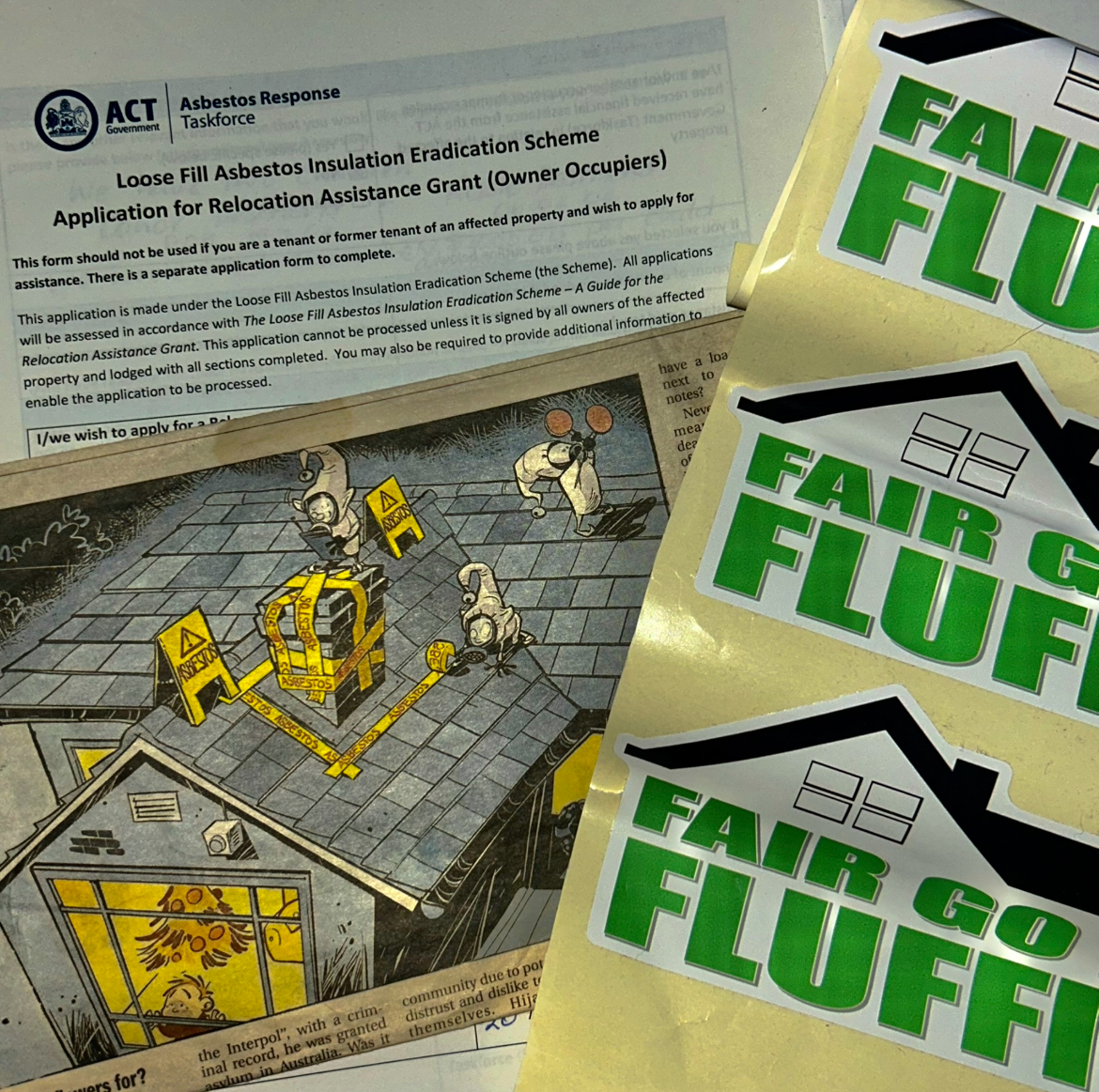
Just over ten years ago, more than one thousand Canberrans were sent a letter that changed the course of their lives.
This letter outlined that their houses – their homes – were contaminated with deadly loose-fill asbestos, installed as insulation by a Canberra company, Mr Fluffy.
The financial, physical and psychological damage caused by the asbestos crisis still affects countless lives today.
The beginning of the asbestos crisis
Canberrans know the cold, and this is how the Mr Fluffy company was able to access the market, selling to thousands of families. Their 1960s-1970s marketing implied that if you needed something to retain the winter warmth inside your home, Mr Fluffy’s Asbestosfluf had you covered.

According to Cancer Council, asbestos is an incredibly dangerous substance, as the fibres can be easily breathed in and result in being trapped in the lungs. Asbestos exposure increases the risk of developing mesothelioma cancer in multiple parts of the respiratory system and other areas of the body.
The type of asbestos predominantly used by the Mr Fluffy company is known as ‘amosite’. Amosite has straight fibres, meaning it is easier to inhale. Additionally, amosite has no bonding agent which means the straight fibres spread easier and are more likely to cause harm.
This meant that the thousands of families who bought Asbestosfluf had, unbeknownst to them, just infected their home with a form of potentially deadly poison.
When the dangers of Mr Fluffy became known, major action had to be taken by the Government.
The Loose Asbestos Insulation Removal Program was, therefore, announced in 1989 which was meant to survey, seal and remove loose fill asbestos from the known ‘Fluffy’ houses across Canberra.
William (Bill) Ryan’s home was one of the houses in the original clean-up. After serving in the military for many years and living all around Australia, Bill and his wife relocated to Canberra.
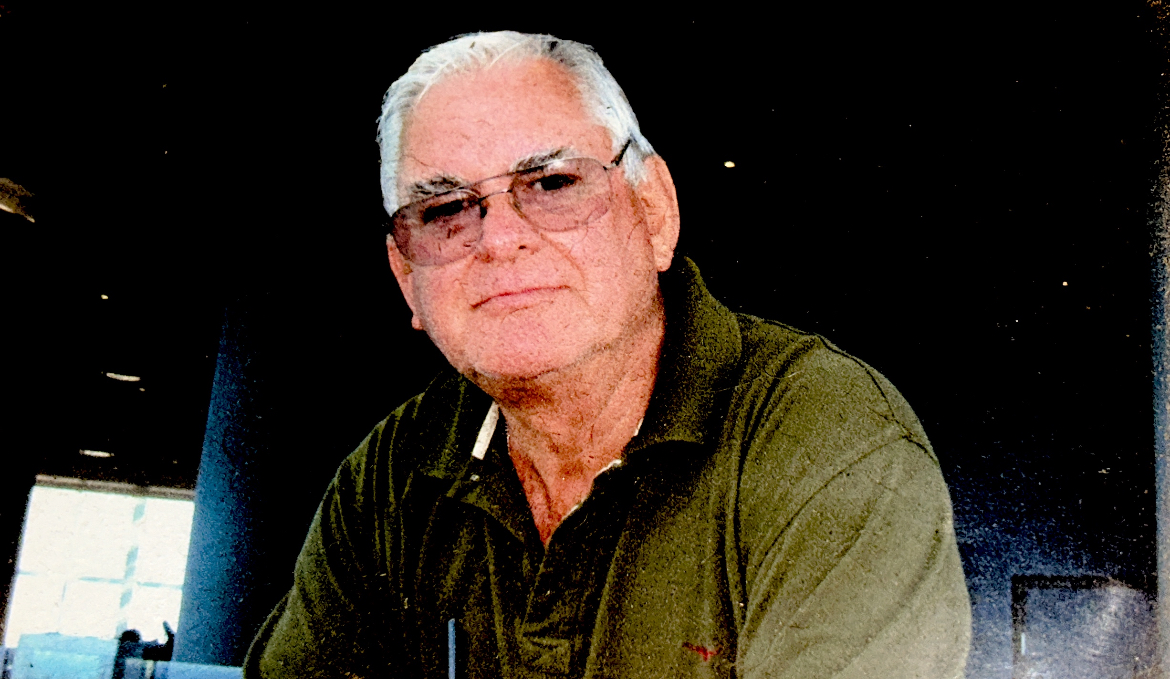
He remembers purchasing his house in the early 1990’s, and being told there was one condition to the sale.
“We were just trying to buy a house when they told us there was one condition to moving in … six weeks after purchase, the government would relocate us and come clean the asbestos out … so they did. Then a few weeks later, they moved us back in and told us we were safe to live there.”
Bill says that years after the clean-up, he sold the house to his son and daughter-in-law, under the impression it would be their forever home. However, this was not the case. His son and daughter-in-law were one of many who received a dreaded letter in 2014.
2014: the letters and the aftermath
In early 2014, the ACT Government discovered that rather than being contained in the roof cavity, amosite’s lack of bonding agent meant the fibres had actually spread throughout peoples homes, therefore making it impossible to remove.
Over 1,000 families were sent letters outlining the dangerous asbestos they shared their homes with. These letters detailed the location of amosite, which was mostly now present in wall cavities and under floor spaces.
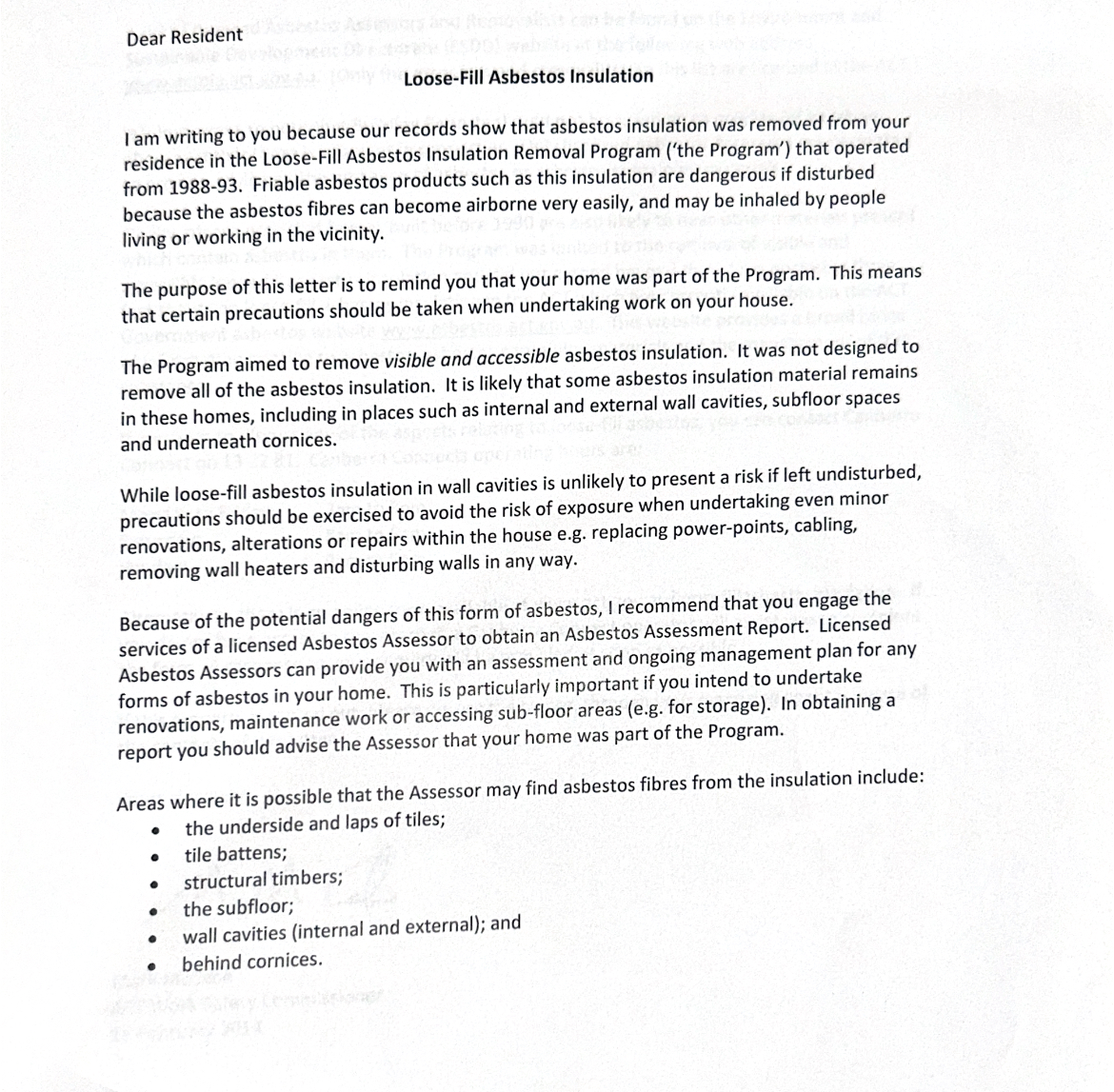
Furthermore, the letter indicated that some asbestos was fine to be left, as long as it wasn’t disturbed.


However, prior to being informed of the danger of their homes by the this letter, many ‘fluffy families’ had already undertaken their own renovations, putting themselves, and the tradespeople, in danger.
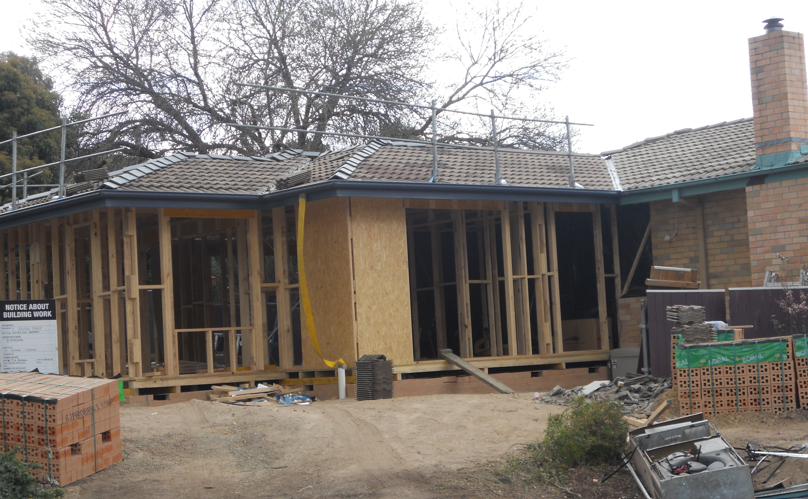

Felicity Prideaux and her late husband Rob lived in one of those 1,049 homes and her life changed in 2014.

She vividly remembers the emotions she felt after receiving the letter.
“Firstly, the stomach just went into an absolute churn, then I started questioning how this happened. What are they talking about? It was all cleaned up … then it was, oh my god … how dangerous is this? We had friends housesitting for us, we had grandchildren in the house.”
Felicity’s reaction was a shared emotion felt among many families at the time. Soon after, she started to wonder what her future would look like.
For many families, leaving their homes also meant leaving neighbours and school districts they shared memories with. As well as leaving friends who lived nearby. This was more than losing a house, it meant losing their community.
The Loose-fill Asbestos Insulation Eradication Scheme, more frequently known as the buy-back scheme, was announced in late 2014. This meant the ACT Government would acquire, demolish and safely dispose of the affected homes.
Although marketed as a voluntary buyback scheme, many, such as Felicity, felt their hands were tied.
“I remember thinking that they can’t throw us out of our home. They [the ACT Government] sold it to us … allowed it to be sold. The government’s got their fingerprints all over this … they allowed us to buy a house that wasn’t safe.”
Felicity recalled the day her house was demolished, even though she chose not to be present.
“I couldn’t go so a fellow-asbestos homeowner offered to go for me. She took photos and told me that she would share them, whenever I felt ready … She kept a little diary for me.”


Felicity now speaks out about the asbestos crisis as she understands the fear other families face.
“I was at meeting with a few ‘fluffy families’ and this dear little lady said to me, ‘I just want to say thank you … for everything you do … I couldn’t do what you do.’ I said, ‘I don’t really do much I’m just a loud mouth, but I’m sure you could.’ That’s when she told me she was too afraid to talk … because of the Government. She would have been at best in her late 70s, and she was frightened. Just horrific.”
The following years
The demolition of the houses did not mean ‘crisis averted’. Many families are left to bear the weight of asbestos through psychological, physical and financial repercussions.
A study completed by the Australian National University in 2024 highlighted that the risk of mesothelioma was higher for men who had lived in Mr Fluffy houses. Additionally, the study found both men and women living in ‘Fluffy’ houses were at greater risks of developing other cancers, such as lung or colorectal cancer.
This statistic lingers in the mind of victims as mesothelioma can take upwards of sixty years to develop after asbestos exposure; causing generations of fluffy families to be at potential risk.
Wendy (not her real name) is a another victim of the Mr Fluffy crisis. She lived at her asbestos-ridded home with her husband and two children, aged 10 and 11.
“When we got the results of the asbestos report we were horrified … asbestos was present in both of our kids rooms. We had just completed major renovations, knocking walls down, including in their bedrooms. I shut the doors to their rooms that day and never looked back.”

Wendy is concerned for her children’s futures as they were so heavily exposed.
“It is not so much myself that I am concerned about, it’s my children. They lived in those bedrooms for ten years. Now they’re grown ups but it will follow them their entire life. Any cough, any sickness, it scares me.”
Amosite asbestos is still being found in Canberra homes years after the ACT Governments buy-back and demolition scheme. Three more cases of asbestos were found in houses during 2020, and many Mr Fluffy victims don’t think they’ll be the last.
After receiving the letter in 2014, Felicity and Rob, as well as Bill’s son and daughter-in-law relocated to NSW. Both families moved from Canberra because they felt the crisis and the victims were treated unfairly and dishonestly by the ACT Government.
A recent investigation completed by Former Chief Minister of the ACT, John Stanhope, revealed ‘fluffy families’ were not fairly compensated for their losses. This investigation revealed each family should have received, on average, an extra $300,000 from the ACT Government.
This financial loss, alongside the physical and psychological detriments, continues to impact victims today.
Mr Fluffy victims, such as Bill, Felicity and Wendy want Canberrans to remember this crisis did not end with the demolition of their homes — it continues for the people who lived through it, shaping their families’ futures.
Original photo by Rosie Desmond