
As Europeans arrived on Australia’s shores, they brought with them the political cartoon.
These editorial prints have helped cover Australian news since before the colony of New South Wales was even founded, with satirists in England already providing commentary on their parliament’s decision to send convicts to the other end of the world.
As colonial Australia matured into the 19th century, the print news traditions pioneered by the English in the 18th century soon followed, and the political cartoon became a staple of the Australian news diet.
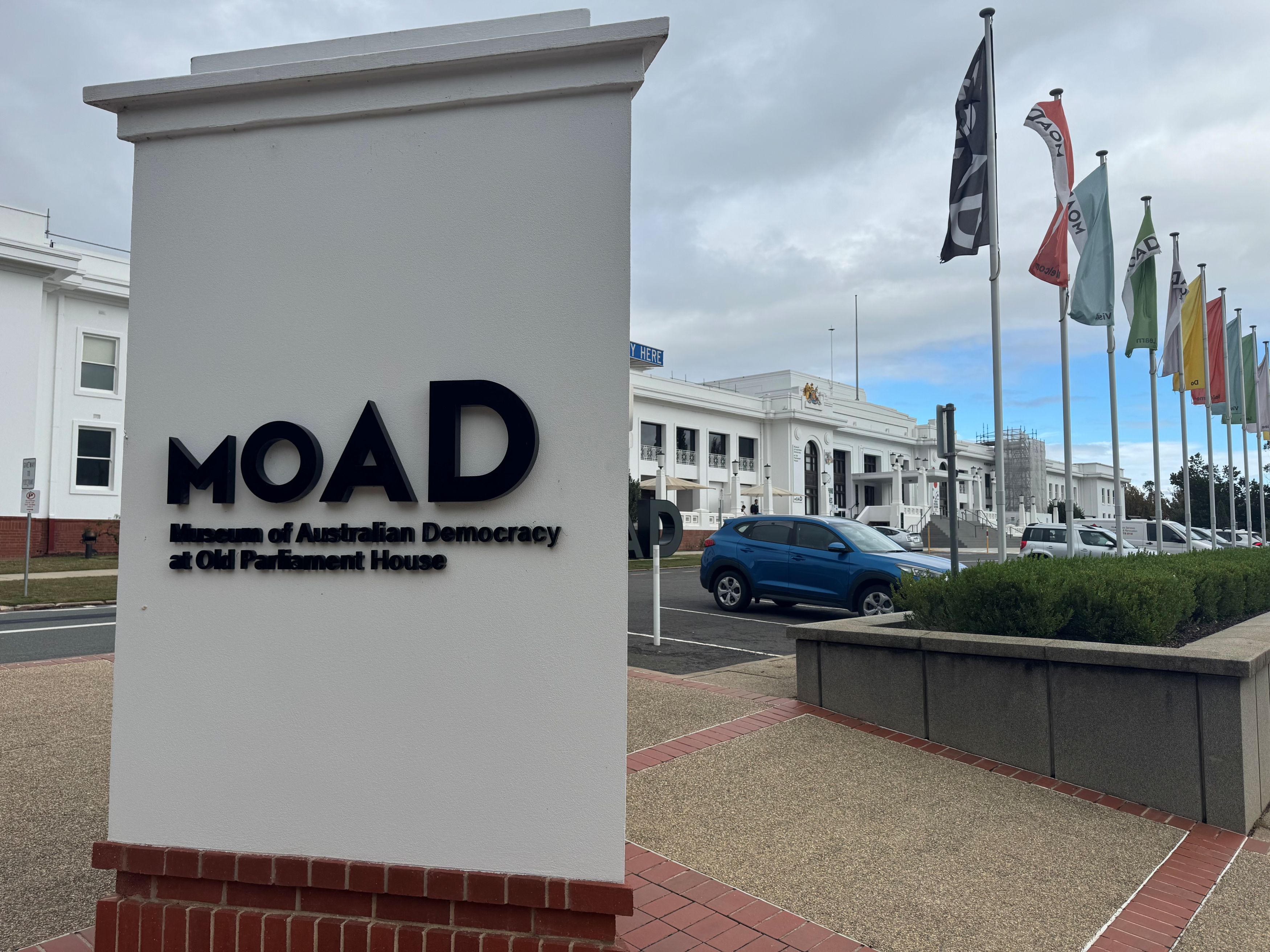
For a tiny fraction of this 200 year history, a select few of these cartoons have been put on display in our national capital. For multiple decades, the Behind the Lines exhibition, today operated and hosted out of the Museum of Australian Democracy at Old Parliament House, has been an annual celebration of the craft of illustrated political satire.
Each year, the major events of politics and life in Australia are catalogued and remembered via the mass media.
This tradition, however, is practiced today in an incredibly different world. The broadsheets and magazines that cartoons had as their homes have shrunk in relevance in the modern age, and the means to broadcast opinion on the rolling on of the world around us is no longer the occupation of a select few.
This evolution is one understood well by Guy Hansen, who has spent many years of his professional life cataloguing political cartoons.
Hansen was an early organiser and curator who worked on the Behind the Lines exhibitions from its inception in the 1990s until 2014 alongside the National Museum.
He spoke to me about the origins of the exhibition, his perspective on curating political satire for the public, and the nature of appreciating cartoons as art.

Q. You’ve been working in curation of exhibitions for quite a while. Can you give a background around what brought you to working for the National Museum and the origins of the exhibition?
A: I started work at the National Museum of Australia in 1991, and my background was as a historian working with collection material cataloguing. The National Museum had a collection of cartoons which had been put together in the 70s and 80s, going back into the 60s and earlier.
In I think 1992, the Government decided to reopen Old Parliament House. They asked the National Museum of Australia to do some displays, and the first display in the old parliamentary library was one called the art of politics, and that was based on the National Museum of Australia’s cartoon collections.
I was working at old Parliament House at the time and they realised they had to put together fairly quickly a programme of exhibitions.
I proposed that we do an annual exhibition of political cartoons and that we would run a competition where we’d invite cartoonists to enter I think it was something like five cartoons.
After we collected that from cartoonists across Australia, we’d make a selection of 150 and then we’d select the best political cartoon. That would be a prize awarded to a cartoonist and also a People’s Choice Award, which would be voted on in the exhibition space, and that was the model it worked on through the ’90s into the noughties.
Q. Was it a very unique opportunity being able to display political cartoons in what used to be the halls of power?
A: Yeah, absolutely. The context of old Parliament House made it very attractive. There were a number of years where the exhibition was there and then was at the national museum before the project was fully transferred over to them.
I thought it would be a good idea for old Parliament House as it was a really accessible way into political history. The topic can be quite dry, but if you tell them you’re talking about cartoons then they like the humour, and then they get into it.
Q. What considerations go into curating the political cartoons covering the touchstones of a whole year and how did that change over time?
A: I would let the cartoonist submit their favourite works, or if they didn’t want to choose them I’d choose some works for them. Sometimes when I’d go to see them, they’d just push a box of cartoons to me and say take what you want, but sometimes they would want to choose them.
Back when there was original work done, I’d actually go turn up at their office and talk to them about their year and what they liked and then make a selection and bring all that back to Canberra.
Then I would book a conference room and I would lay out the cartoons and consult with other staff to try and find the ones which fit our criteria.
So we kind of had a matrix like what was aesthetic (what demonstrated a really high level of skill and craft), what was funny, what was insightful, and what reflected what was going on across Australia, where cartoonists really had a lot to say.
The idea was as you walked around, the cartoons would all have something which really made them stand out. Over a whole year, cartoonists publish a lot of work which is OK or not too bad, but they will have some absolute fantastic cartoons and they were the ones I tried to find.
Some of the illustrators, for example, they didn’t do funny cartoons, but they just do a really interesting illustration or caricature, that isn’t so much a belly laugh but rather “ohh that’s a really impressive drawing or that has an insight about the person.”
The 90s was a great time to do that, because the print media in Australia was still very strong. I didn’t know it at the time, but by the time we got into the noughties you really started to see that traditional cartooning coming to an end in some ways as we were moving to a new age of digital media. So the number of people doing original illustrations shrunk, and its prominence in the newspapers started changing.
Q. Is the time working on the exhibition in the ’90s what you look back on most fondly?
A: I think it was the right time to do it. You sometimes hear people talk about there being a golden age of cartooning, which would be the 1890s right up to World War 2, where you had magazines like the bulletin and then Smiths Weekly.
But for me, I actually think the golden age of cartooning was really from the 1970s through to the 1990s, where cartoonists sort of became household names and people would buy newspapers just to see Ron Tanberg or Alan Moyer or Bill Leak. They were well known personalities, and that was a really big part of how newspapers marketed themselves.
But once you got to the end of that period where digital media really took over, their profile really reduced. They still have profile through insiders with Mike Bower’s little section in in that show, but it’s not like it used to be. Digital Media has had a massive impact.
Q. As newspapers move further into locked down online front-pages, do you think that cartoons are in danger of going extinct?
A: It wont go extinct, but it will be different.
With people getting their media in different ways, there’s a lot of artists who are working through their websites and things like that.
Visual satire continues, but it’s just that digital media is not the way it used to work on print. Publications with the cartoon sitting on the opposite page to the story itself or on the editorial page, and a big illustration on the opinion page in the newspapers that just doesn’t work anymore.
I think some artists are reinventing themselves like David Pope at the Canberra Times and Megan Herbert (with brands beyond the papers they draw for), but it’s just a smaller group of people with a smaller audience.
Q. Often in discussion of art there can be a perception that comedy is a lower form and cannot properly address serious issues. Do you think cartoons have a serious place in political debate and if so are there limits to what they can cover?
A: I don’t think the paradigm of art should be used to understand cartoons. They were developed in the context of news media where it’s not the original artwork that is important.
It’s the reproduction in the newspaper and the conversation that the cartoons having with all the other elements of the newspaper that is important.
Its very much of traditional print culture. While many of the cartoonists are very good artists, what they’re producing is actually a part of media commentary, and the good cartoonists are very serious commentators.
And are there some things which they shouldn’t cover? I wouldn’t be the one to say, but more broadly you’re going to push the limits at any one time. There’s going to be taboos about things you should and shouldn’t do, and that’s matters of taste and judgement.
You know clearly when you do some things, you’re going to aggravate people and you want to have good reasons for doing that. So I think really good cartoonists are careful about what they do and make decisions, it’s not anything goes.
They want to do things which make an interesting comment on what’s happening or make a good joke, not just do something just to be offensive.
Q. In terms of what you said that cartoons shouldn’t be appraised as art in isolation from wider commentary and the product they are sold in, was there thought given as to how to reflect this when putting them on display in museums?
A: One of the things we do we do with the cartoons is frame them, and that in some ways does turn them into artworks because they go inside a frame and inside a gallery and in some ways that makes you look at them like an artwork. I like to think that the frame and presenting that way makes you take them seriously.
But whenever I could, I’d do a part of the exhibition called cartoons and context where I would use something like a newspaper reading desk. I would get pages from newspapers and put them underneath a piece of acrylic so you could actually see cartoons in the context of what they look like inside of newspapers.
I think it’s very easy, particularly once you frame a cartoon to start thinking of it as an artwork when it’s very much part of this tradition of commentary and newsprint. It was never designed to be hung in a gallery.
But it’s good to hang in a gallery, because it makes you look at it in a different way and appreciate it.
Q. Is it difficult curating an exhibition of products that are so ephemeral?
A: On the one hand, because cartoons are funny that’s always appealing to the public. It becomes more difficult though because they don’t stay funny for very long because you need to remember the events and the personalities.
One of the difficulties is trying to get the works together which actually have a lasting punch. This year we’ll have an election, but within a few months we’ve kind of forgotten a lot of the stuff which happened earlier in the year.
But sometimes the big issues like say the Bali bombings, the twin towers, bush-fires, the impact continues because they’re seared onto the public memory, and then key personalities like Bob Hawke, Tony Abbott or Julia Gillard, those personalities stay in people’s memories.
Q. When representing public institutions like the National Library or National Museum, is it challenging displaying expressly political subject matter without appearing to endorse a perspective?
A: Absolutely. And you need to be aware that when you’re working for a national institution, you’re not an activist and you’re not selecting material because you think it’s important, you’re selecting material because it’s part of the public record. The political opinions in cartoons are those of the cartoonists.
As a test, I wouldn’t accept cartoons which hadn’t been published, they have to be part of the public record. So rather than me saying I selected these cartoons on these topics because I like them, it was me saying this is the public record.
Sometimes there’d be a lot of cartoons in my in the shows that I did which would reflect badly on the government, but that’s because that was what was in the papers and in the period that I did the show.
Q. With the rise of political discourse on social media, both political parties and members of the general public can rapidly produce and share their own political satire. Do these works follow in the traditions of cartooning that you described before as being a part of debate?
A: To be honest, no, I think it’s part of a new and different tradition. There was a really strong test before which was has a newspaper hired you, and have they consistently used you as a cartoonist and have a readership supporting it. People putting up content online aren’t restricted in the same way.
It’s much more individual opinion. We were able to kind of reflect the public record of debate as reflected in the newspapers, which sold hundreds of thousands of issues. Cartoonists had to be hired and if they did stuff which didn’t work, they got sacked. Its like there was a real sense that you’re reflecting something which is happening in our culture.
This is actually what the public discussion was, whereas in a much more fragmented media universe it’s a little bit unclear as to whether what you’re pointing to reflects anything of broader significance than that person’s point of view.
Guy Hansen now works at the National Library as the Director of Exhibitions, helping create themed events showcasing the strengths of the libraries collection.
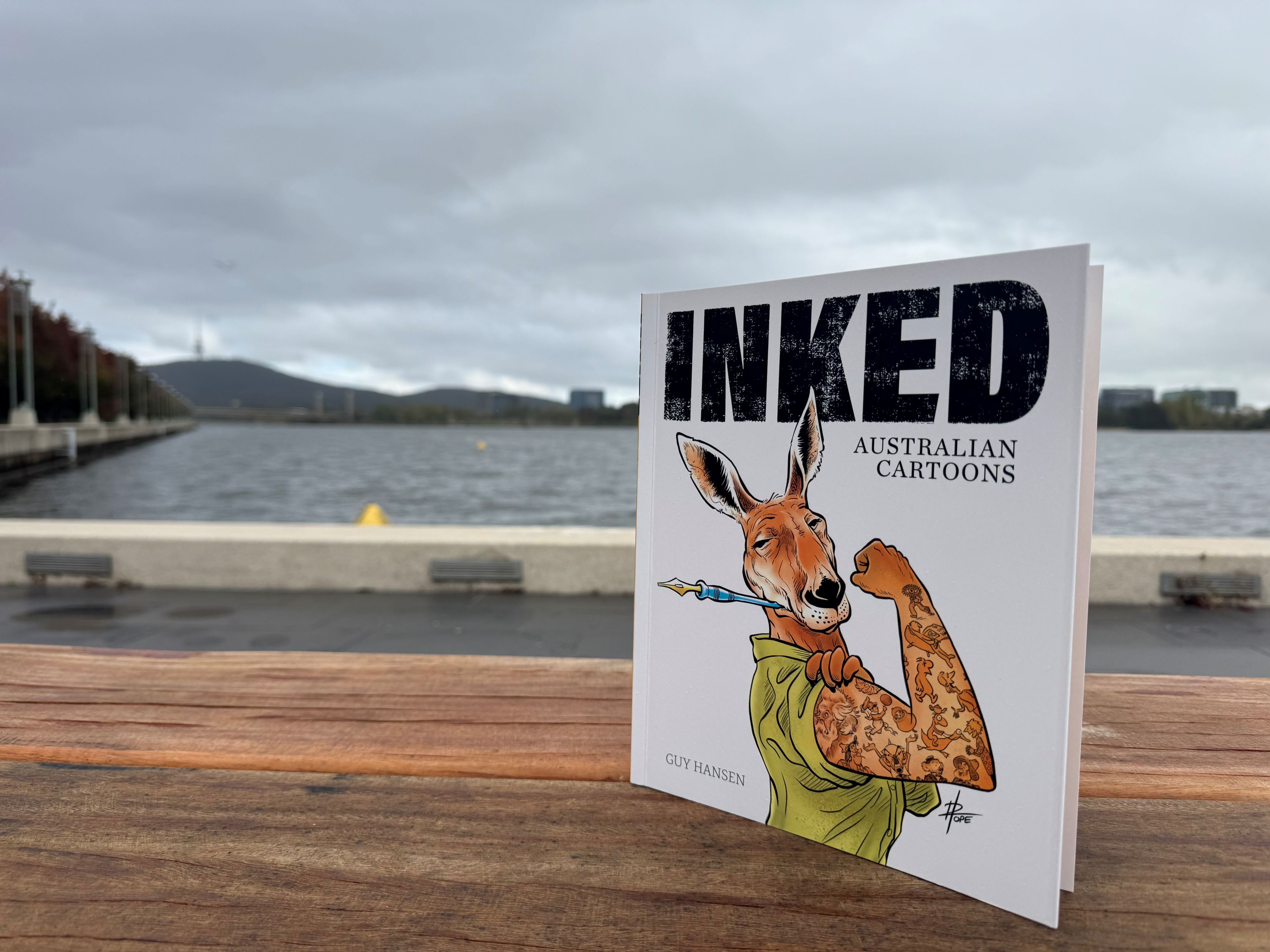
One such collection was Inked, which took a retrospective look at the history of Australian cartooning from the earliest days of the colonies to the present.
While the reflection on cartooning highlighted a glorious heyday now firmly in the past before an uncertain world took over, when asked if he had any more thoughts to share he had just one thing to say.
“I still like cartoons.”
Photos by Brendan Barry