
Cartoon animals, alcohol markers, and a whole lot of paint is the recipe Sweigz uses to create his unique and amazing art.

Stewart Weigand is the creative face behind the Sweigz (Swee-gz) art project. Sweigz blends a mixture of grunge, graffiti, and cartoon artworks together to create a unique piece of art that on first glance is simple in design but on closer inspection is a carefully formed piece of canvas art.
Sweigz is just one example of the amazing underground art scene that Canberra harbours. In this interview, Sweigz shares his creative process, inspiration, and story of his art.
What’s the story behind Sweigz?
A: Sweigz is pretty much just a passion project for something that I’m doing other than graphic design. So, it’s something that I’ve just been building. Little bit by little bit. And it has become quite a fun thing to do after work. It’s just art and graphics and anything I wanted to do at the moment. Sky’s the limit really, it’s been fun.
How long ago did Sweigz start?
A: It would have been about four or so years ago that I started getting back into painting. I was doing painting and a little thing here in that high school, and from there I kind of dropped it, then uni and then started pitter pattering back into it and basically in the last year or so is when it started to click, and it’s been a bit of a rolling ball since then. So yeah, I guess I was getting into it.
The name Sweigz is a mixture of full name, Stewart Weigand, how did you think of that?
A: Yeah, pretty much on a whim. I did play around with a couple other names, just for the sake of trying to pick something that sounded interesting and was me as well, but kind of really boiled down to I could make a nice looking logo out of it, and there was no other social medias using it, and so it was free game.

What does your creative process look like?
A: Paint is a good process. I have an iPad that I mock everything up on beforehand, so I’ll pick. Maybe I can colour scheme or an animal, and from there I’ll start building little bits and pieces to mock it up, to check if it’s going to work.
And then from there, I just get it straight onto the canvas background, layer by layer, like bit by bit, and just build on top of the other thing. And it’s just really fun to make. The more layers and the more detail I can get into it and better they end up looking. So, I just keep going that way.
Sweigz sets itself apart from many alternative artworks with its use of warm tones and alcohol markers to bring two different styles of art together.
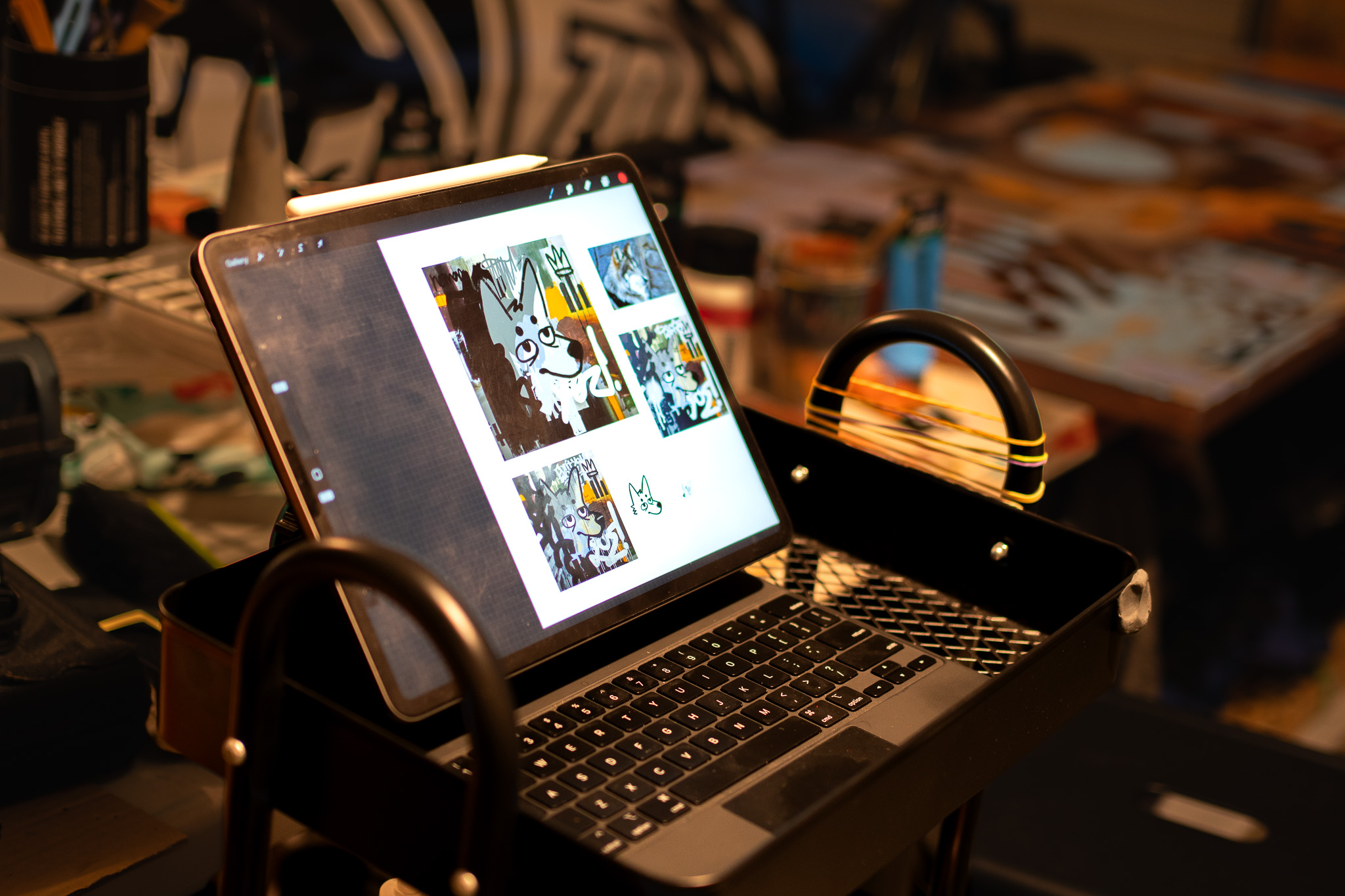
What was the inspiration to make the mix, the cartoon style with the graffiti style?
A: Oh, it’s just something that I’ve sort of interests when it comes to, just seeing some combine that you like the look of and seeing if you want to play around with something like that.
That’s how the first one sort of started to take shape. Like there was like a couple sort of examples of I just kind of really digged what was going on like. It was graffiti was grungy, and I started playing around with it in my own kind of way. And that’s when my cartoon styling started to fall into it. And then really it just kind of clicked together more and more. I started playing with it and just this just worked more and more together. I just kept using them. So, as much colour as I can get into it, and then on build on top of that.
Is there any specific person or specific style that really inspired you?
A: There’s a couple in there that, to my tongue the moment I try to find out what those are. But, people are just kind of really went to town when it comes to graffiti. Like, there’s so many awesome graffiti artists out there. And then there’s little bits and pieces that I just have in 1 or 2 artworks. I feel like they hit the nail on the head, and I want to figure out why, and I want to try and figure out if I can do that. And then you just go from there.
And heaps of social medias, heaps of talented canva artists that have been able to get in contact over the last couple years who are awesome and had so many other things that they got going on, and it’s just, yeah, building on those relationships and knowing people, people overseas who are starting to be interested in things, big conversations and it’s all good.

Have you found yourself making a lot of connections with lots of other artists?
A: Canberra has been hard because I kind of have to go out to places and be like a complete nobody and say hi to everybody. And I’ve been getting really good at that because it’s just you got to do it. But bit by bit, Canberra has been getting smaller.
Like I know Australia people now, I’ve been starting to bridge out to commissions that are overseas. I’ve been starting to get hit up on people overseas and the world is getting smaller real fast. It’s getting real fun.
Has there been any notable experiences or places that you’ve managed to get to or experience from your art?
A: Yeah, definitely. I’ve been to Sydney and Melbourne recently for an exhibition that’s called The Other Art Fair, and that’s like one of those ones where there’s a whole bunch of artists in a big place and you just selling off people that walk by, basically.
And Sydney was awesome. But when I went to Melbourne, the reception from Melbourne was like way higher in just terms of they loved the graffiti stuff. And they were like kind of what, you know about it, just even just going into the city and getting to walk around all the alleyways and stuff for the graffiti, it’s so cool.
Does that sort of environment with artists and the graffiti style really inspired you to improve your work?
A: Yeah, definitely did it. Maybe recognise how much more of that is out there? Not to bad mouth Canberra, but there’s a whole different scene going on. And like Melbourne’s Sydney, it’s just like got its own thing going on. And yeah, being not only able to be involved with it, but being like part of it is its own small sort of way, I was like, oh wow, this is like so much more like, you can like take it. It’s awesome.
You’ve really ramped up in the last year since the beginning. Have you seen your art change or improve overall?
A: Yeah, like that was definitely that one off. Like I think it was April. This time last year, I just made an artwork that was in this kind of style, and it just got looked at so much more.
And then from there, I just really liked it and kept progressing with that. And it was a couple of months later that I started doing the really simple line art. And that was another turning point for like the other end of the spectrum, where it was like a uber simple and then like that so much stuff going on and just like chaotic crap.
But, yeah, just like little bit by little bit. I’m starting to see what the people sort of looking at it more or less. But I’m in a really good scope right now where and nothing’s getting left behind by. Everything’s getting looked at really seriously in one form or another.
I had a really big artwork that was stuck with me for like two years or so, and then to see that one get picked up in Melbourne was like a breath of fresh air of like, yes, it’s not doomed. Someone wants it. I just have to get in front of the right people.
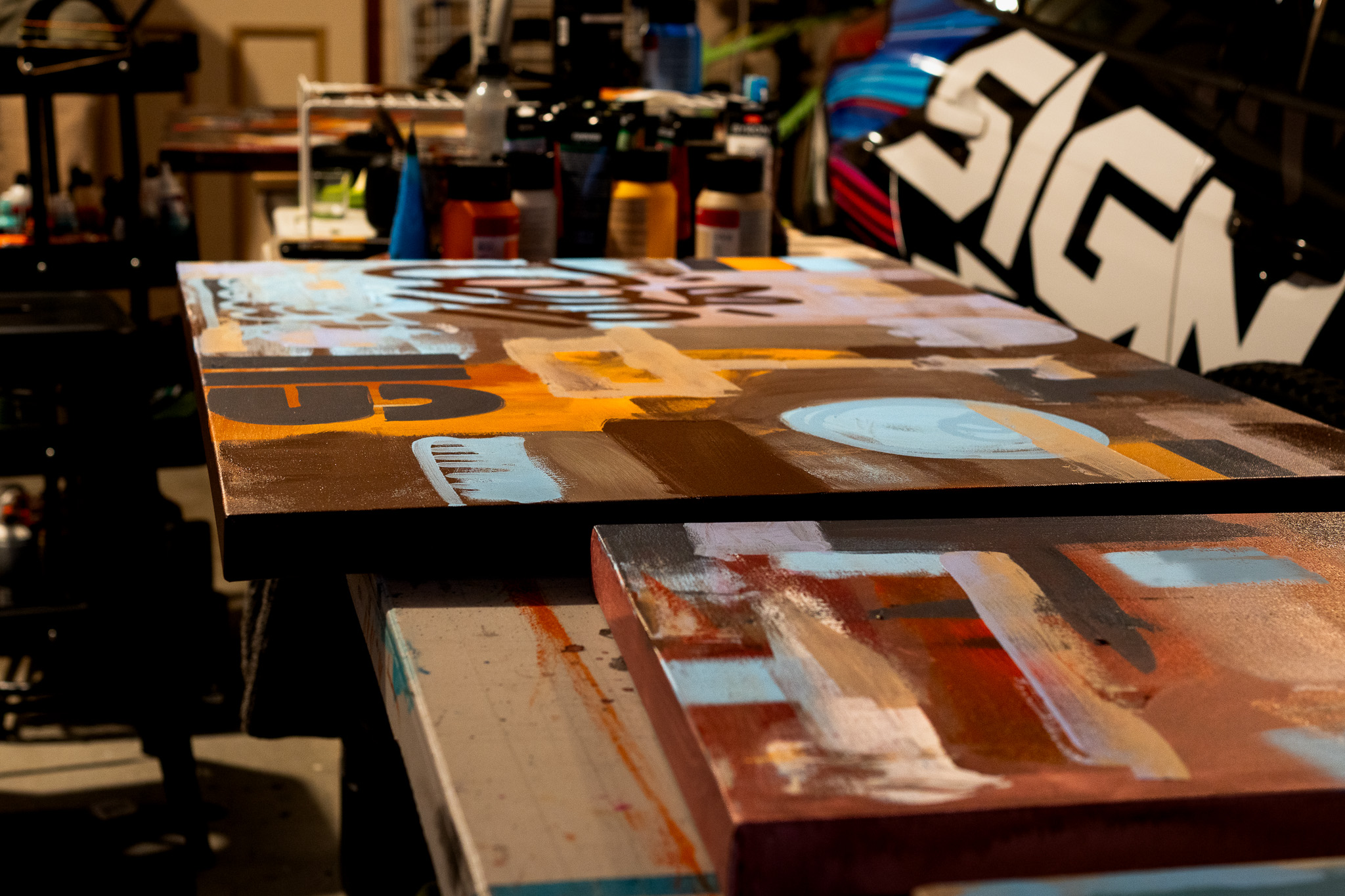
Is there a piece that you’ve made that’s really resonated with yourself?
A: Yeah, definitely the large one, because it was one of the early ones that I did make. And then I kind of like chopped and changed to bring it up to sort of what I was doing now.
That one I really liked. I had it in my lounge room for like so long, just this massive artwork and just to see it getting picked up was a little bit like relief, but also like, oh dang, now I’m losing that one, that sucks. I hope it goes off to a good home. And yeah, I can’t say that there’s any that I’ve like actually not liked it in any shape or way.
There are some that I’m a bit hit or miss. If I’m like, “I don’t think people really like that too much.” And then it’s the first one to get looked at. It’s hard to pin and yeah, so far, I’m digging everything.
What are your aspirations for the project in the future?
A: Sky’s the limit, really. Like, the more and more I interact with other people doing this kind of stuff, the more I realize that it’s like that it’s their full time job, really, like, dream level stuff would be to take it on as a full time gig and to expand it as far as I can take it.
Little bit by little bit. Like I gotta make a website. I gotta figure out commissions. Like I had to close commissions because people were far too eager. And I only have afternoons after work. Yeah, like, I want to make so much more of it. And there’s an audience there, and I just need to plan things as well as I can and maybe get away from my day job a little bit more.
To see more of Sweigz’s art you can follow him on Instagram @sweigz.
Photos and video by Michael von Demleux