
In a decade where environmental uncertainty is at a peak, young climate activists are more desperate now than ever to make a change.
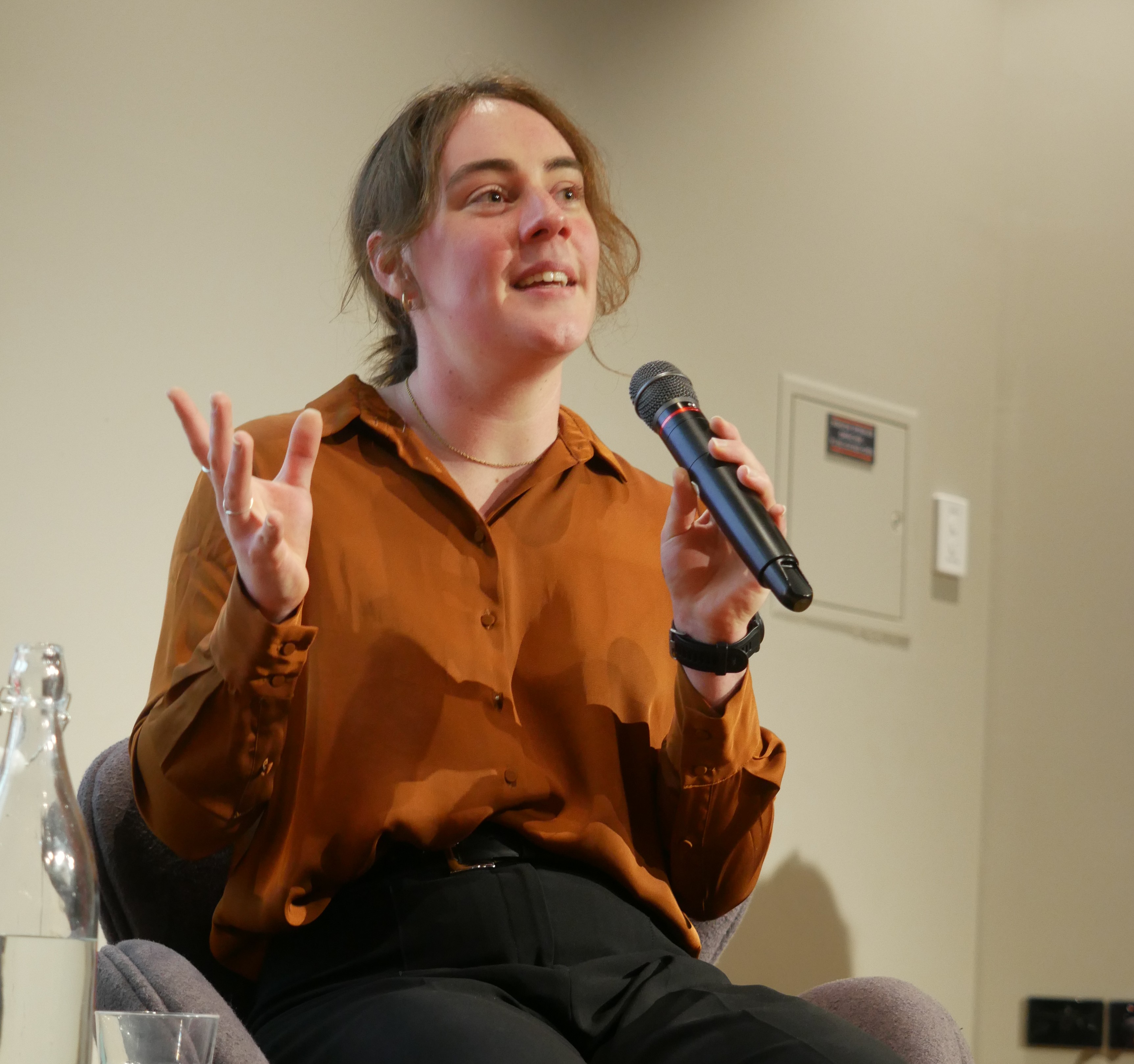
Growing up with the constant confrontation of climate change, one of the young activists we spoke to, Callista, has felt concerned about the health of her local environment; “As I’ve grown up, I’ve still had that conscience: When I become old, is the earth still going to be there for me?”
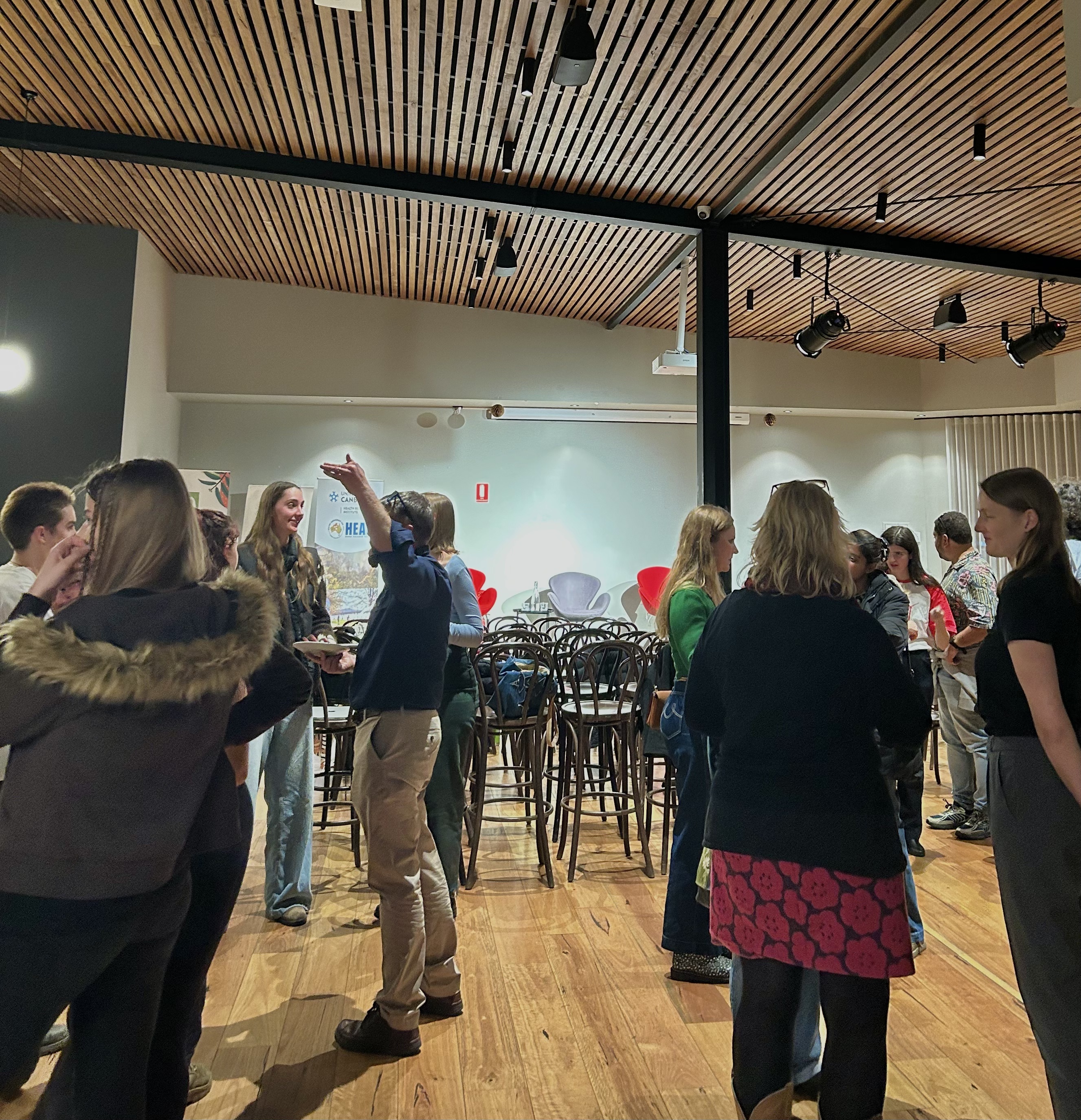
Despite this fear, in the heart of Canberra, the Climate.Nature.Us: Youth Voices and Wellbeing event last May tackled these concerns head on, providing a space for climate discussion that was anything but grim.
Sparking climate conversations
Hosted by community conservation organisation Landcare ACT and climate resilience research body Healthy Environments and Lives Network (HEAL), the Climate.Nature.Us: Youth Voices and Wellbeing event brought together young climate change advocates and environmental health professionals to discuss how growing climate uncertainty disrupts youth wellbeing.
Creating a space for honest climate discussions, young people took the reins to connect with other passionate activists, to find solutions to combat climate change while maintaining positive mental health.
A message of hope sang strong in the room of youth passionate about making change now.
Advocates bare the burden of ‘eco-anxiety’
Opening the discussion, the panel posed the question:
“How many of you have, or experience anxiety?”
Over half the room raised their hand.
In a nervous chuckle, the room seemed to exhale, realising they’re not alone.
‘Eco-anxiety’ is defined by the UN as a mental health response to the pressure of the rapidly changing environment, and distress stemming from lack of systemic climate action.
The panel of young leaders revealed that despite their drive to take on the challenge of combatting global warming, the responsibility of advocacy often causes burnout for those most passionate.
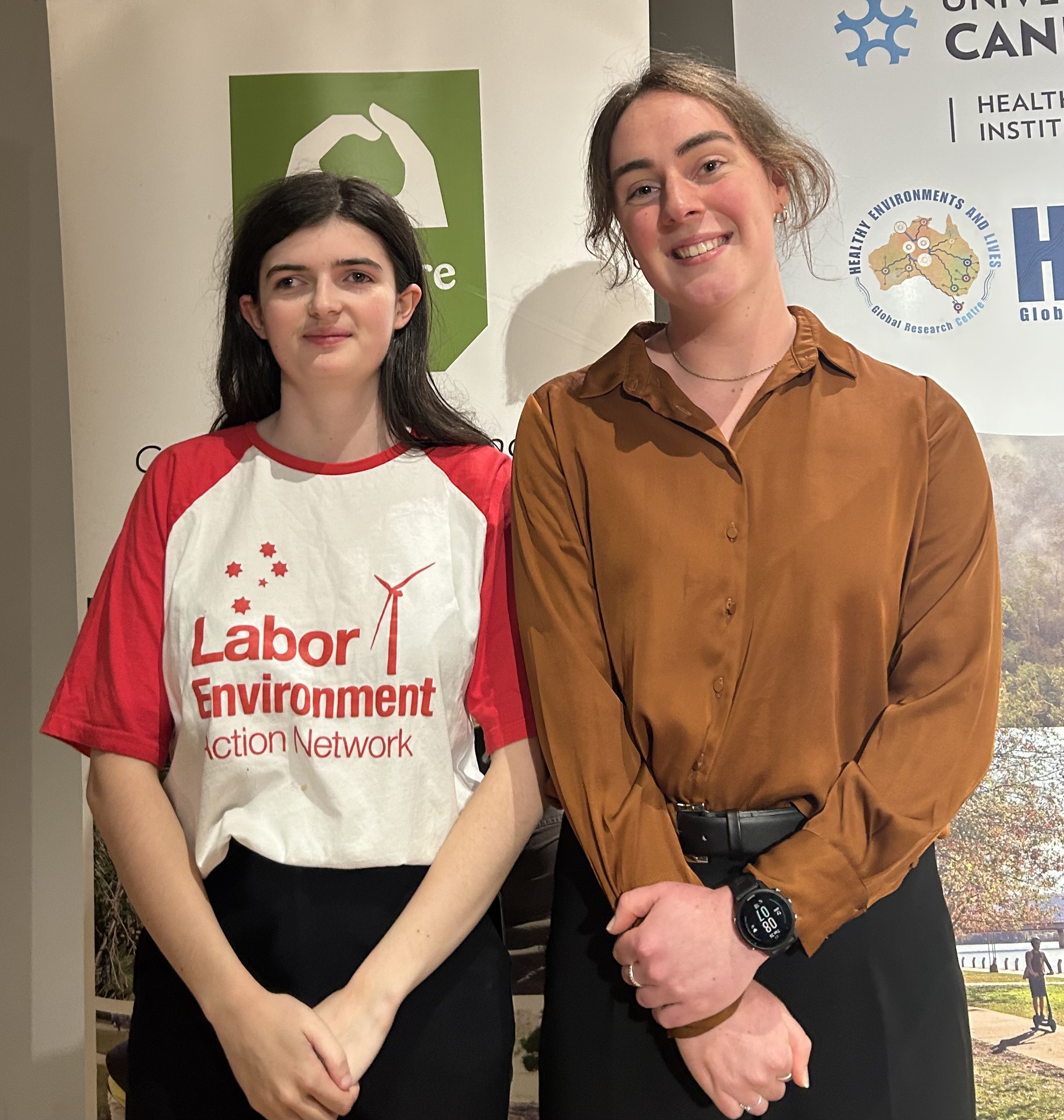
Labor Environment Action Network (LEAN) member and Climate.Nature.Us panelist Lucinda Adams has experienced how overwhelming advocacy can be;
“When you have a period of quite poor mental health you have the instinct to be isolated which is really destructive.” She warned.
Climate stress is top of mind for young people
Nationwide, over three-quarters of young Australians are impacted by climate stress, experiencing negative feelings about the future, loneliness and psychological distress.
In 2025, Mission Australia’s Youth Survey identified climate and environment ranking as a top issue of importance for young people, following cost of living and mental health.
For the panelists, it’s not only about restoring the environment, but preserving the passionate advocate communities that lead the charge.
Retaining hope through collective action
Panelists urge advocates not to go it alone, with strength in numbers essential for making a lasting difference. But in a time where negative climate headlines seem inescapable, it can be daunting for passionate young people to know where to start.
“You can feel very helpless because everything feels too big. You’re not sure that you can actually make an individual difference”
Alice, a youth activist and event attendee
Community events like Climate.Nature.Us are tackling this isolation head on, creating spaces for young people to not only be a part of the solution, but connect with others committed to the cause.
For Alice, seeing other advocates who care, provided the much-needed validation that she is not alone in the fight, sparking motivation to overcome the ‘eco-anxiety’ rut.
Hannah Vardy is a member of the ACT Duty of Care campaign, working collectively to legislate protective climate policy for future generations. She’s confident that society needs to remove the stigma that often follows ‘eco-anxiety’, reframing it as an opportunity for collective action.
“(Eco-anxiety) not this individualised issue, but actually something that we can be working on in communities to overcome” said Hannah.
A critical decade for climate action.
With new reports by the World Meteorological Organisation predicting record temperature highs in the next decade, the environment is at a catastrophic tipping point. Advocates stress that “showing up for the future you want to see” is more important now than ever.
And you don’t need to be a climate expert to do so.
For Lucinda and Hannah, the unique skills of each individual is what adds up to lasting change, transforming passion into collective impact.
“You might be a graphic designer, a writer, a musician, a scientist. There’s no one perfect mold”
Hannah Vardy
Across the capital, community driven conservation movements like Landcare, and advocacy group Australian Youth Climate Coalition provide pathways for budding and experienced activists to take action at a volunteer level.
For Lucinda, the Australian Labor Party’s progress on renewable energy targets as part of their goal in achieving net zero by 2050 is an example of what youth can achieve when they believe in a common cause.

Calls for systemic action
Despite the dedicated effort of young activists, increased government support and protective environmental policy are needed to drive global momentum.
As young activists call for increased environmental funding to decarbonise energy sources and restore biodiversity, they’re sure that without collective action, community wellbeing will continue to worsen.
With 0.06% of the 2026/2027 Federal Budget allocated to on-the ground environmental programs and a 16% decline in on-ground biodiversity funding since 2025, a report by the Australian Biodiversity Council identifies that the investment will fall short in achieving the ALP’s environmental commitments.
Hannah describes the government’s commitment as “woefully inadequate”.
“We have some of the most precious ecosystems in the world and we’re not acting like it through funding” said Hannah.
Alternatively, LEAN member Lucinda is confident that it’s not all bad news, with the Labor government’s investment in ‘watchdog program’ National Environmental Protection Agency (EPA), making promising progress for the future of government commitment to bettering Australia’s environmental policy.
“It’s good to see how we have these self-improving processes in the EPA” said Lucinda.
Leading with hope
Despite the sea of negative news, these young activists lead with a hopeful vision for a healthy environment.
By continuing to find spaces to work together, they are optimistic that their generation has the strength to make lasting change.
From her experience working on the LEAN campaigns, Lucinda shares the advice that drives her motivation each day:
“What am I gonna do today that’s going to have someone better off?
Lucinda
What am I going to do that’s going to make my community, the country, the planet better?
One thing today. What am I going to do?”

Original photos by Lauren Tanzey