
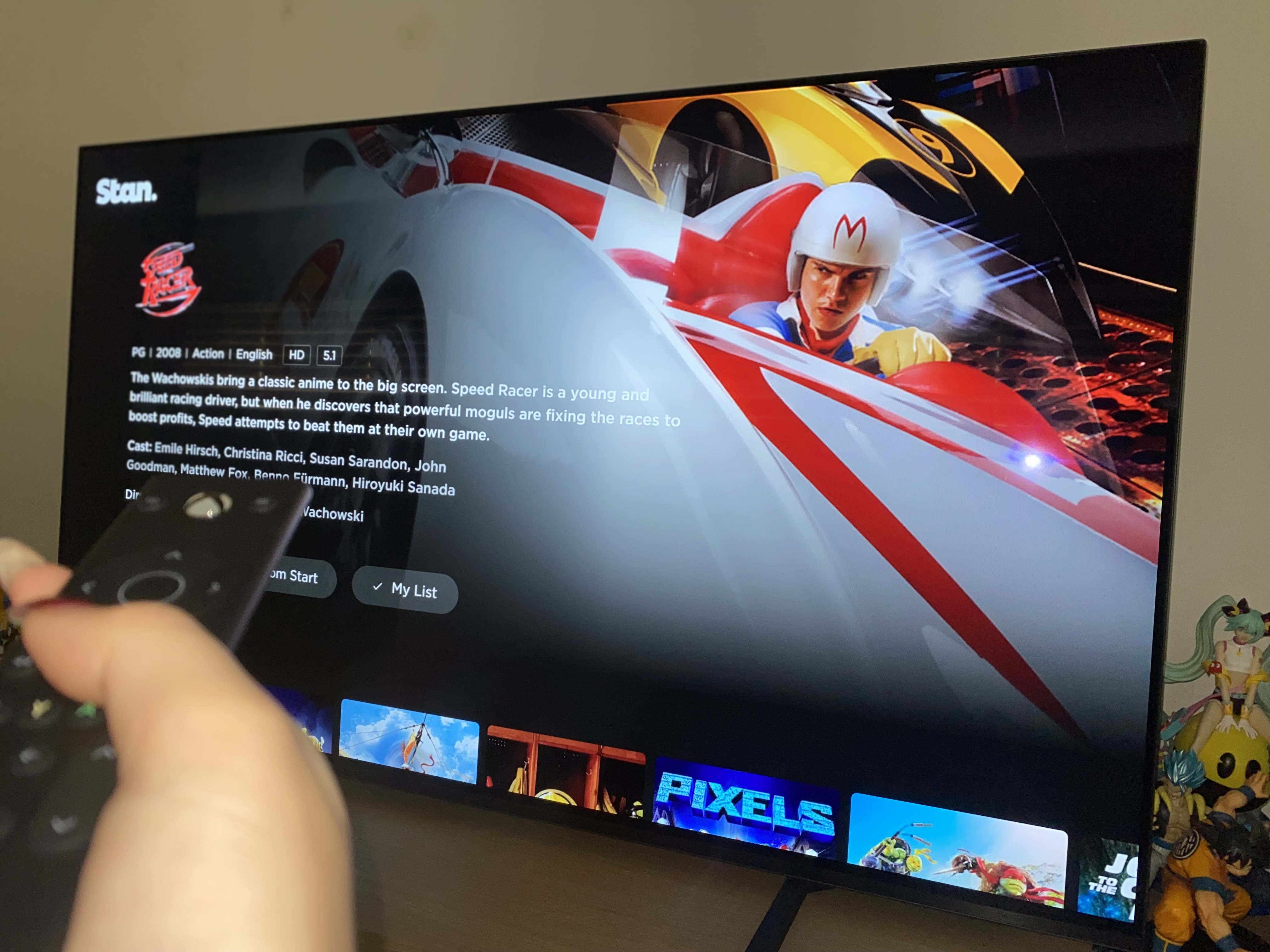
In an era dominated by dark and gritty superhero films, Hollywood found itself drained of colour, focusing instead on narratives that reflected civil unrest in America and ongoing conflicts in the Middle East. Released between comic blockbusters Iron Man and The Dark Knight, the Wachowskis’ Speed Racer (2008) struggled to find an audience. Its bold fusion of style and substance was overlooked at the box office, as audiences gravitated toward more serious, grounded storytelling.
Now, nearly 17 years later, the film has gained a devoted cult following – and for good reason. Its message feels more relevant than ever, serving as a cautionary tale about corporate greed and its impact on not just the film industry, but the arts as a whole. A near-perfect adaptation of the original 1967 anime, Speed Racer remains a visually stunning and uniquely heartfelt cinematic experience.
Speed Racer began as a manga in the 1960s, created by Tatsuo Yoshida. It quickly gained popularity and was adapted into a 52-episode anime series, becoming one of the first full-colour anime dubbed into English for a Western audience. The show was a major success in the United States, serving as an introduction to Japanese animation for many children of that era.
Plans for a live-action adaptation date back as early as 1992, with several high-profile names attached to the project, including Johnny Depp, Henry Rollins, and Vince Vaughn. The Wachowskis took on the film in 2006, initially hoping to cast their Matrix star, Keanu Reeves, in a major role. Ultimately, the project moved forward with Emile Hirsch as titular character Speed Racer, supported by a star-studded cast, and began filming in 2007.
The film follows Speed Racer, a young race-car driver, and his family as they navigate the ever-changing world of motorsports. Haunted by his older brother’s passing, Speed fights against powerful corporate figures seeking to control races for profit and power.
The Wachowskis aimed to create a stylistically faithful adaptation while giving Speed Racer its own identity, achieving this through a neon-soaked retro futuristic aesthetic. The film pays homage to the children who first watched Speed Racer in colour back in the ’60s.
Despite flopping at the box office – earning only $98 million against its $120 million budget – its core message resonates even more today. It serves as a reflection of capitalism’s grip on society, showing how wealth dictates power and how corporate greed stifles passion and creativity in the arts. Speed Racer is more than just a racing film; it’s a commentary on a system rigged in favour of the powerful, rather than those who truly love the game. The message is hammered home with an integral message, “You don’t climb into a T-180 to be a driver. You do it because you’re driven.”
The film also explores the impact of grief on a family, particularly how the loss of Speed’s brother, Rex Racer, shapes his journey. Speed is constantly reminded of Rex—his achievements, his love for racing, and his fight against corporate control in motorsports. Rex’s absence also affects the rest of the Racer family, highlighting how the loss or estrangement of a child can reshape parental relationships. Pops Racer, who once cast Rex out, learns from his mistakes. When faced with the possibility of history repeating with Speed, he grows as a father, choosing to support his son rather than leaving him to fight alone.
The film also serves as a critique of the filmmaking industry. Its candy-coloured visuals and ground breaking CGI challenge Hollywood’s formulaic approach, delivering an anti-capitalist message while pushing the boundaries of technology and storytelling.
Speed Racer is one of the few anime to live action adaptations that evokes the spirit of its source material. While many adaptations struggle to translate the original’s dynamic imagery and heightened energy, The Wachowskis embrace the wacky cast of characters and dazzling visuals, bringing the exaggerated movements and kinetic energy of anime to life with incredible precision.
Visually, Speed Racer is unlike any other film I have ever seen, its rapid-fire editing style, use of a saturated colour palette, and new 360-degree camera technology creates a hyper stylised film that feels both immersive and surreal. And with a run time of 135 minutes, Speed Racer manages to do what The Fast and The Furious attempted to do in ten films. Its high-speed gravity defying races don’t just serve as incredible set pieces but also drive the story, emphasising the true artistry and passion behind motorsports rather than just brute spectacle.
The performances in Speed Racer are among the film’s greatest strengths. Emile Hirsch embodies Speed with sincerity and depth, effortlessly conveying bittersweet melancholy through subtle facial expressions alone. His portrayal adds an emotional weight that elevates the film beyond its vibrant spectacle.
The film fully embraces its playful, slapstick nature, seamlessly blending intense action with lighthearted visual gags. Rather than undercutting the drama, these moments add to the film’s charm, staying true to the whimsical energy of the original anime. This balance of high-stakes storytelling and self-aware humour enhances Speed Racer’s unique tone, making it a rare blockbuster unafraid to have fun with itself.
Speed Racer fully commits to its vision from the very beginning, delivering a pure celebration of sport, the arts, and the fight against capitalism’s hold on society. The Wachowski sisters have crafted a neon drenched spectacle that not only feels like a living breathing anime but also pushes against the Hollywood machine.
Speed Racer (2008) is a near perfect masterpiece that upon release was unfairly overlooked by its critics. To this day, the film still serves as an important message to create art, not just because you can, but because you have something to say.