
Tiger on the Rocks is an award-winning film that examines some of the most intriguing secrets about the Tasmanian Tiger.
This film, created by writer and director, Cathryn Vassaleu, and produced by Pat Fiske OAM of Bower Bird films, takes us on a journey around the Australian continent. Our mission is to learn about traces of the tiger, or thylacines, (a more appropriate name), embedded in Australia’s past.
Vasseleu’s documentary is truly a passion project, driven by the intrique of the thylacine’s deepest and oldest stories.
“People were looking for the missing animal. But I was looking for its ancient story …. I started to realize that this was a huge topic,” Vasseleu said.
The tiger’s recent history
Most people know the Tasmanian Tiger as an extinct marsupial that only existed on the island state of Australia.
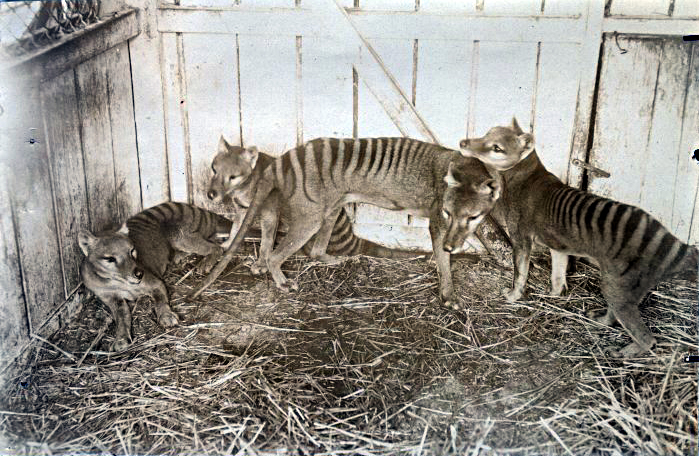
Thylacines disappeared less than 100 years ago. European settlers caused the erradication of these apex predators, believing them to be a threat to sheep and poultry. Farmers trapped and hunted the animals until all but a few remained in zoos. This devastating event embodies the tragedy of species loss.
Yet, there is much more to learn about these unique animals.
As we follow the thylacine’s trail in this documentary, we begin by revisiting its decline and extinction in Tasmania during the first 130 years of European settlement. This sets the scene for more surprising revelations.
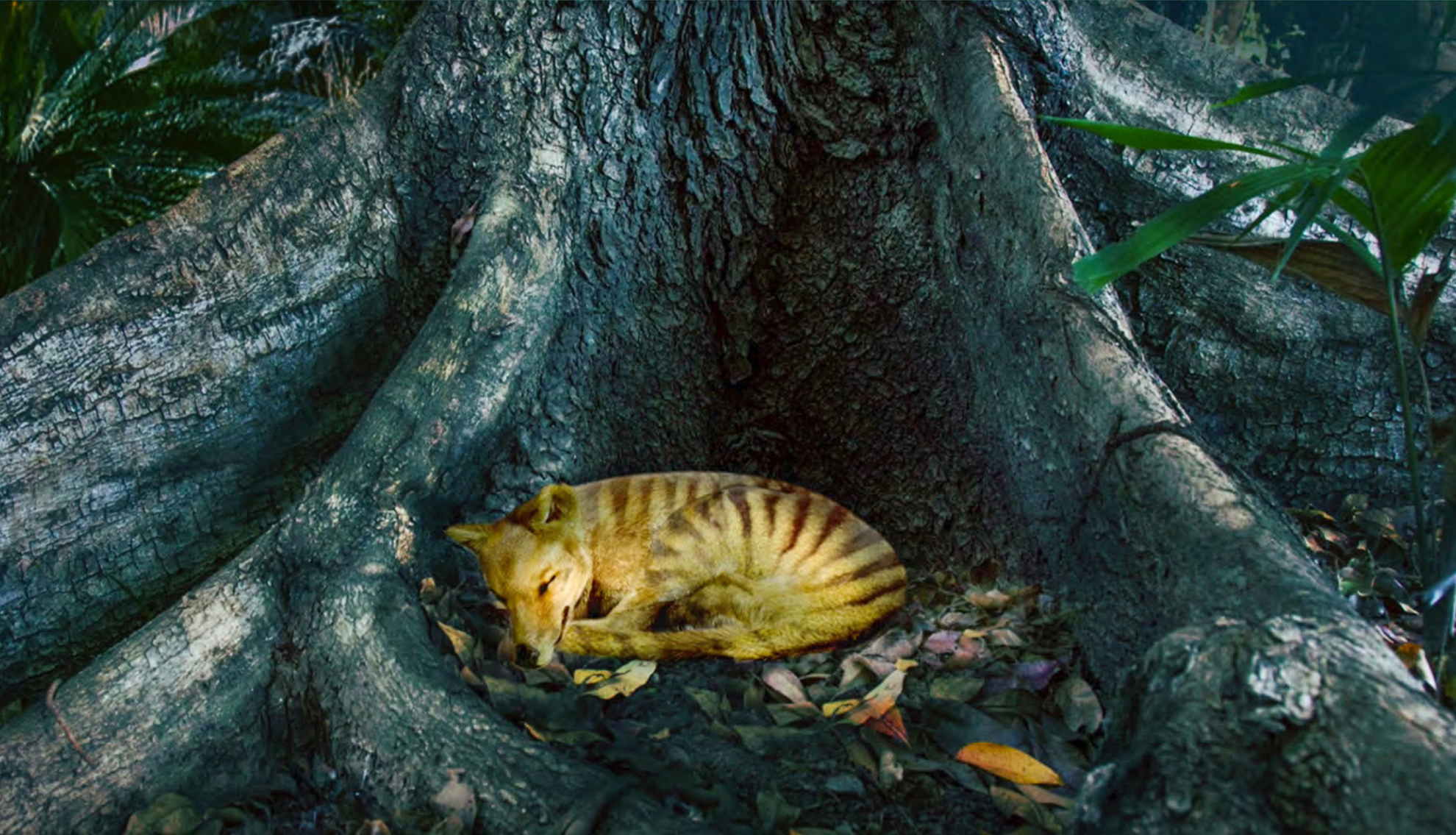
Significantly, thylacines weren’t confined to Tasmania. Their history extends back in time and place, and their story is preserved in rock art, pre-historic fossils and rare mummified remains.
“It’s an animal that’s in the Australian psyche, and it has a very powerful importance to people,” director, Cathryn Vasseleu, said from her home in Sydney.
To tell the story, we hear from Indigenous elders, palaeontologists, archaeologists and citizen scientists about their traditional knowledge and incredible finds.

Indigenous rock art
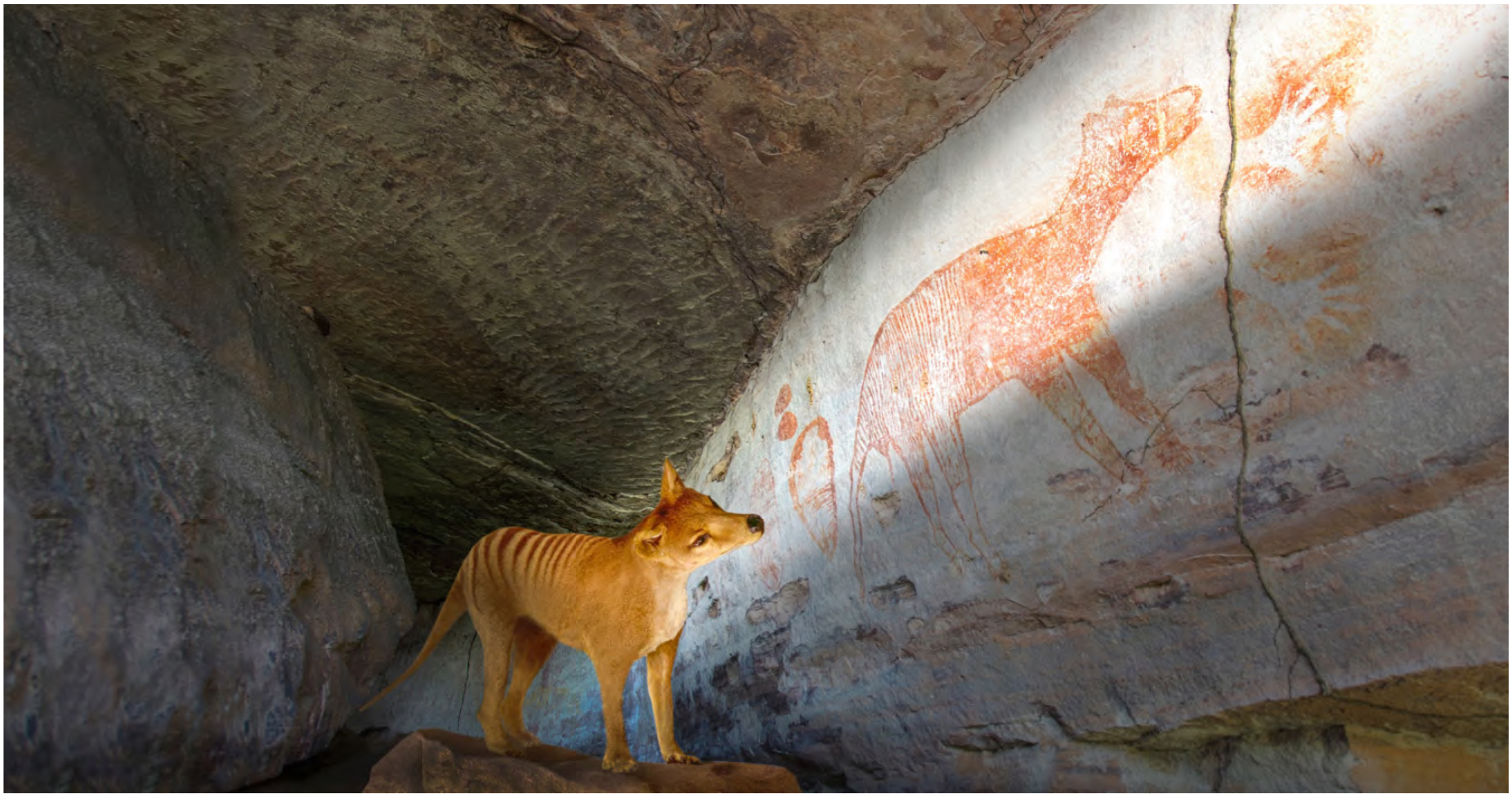
Vasseleu was inspired by the beautiful rock painting of a Tiger at Ubirr, in Kakadu National Park. She began delving into research in 2010.
She visited sacred rock art sites where ancestors of traditional owners have left carvings and paintings of thylacines.
These were thylacines that lived alongside humans. The last modern animals that disappeared from the mainland 3,500 years ago, leaving an isolated remant on Tasmania.
They were dog-like, with a pouch, a kangaroo tail and stripes. Thylacines were not tigers, or related to cats. Their closest relatives are the other marsupial carnivores: devils, dunnarts, numbats and quolls.
Fossils in the rock
However, the thylacine story is also an ancient one. There were several species of the predator marsupials living and hunting in Australia and Papua New Guinea.
Vasseleu told me a lot of the material for the film was generously contributed by people from work they’ve done.
“It’s a bush telegraph kind of thing in a way. … One thing leads to another and people hear about it …. it’s a film of goodwill,” she said.
To understand these prehistoric thylacines, paleantologist, Adam Yates, at the Museum of Central Australia, shows off an impressive collection of fossil records dated up to 25 million years old.
Vasseleu met film producer Pat Fiske OAM in 2017. With Pat’s guidance, by 2022, the film had progressed from rough cuts and creative ideas to its final finished format.
The film uses animations created from vintage film footage of zoo-kept thylacines, interviews, cinematography, and archival footage of Australian citizen science projects. It is narrated by Yidinji and Meriam woman Rachael Maza.
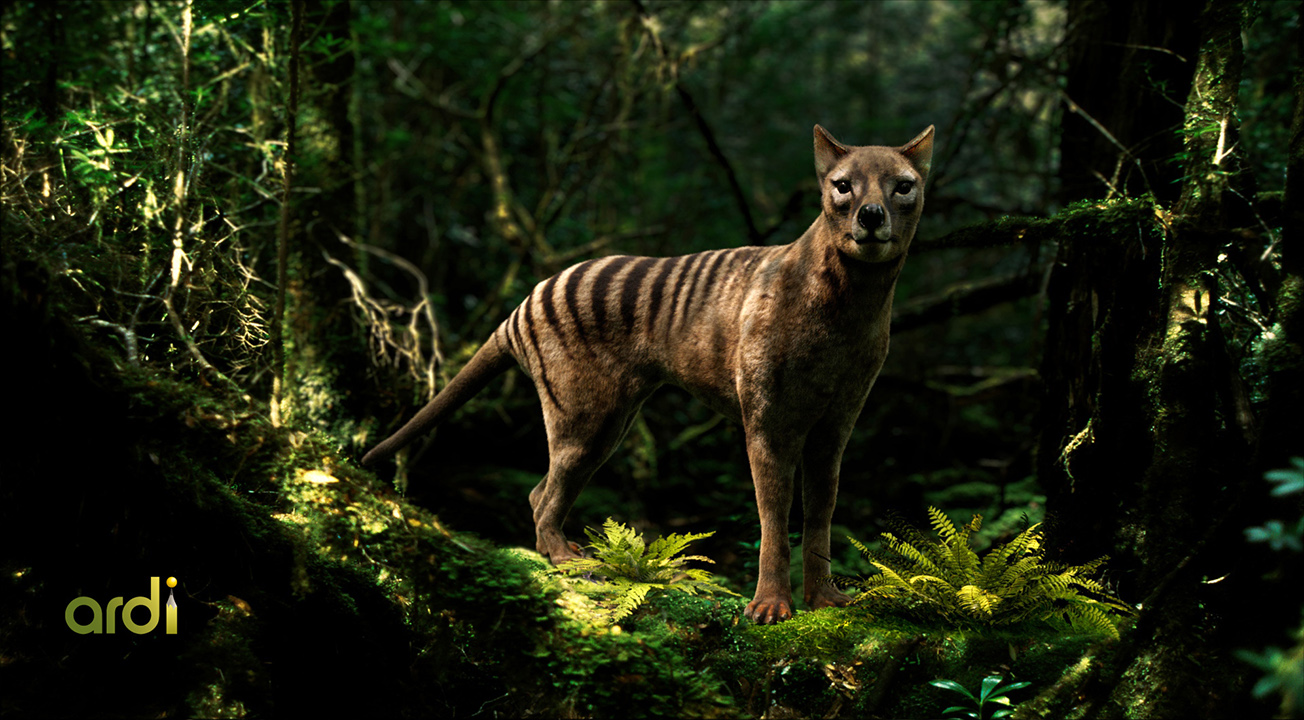
Today, researchers are investigating the thylacine as a good candidate for de-extinction — bringing the animal back from the dead.
With similar obsession, adventurers and determined believers pursue the elusive beast in the hope that they might catch a glimpse, and prove that the tiger lives on in the remotist parts of Tasmania.
Who should see this film?
The film has a wide audience among people interested in Australia’s environmental history. Consequently, if you want to know more about extinction or Australia’s ancient past, or are fascinated by the Tasmanian Tiger, this film is for you. It is also an educational film for schools, museums and local communities.
Schools and institutions can purchase an educational study guide through the Australian Teachers of Media. The Guide is an aid to explore the thylacine in environmental science, Indigenous history and art, and Australian history and geology.
Tiger on the Rocks is winner of the Best Australian Documentary at the 2022 Wildlife Conservation Film Festival, finalist in the 2022 Collarts Atom Awards and selected for other film festivals and special showings, such as NAIDOC week.
You can watch Tiger on the Rocks on SBS onDemand.