
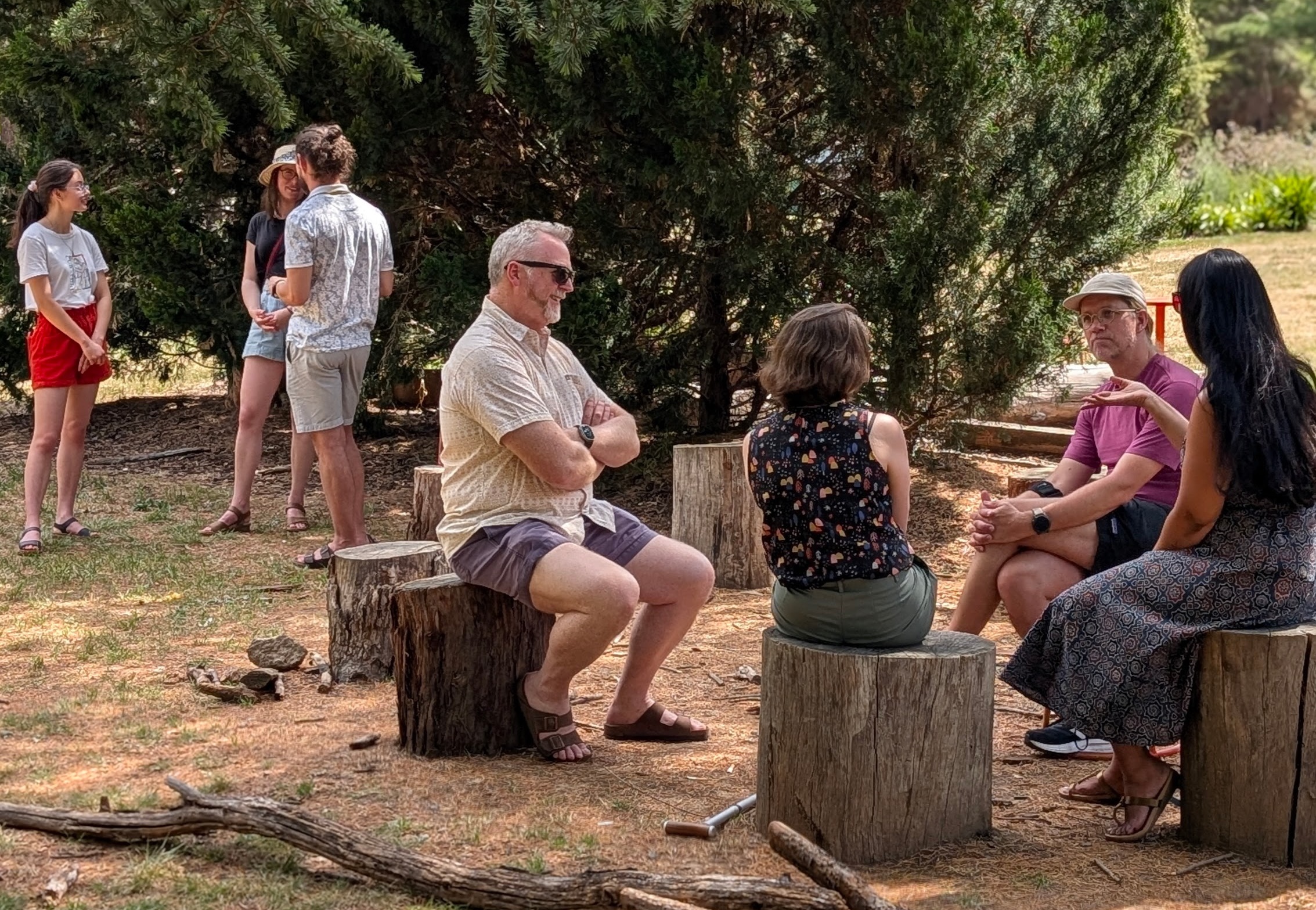
It’s a sunny afternoon in Haig Park.
Warm light dances through the trees; animals crawl out of their burrows ready to greet Spring with open arms.
Amidst the delight, several voices emerge.
For some, it is their first time in conversation.
For many, it will change their lives.
Goodbye small talk!
If you had to represent the human race to an alien civilisation, what two things would you tell them about humanity?
What advice do you give to others, but rarely follow yourself?
Is it possible to have a genuine relationship with an AI bot?
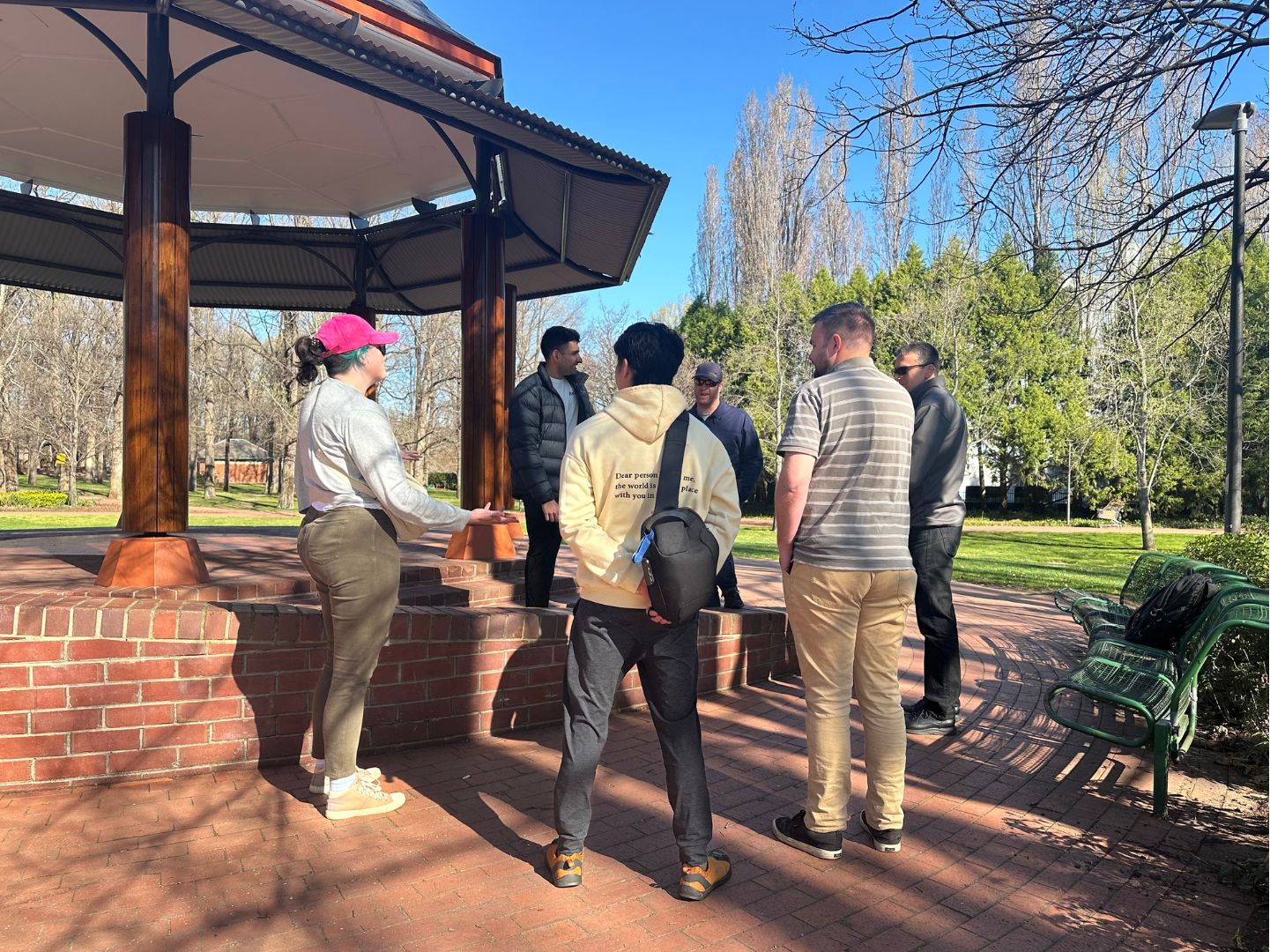
Twelve strangers gather in a park, pondering the answers to these perplexing questions.
It may sound bizarre, but it’s a real thing happening every month in Canberra.
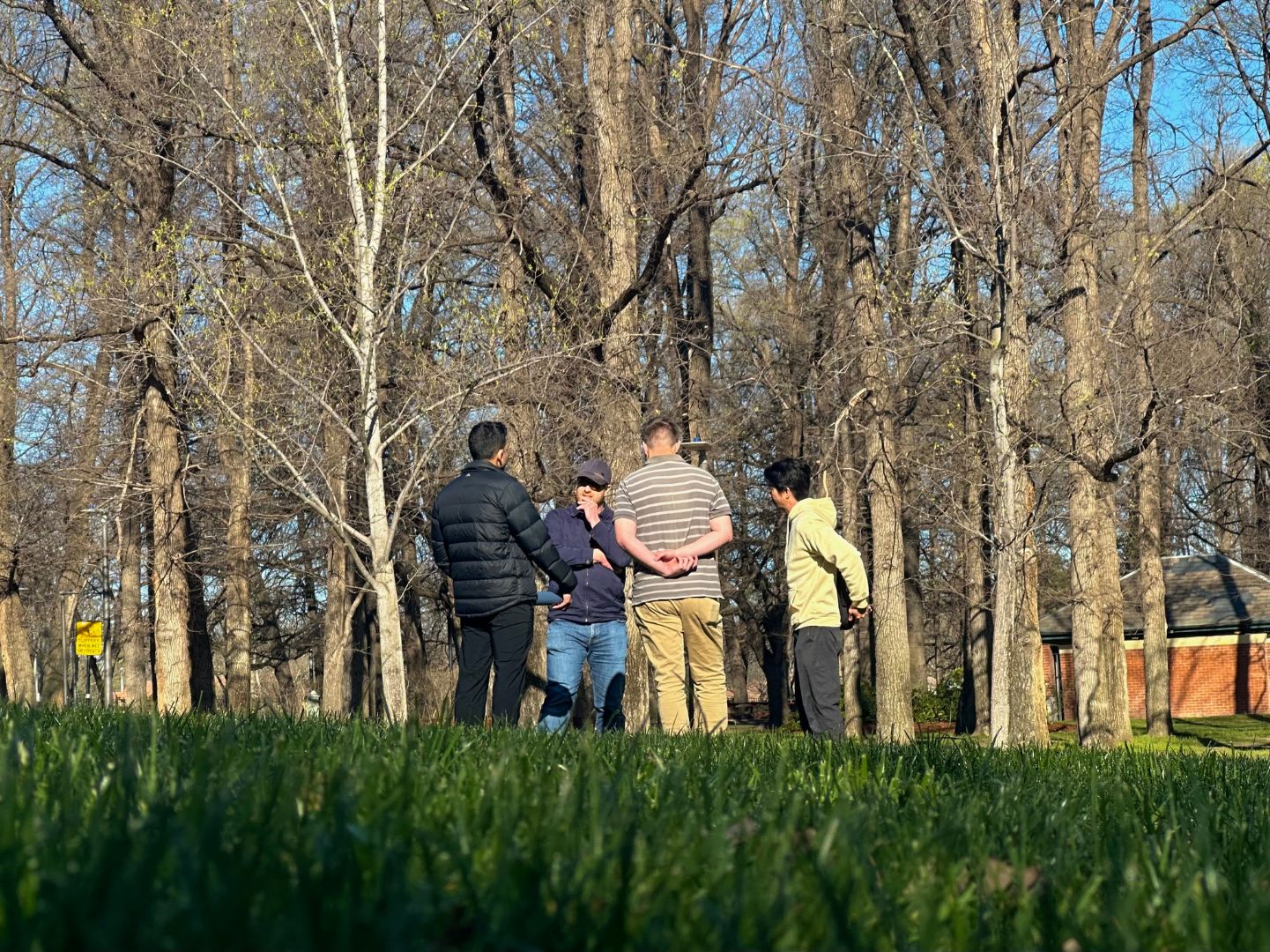
Awâre Commune is not your ordinary conversation circle.
Gone are the days of trivial small talk — deep discussion now steals the spotlight.
Once a month, individuals gather together to challenge their ideas, contemplate dilemmas, and leave with new perspectives.
It’s completely free, completely community-driven, and completely open to anyone willing to spend a Sunday afternoon ruminating over life’s biggest question.
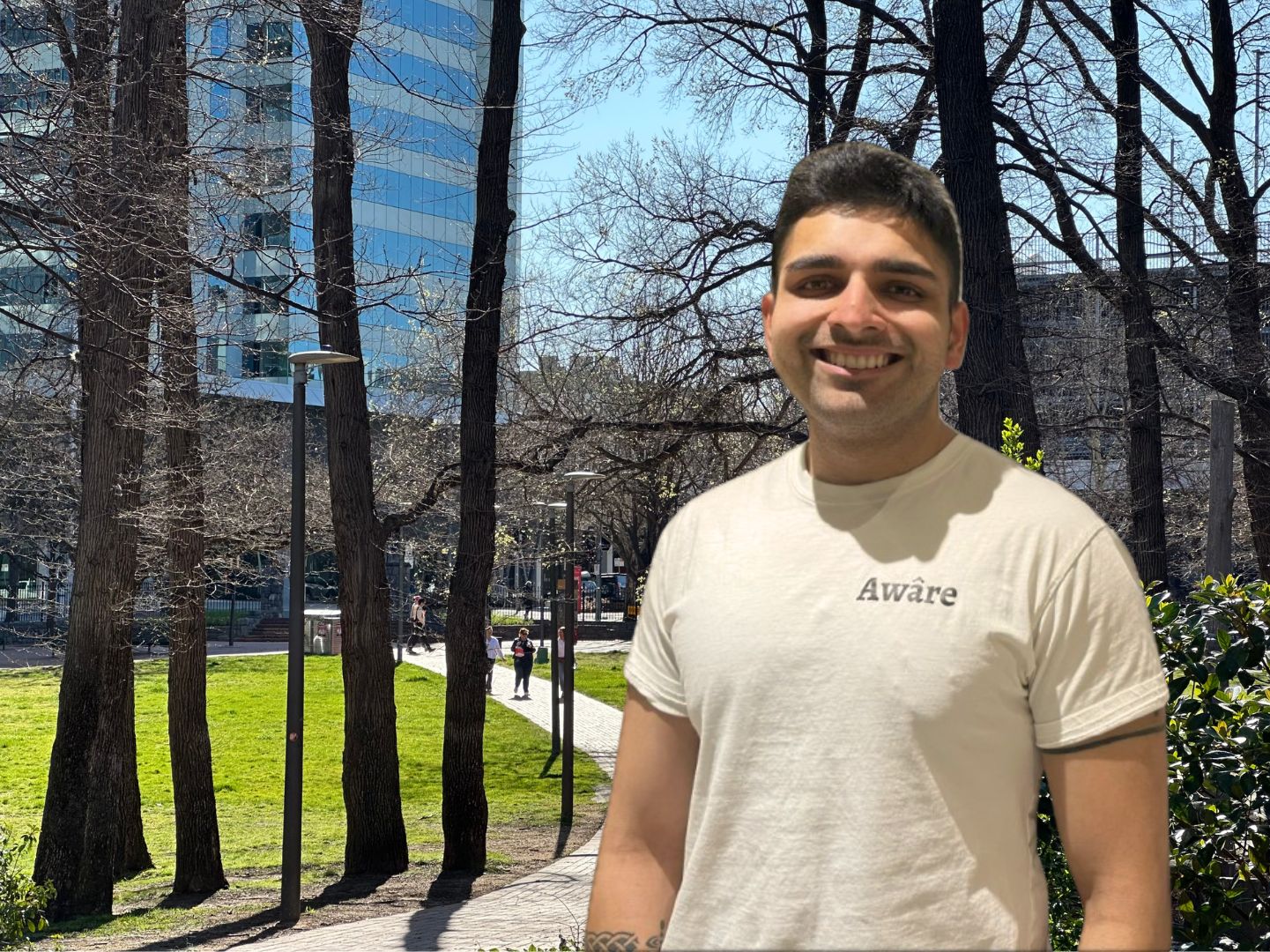
Meet Akash: a passionate philosophy buff and Awâre’s founder.
Growing up in Kolkata, India, Akash learned to appreciate the finer things in life.
But it wasn’t until he moved to Australia for university that his interest in philosophy began to blossom.
In 2018, Akash stumbled upon a book on stoic philosophy. It was a practical novel, not forcing the reader to live a certain way, but simply outlining how the ancient Romans and Greeks lived.
Gradually, Akash implemented some of the book’s principles, and realised his relationships, mental health, and quality of life all improved.

With his initial tango with philosophy proving to be successful, Akash continued to learn and grow.
He noticed his outlook on life started to shift to the point where the general conversations he found himself in “didn’t resonate the same way”.
“I felt isolated, not because people were not welcoming, but rather, I didn’t feel that I was being heard.”
Soon, Akash spiralled into feelings of loneliness.
Today’s loneliness
The American Psychological Association defines loneliness as the “affective and cognitive discomfort or uneasiness from being or perceiving oneself to be alone or otherwise solitary”.
In other words, an unpleasant sensation arising from feeling isolated or having unfulfilled desires for social connection.
A ground-breaking report published by peak body Ending Loneliness Together found that 43% of Australian youth feel lonely, and about 16% of people globally.
Moreover, around 14% of young Australians are experiencing persistent loneliness.
Michelle Lim, CEO and Scientific Chair of Ending Loneliness Together, finds this figure particularly alarming: “[this] actually says to me that once they become lonely they stay lonely”.
Some experts are describing this situation as a loneliness epidemic.
The U.S. Surgeon General made the bold claim that insufficient social connection has the same risk of premature death as smoking 15 cigarettes per day. (Although, this statement could be seen as exaggeratory).
Others contest that calling it a ‘loneliness epidemic’ is deceptive as it makes the problem seem like an emergency requiring an urgent response, when it instead requires sustainable, long-term solutions.
Regardless of what side of the fence you’re on, there is no doubt that loneliness is real and prevalent.
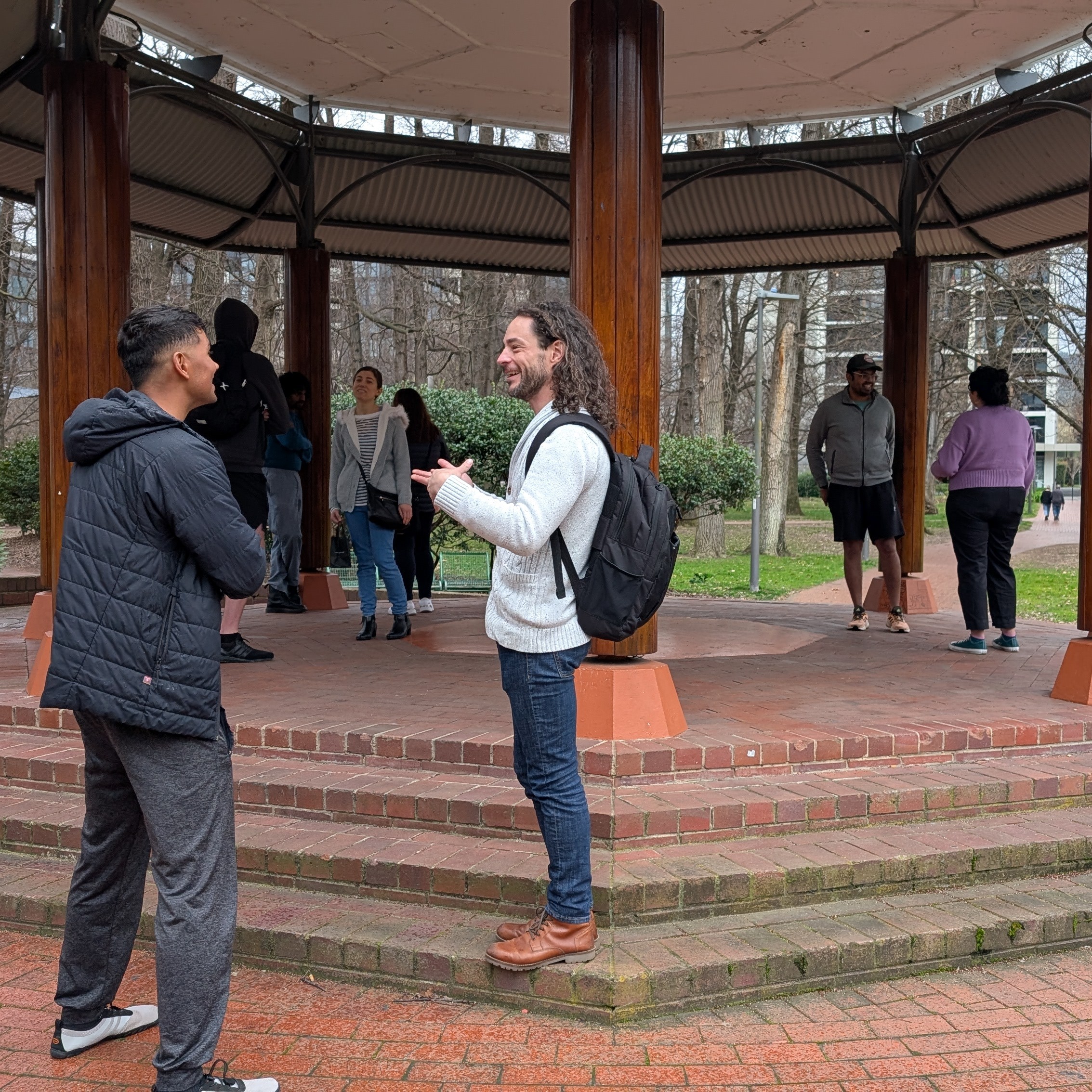
To escape this period of loneliness, Akash began searching for ways to both fill his philosophical cup, whilst also making genuine connections.
After a quick google, he discovered a conversation circle centred around altered states of consciousness. Discussing meditation, psychedelics, and yoga with others provided a safe, open space to connect.
However, the group was soon discontinued, and Akash was left lacking a platform to engage in profound conversation.
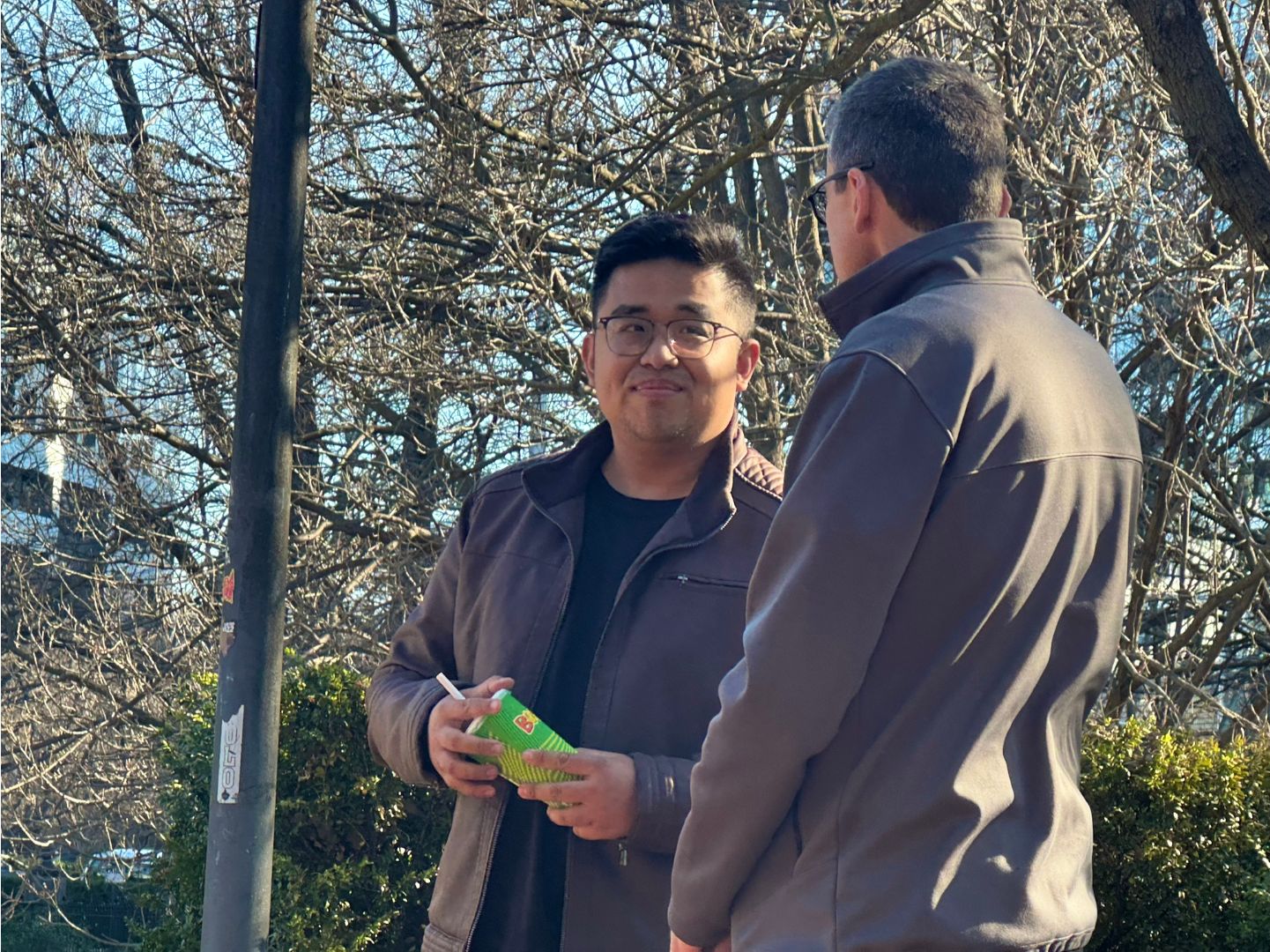
Fast forward several years.
Akash was talking with someone at a party and the subject of philosophy came up.
He recommended some books to explore, but was bluntly met with the response, ‘Akash, I think it’s too complicated’.
Akash was not ready to give up, and tried re-framing the topic.
“Think about it this way. If you want to learn about nuclear physics, you don’t jump into nuclear physics without learning about energy first, right? Same goes for philosophy. There’s places you can start that are much more accessible and fun to read — because not all of it is fun to read.”
Sharing some tangible examples, Akash’s friend came back to him and said they ended up enjoying it a lot.
“What that interaction made me realize is that people have this general aversion to the word philosophy. They feel that it’s complex, it’s complicated, it’s boring.”
The birth of Awâre
This got Akash thinking.
How could he create a space that embodies philosophical talk and discussions without calling it philosophy?
After all, “the best interactions [he’s] had have been deep, meaningful conversations about things that affect all of us.”
“You feel like you know the person for a lot longer than you actually do.”
And when it comes to building connections to reduce loneliness, feeling like you know someone is often step one.

From here, Awâre began to take its first steps, morphing from a vague notion into reality.
The name was picked, the socials were created, and by February 2024, Awâre was set to embark on its maiden voyage.
The first session was met with slight nerves, but an eager passion to share the power of deep conversation with others.
“People seemed to love it. It was friendly, it was open.”
Starting out with 14 people and several prompts, Awâre’s success began to snowball from day one.
“It really kick-started a trend, because after that, each session we would get more and more people — a fresh bunch of regulars and new people as well.”
After a year of running monthly sessions, Akash decided to spread the art of conversation beyond the confines of the nation’s capital.
Despite receiving over 25 registrations for the first Sydney gathering, heavy rain resulted in the event’s cancellation.
Regardless, ten people still turned up in high spirits, and the group congregated in a nearby café for a mini-Awâre discussion. The patter of rain simply provided a backdrop for the intimate conversations taking place amongst strangers.
Literally moving forward through rain or shine, Akash noticed “there is definitely a market for this where people are struggling with loneliness, and they are open to having these conversations with people”.
As a testament to the power of deep talk, “some people have told me they feel like Awâre is a free and open therapy session”.

The art of conversation
Spend several moments at an Awâre session and you will sense a tangible feeling of connection between the people there.
For some, it’s a platform to improve their conversation skills, while for others it offers the unique opportunity to dive headfirst into the world’s biggest questions — all without judgement.
Regardless of motive, there is a strong guarantee you will walk away feeling less alone.
For Akash, the objective is simple: “my goal from the very beginning was that if even two people can meet at Awâre and become friends out of it, that’s success for me”.
And having spotted several group members grabbing coffee outside of the event, or even going on a date, it’s safe to say Awâre has been nothing short of successful.
In our digital world, human connection is becoming more far-fetched, and loneliness has seeped into the corners of many of our lives.
Perhaps we should follow in Awâre’s footsteps.
Let’s skip the small talk and get deep.
Original photos by Alison Kennelly