
From black puffer jackets to business casual blouses, Canberra isn’t known by many as being a fashion-forward city.
Sophie Montefiore Gardner, owner and designer of sustainable Canberra fashion brand True Soul wants to change that.
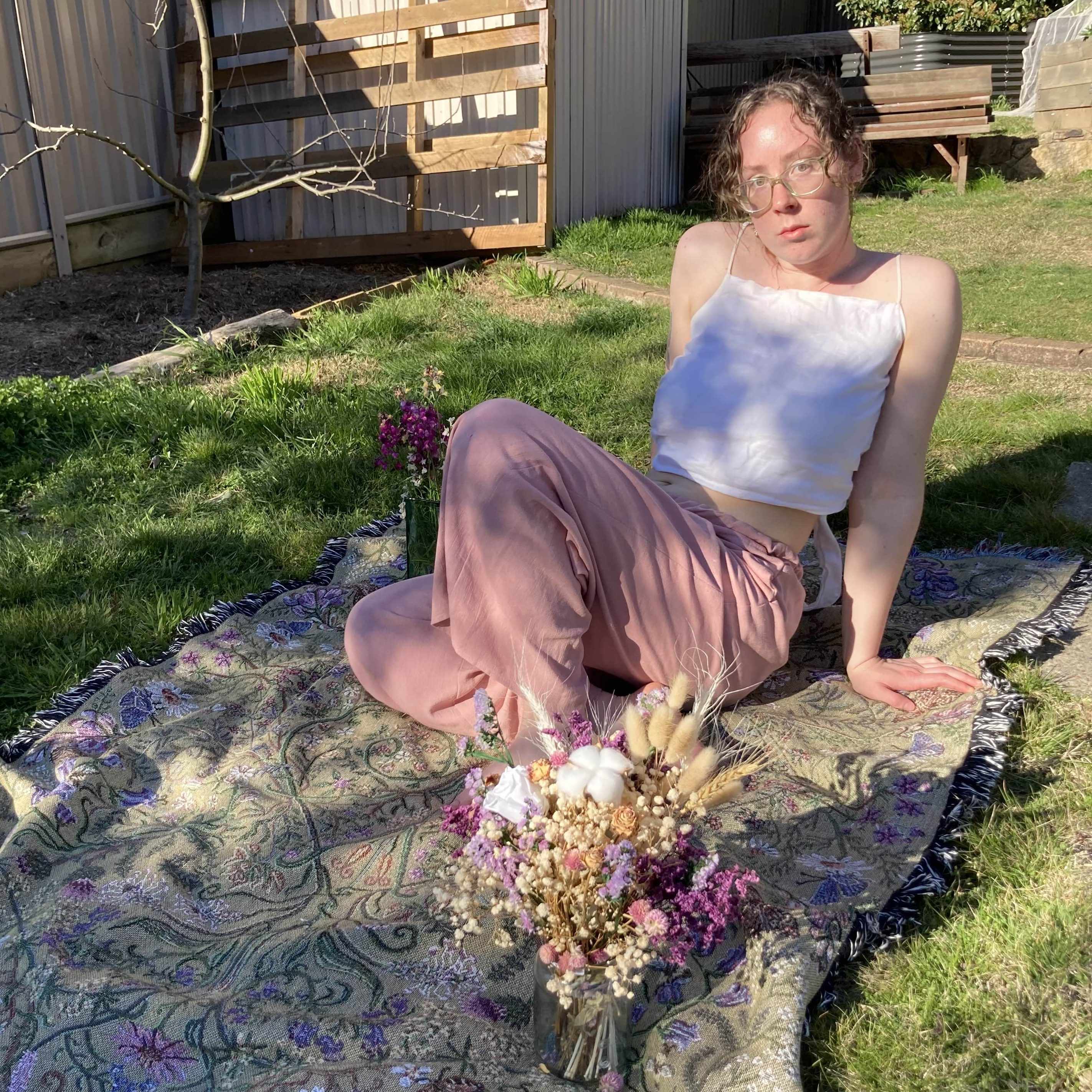
“It’s not just the suits”
“I’d say [Canberra fashion] is very eclectic. We’ve got such a wide range of people, from polititians and the diplomats and APS workers [to] international students [that] bring their own sense of style.
“I think that brings a lot of exploration and fun and excitement to the fashion scene as well.”
A Canberra local, Sophie’s exposure to environmentalism started with influence from her family.
“My parents [were] quite environmentally conscious,” she says.
“It’s how we grew up.”
Now, the launch of Sophie’s small business continues to feed her keen interest in environmentalism and sustainability whilst also contributing to a budding community of artists in Canberra.
With a strong focus on sustainable and accessibile fashion and lifestyle, True Soul is Sophie’s way to make a difference. Inspired by a college textiles unit on recycling and reusing, she’s been immersing herself in the ins and outs of the fashion industry since.
“That unit was probably the first time I had really been exposed to [unsustainability] within the industry itself,” she says.
“That opened my eyes and promtpted me to start thinking about it, and I’ve just been thinking about it ever since.”
But this isn’t the only influence she’s had on her outlook towards the fashion industry. After watching the documentary “The True Cost“ a few years ago, Sophie was inspired to spark change.
Highlighting the inner workings of the fast fashion industry, the 2015 documentary delves into the consequences Western consumption culture has had on the environment and the underpaid workers who create garments for millions around the globe.
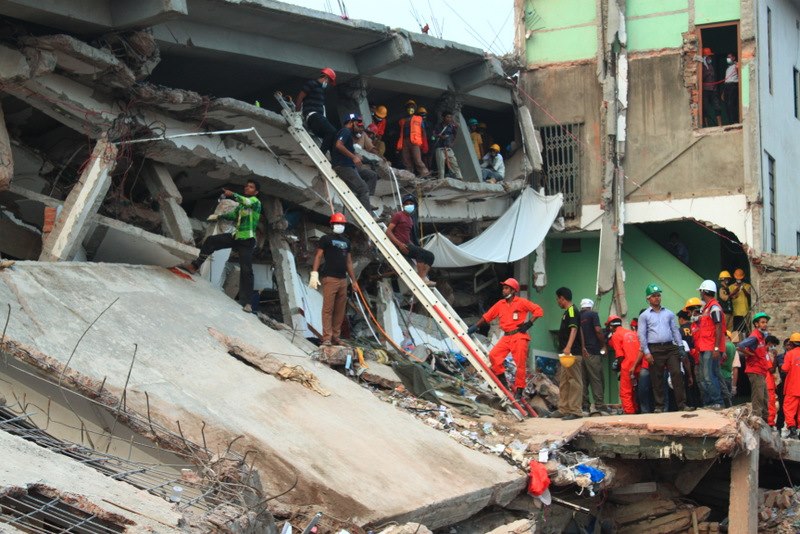
The documentary explores the conditions of garment factories in Bangladesh, where the collapse of the Rana Plaza building in 2013 claimed the lives of over 1,000 wokers and left another 2,000 injured.
“The more I learn, the more I’m horrified and inspired I am to change.”
The disaster not only encouraged creators like Sophie to become more conscious — it also sparked a fashion revolution.
“It reached global awareness. Up until [the incident] garment workers had been invisible and their exploitation had been very hidden,” Sophie says.
“People didn’t know how bad the conditions were.”
Protestors hit the streets of Bangladesh in the aftermath of the disaster, demanding improvements to safety standards. In response, the Bangladesh government passed a new law requiring all garment factories to be inspected by an approved agency.
Sophie’s small business is one of many popping up in the Canberra fashion scene, but launching her business wasn’t light work. With fast-fashion companies rushing to beat each other to the newest trends, sustainable brands are falling behind in the race.
“It’s definitely a challenge. A lot of people aren’t really motivated by the sustainability.
“You have to be really aware of who you’re marketing to and why. You can’t just say ‘Oh we’re a sustainable brand!’ You have to create [a] story around your brand. You have to create a lifestyle to make people want it.
“Not just for the conscious consumers, not just for the people who care about sustainability, but also for people who want to look like you or people who have a similar sense of style. It’s about marketing to them as well.”

Despite these challenges, Sophie still continues to strive for a more diverse environment in the local fashion scene.
“I’d like to see [Canberra] be known for fashion more. There’s a lot of talent here – creative talent of all kinds!
“A lot of people feel like they have to move to Sydney or Melbourne or overseas to make a name for themselves… [but] there’s a market for people to be creating.”
The market for creatives continues to expand with the emergence of blogs and magazines gaining popularity in Canberra.
Local fashion blog and magazine CanberraCore has gained traction the in the past couple of years, documenting Canberra’s growing street style and fashion scene.
Even with the growth of these blogs, Sophie still believes more needs to be done.
“I think it is really good to see more [blogs and magazines] and people have obviously seen the gap. There was nothing before that!” she says.
“It would be awesome to see more inclusivity of style because I think each [blog] has their own niche.
“CanberraCore focuses more on a Y2K style – there’s lots of smaller bodies [and] it’s a very specific style – which is fine! But I’d love to see more diversity in other things for people who like florals or pretty things, and more size inclusivity.”
For other small business owners like Sophie, support and recognition from locals is crucial to keeping their business afloat.
With a range of local stores and markets popping up around Canberra, those curious in delving into local fashion are encouraged to explore what’s on.
“If you want to see more small businesses [and] more creative businesses in Canberra you have to support them.
“If you want to see more variation go to the markets on Sundays! If you don’t want to just shop at Target or Kmart, you have to support the businesses that are providing other options. That doesn’t necessarily mean buying from them every week – it can just be following them on Instagram.”
Sophie’s advice for Canberrans interested in exploring the budding community of local creatives is loud and clear.
“Just start doing it — put yourself out there”
“I suffered a lot with impostor syndrome [and] it took me a long time to just start doing it.
“You have to just start. It’s not going to happen unless you do.”
Original photos by AJ Benedictos