
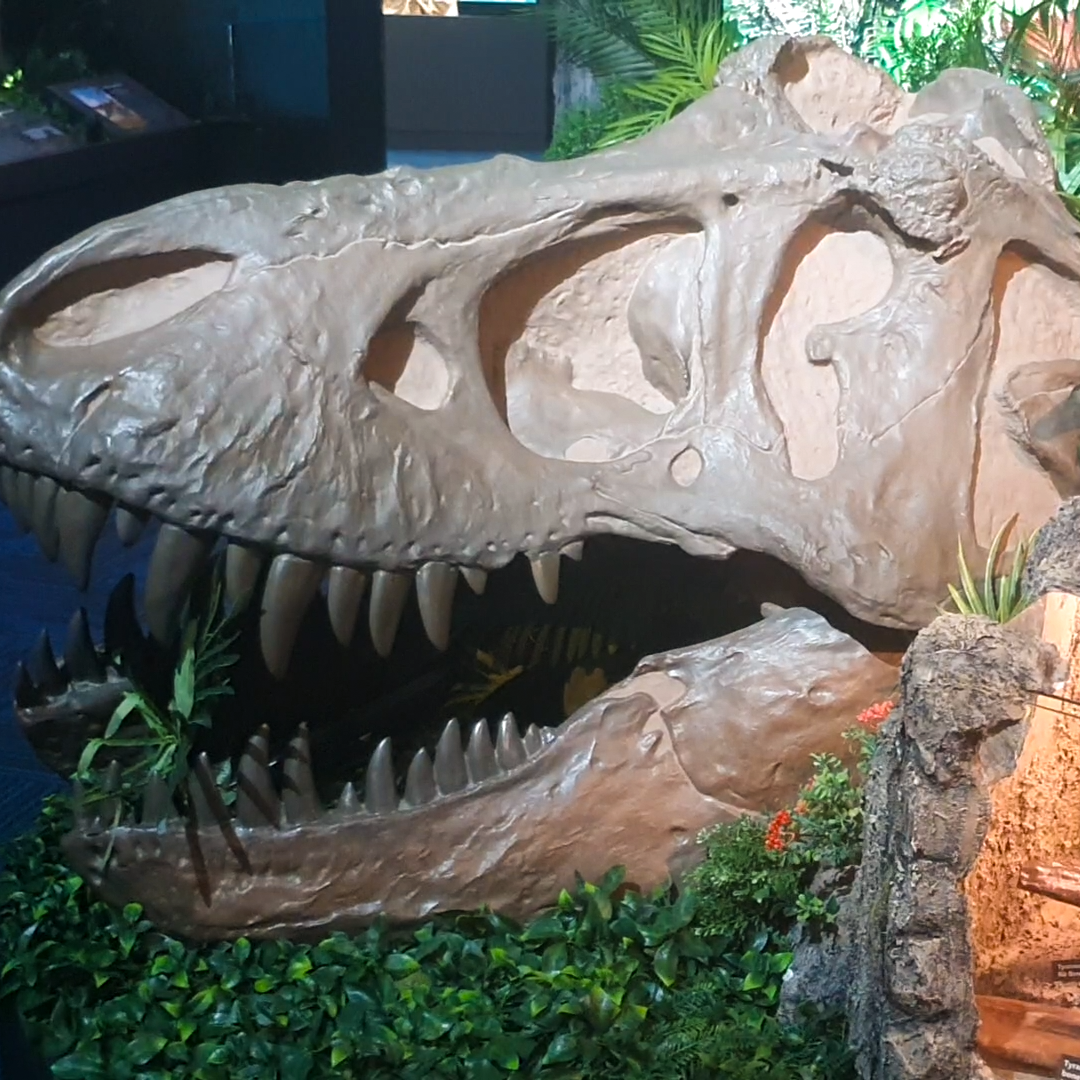
Like all other continents, Australia was once home to a host of prehistoric dinosaurs millions of years ago.
In fact, for a lot of the Mesozoic period (the age of dinosaurs), Australia wasn’t even Australia.
It was part of a supercontinent called Gondwana, which started to split into Africa, Madagascar, India, South America, New Zealand, Antarctica, and Australia around 180 million years ago.
However, Australia’s general public knowledge of domestic dinosaurs has struggled to reach the same level that it has in the Americas, Europe, Asia, or Africa.
This is ultimately comes down to Australia’s history with dinosaurs beginning quite far behind everywhere else.
The first recorded dinosaur fossil in Australia was in 1903, and it took over 20 years for Australia to formally recognise it’s first dinosaur, Rhoetosaurus brownei, in 1926.
While over a century ago in Europe, dinosaurs were already being formally described, with Megalosaurus bucklandii being the first dinosaur ever named, way back in 1824.
Deputy Director of the Western Australia Organic and Isotope Geochemistry Centre, Dr. Stephen Poropat, says that it took several decades after Rhoetosaurus’s discovery for Australian palaeontology to get off the ground.
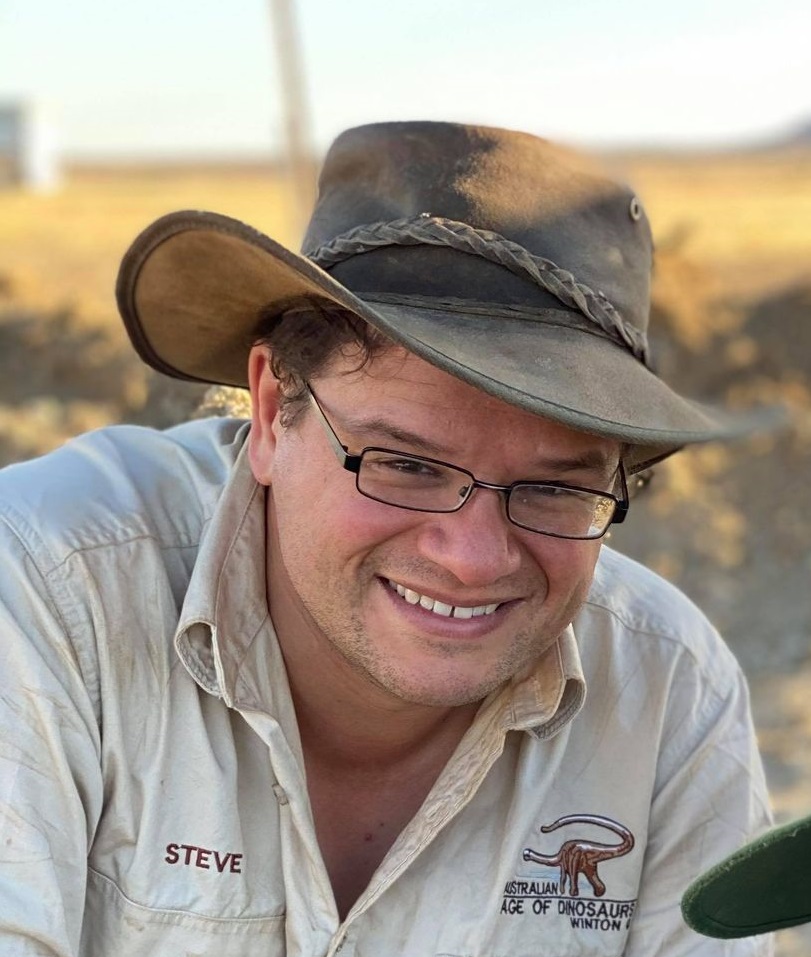
“In the ’60’s, specimens are being discovered but they’re still not getting described, and the same is true in the 1970s,” he said.
“It’s only from 1980 onwards that you start to see a lot more work being done.”
Dr. Poropat lists the Dinosaur Stampede as a key example, and said that it helped put Australia on the map.
“That was first reported in 1979 and properly described in 1984. That did draw a lot of attention overseas, because at the time, it was the densest accumulation of dinosaur footprints anywhere in the world,” he said.
Dr. Poropat adds that modern public perception has been influenced by museums like the Australian Age of Dinosaurs, Eromanga Natural History Museum, and the Australian Opal Centre.
“(They’re) all continually feeding out reports about new discoveries, or new display, or new descriptions of specimens that have been made in our own backyard,” he said.
While Australia might not have iconic dinosaurs like Tyrannosaurus Rex, there are several notable known species.
One of Australia’s most famous, is Muttaburrasaurus – a large herbivorous ornithopod that lived during the early Cretaceous period.
Dr. Poropat notes that Kellanova (previously Kellogg’s Company) supported the casting of Muttaburrasaurus skeletons, around the time it was described in 1981.
“Because of that, all of a sudden every state museum had a cast of Australia’s own ornithopod dinosaur with the big bump on it’s nose.”

Other Australian dinosaurs with distinctive backstories include Leaellynasaura, a much smaller ornithopod, named after the daughter of two Australian palaeontologists, Tom and Patricia Rich, and Qantassaurus, aptly named after the Australian Airline, Qantas.


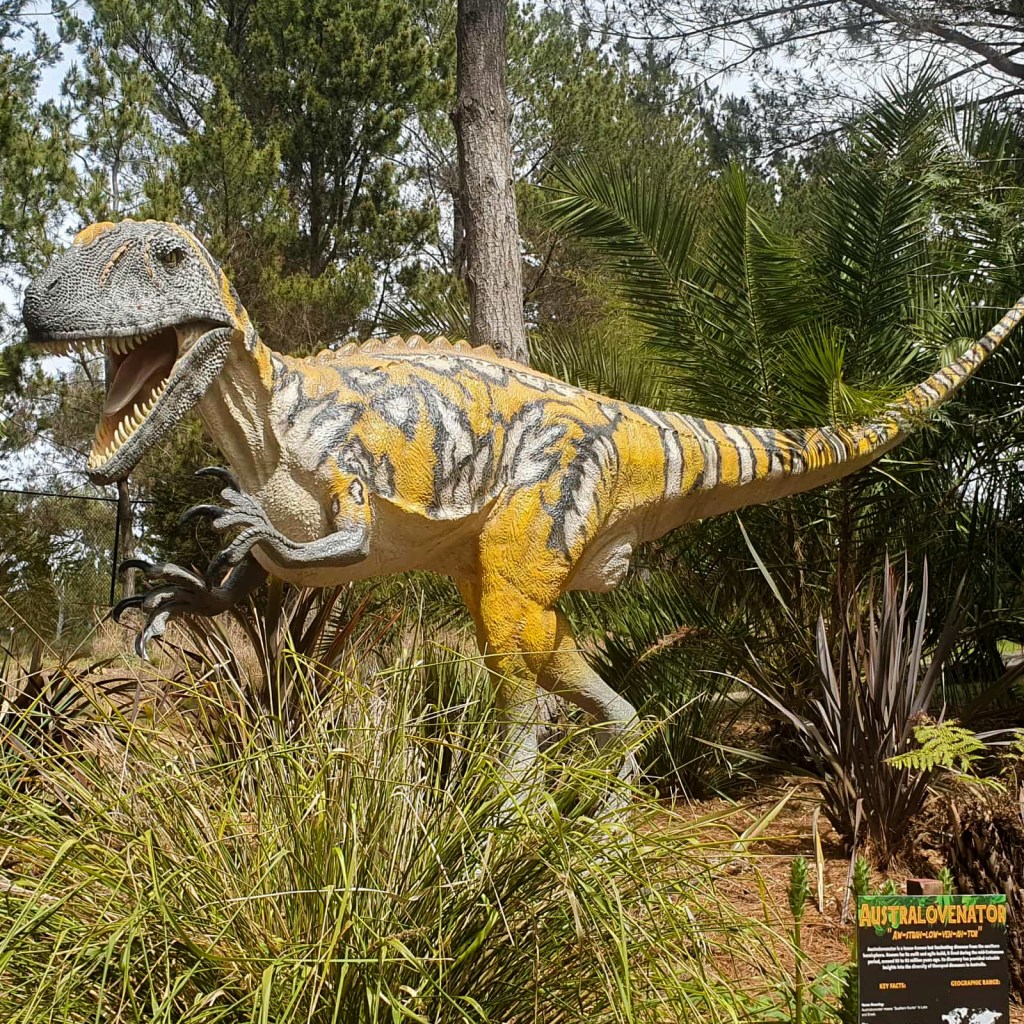
Arguably the most well-known carnivorous dinosaur discovered in Australia, is Australovenator.
Standing tall at about 1.8 metres, Australovenator is a Cretaceous period megaraptor, and likely hunted small sauropods such as young Diamantinasaurus and other small herbivores.
What helps to make Australia’s history with dinosaurs unique, is our method of digging them up.
It’s not uncommon for everyday people to stumble across fossils somewhere in the world, but Dr. Poropat says that very few Australian discoveries were made by palaeontologists.
“Without people taking their own time to go and explore their own backyard in Australia, we would have barely any dinosaur bones at all.”
“What we’re seeing in the last 20 years in particular, is regional museums really picking up and doing a lot of the hard work… in tiny towns in outback Queensland and regional New South Wales,” he said.
“Without those dedicated locals, we wouldn’t be seeing anywhere near the level of discovery that we are in Australia now.”

While Australia may finally be picking up the pace, there’s still a lot to learn about Australia’s dinosaur history.
The good news for Australia is that more and more discoveries are being made every single year, and it may only be a matter of time until Australia finds a specimen so iconic it can rival the T. rex.