
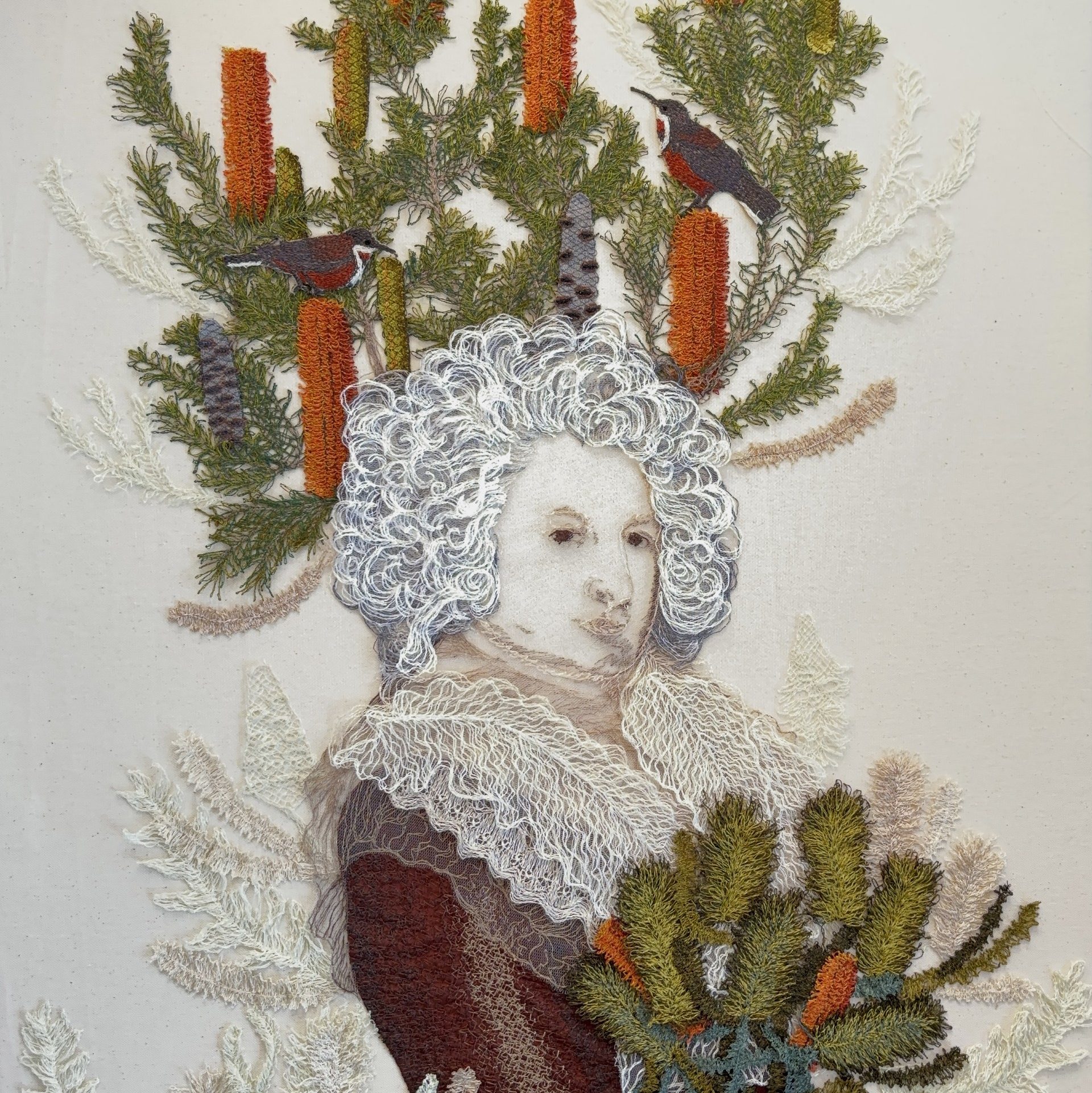
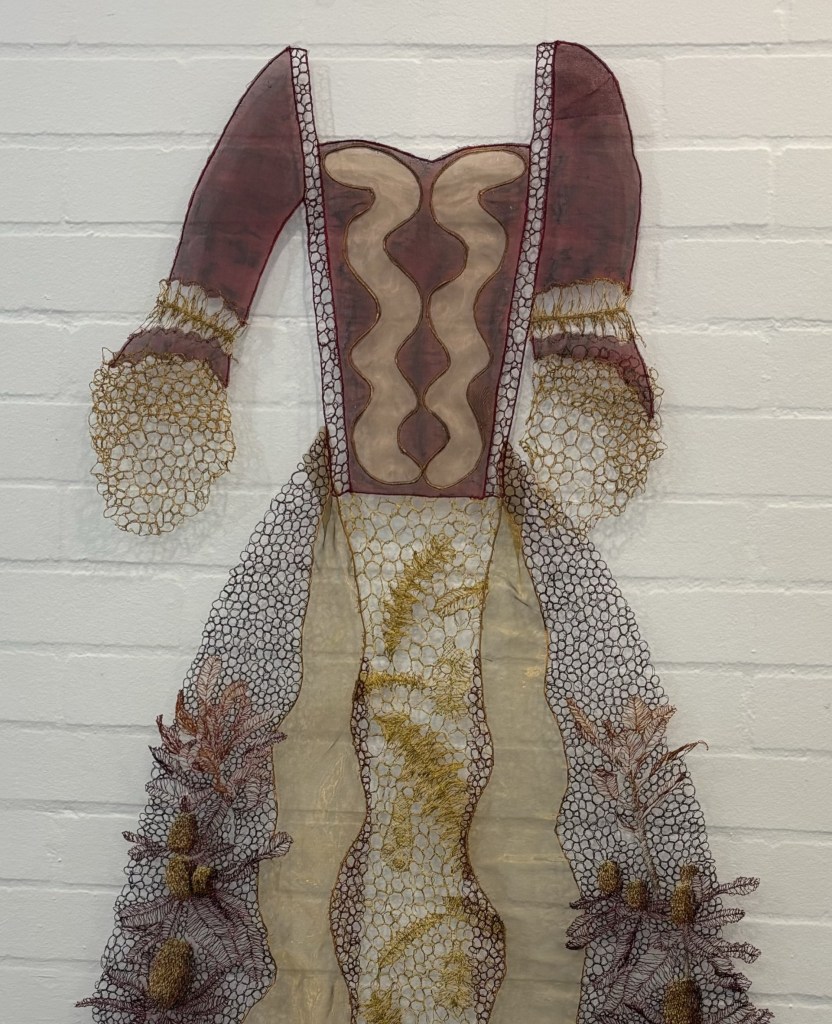
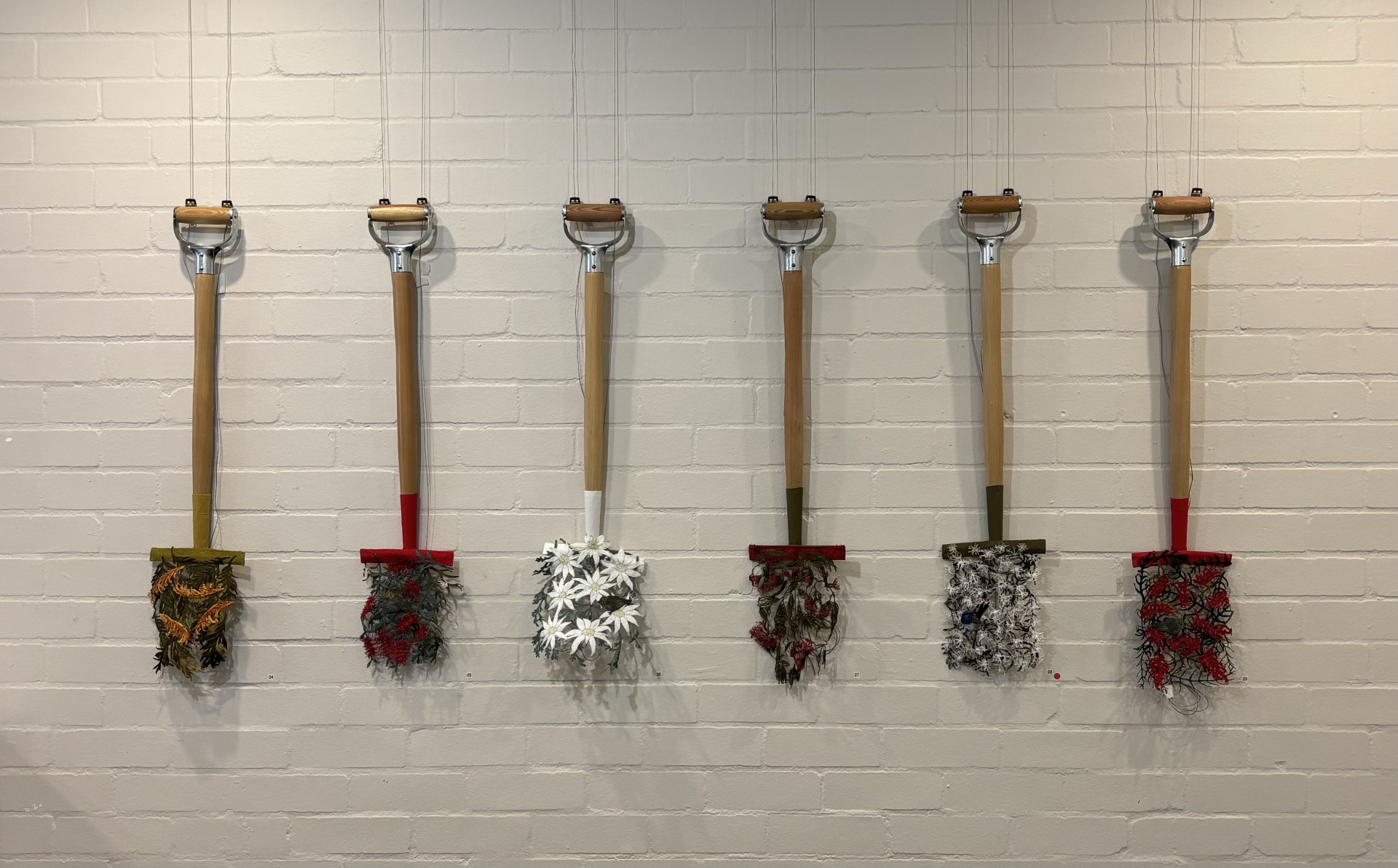
Local Canberra artist Sharon Peoples’ ‘Garden Promenade’ speculates on the what could have been if Sarah Sofia Banks, sister of Joseph Banks, had travelled to Australia alongside or instead of her brother. With a focus on motifs through her brother’s collected plants, such as flannel flowers, grevilleas and banksia, Peoples exercises lace-like textiles to draw an attention to the feminine eye.
I had the pleasure to speak with artist Sharon Peoples and ask her a few questions about the ‘Garden Promenade’ exhibit, her background as an artist, and her artistic ethos.

Q: Sarah Sophia Banks had such a bold personality and unique style. How did her life and interests inspire your approach to creating ‘Garden Promenade’? Were there any particular aspects of her character or collection that influenced the direction you took?
A: It’s more about her way of working, the collections she created. It’s very much an anthropological approach, as we might say today, because she collected not just objects that reflected her own class but also everyday, ordinary items, printed tickets and such, that regular people used. This, in turn, tells the story of their lives and how they lived, which is what really interests me.
Embroidery is often seen as something very ordinary and domestic, which places it at the lower end of the art hierarchy. That aspect has greatly influenced me; using something ordinary, something feminine, to convey what was happening in the collection world at the time. The world of collections was very masculine, bold, and assertive, but you can describe the act of collecting in a different way as well.
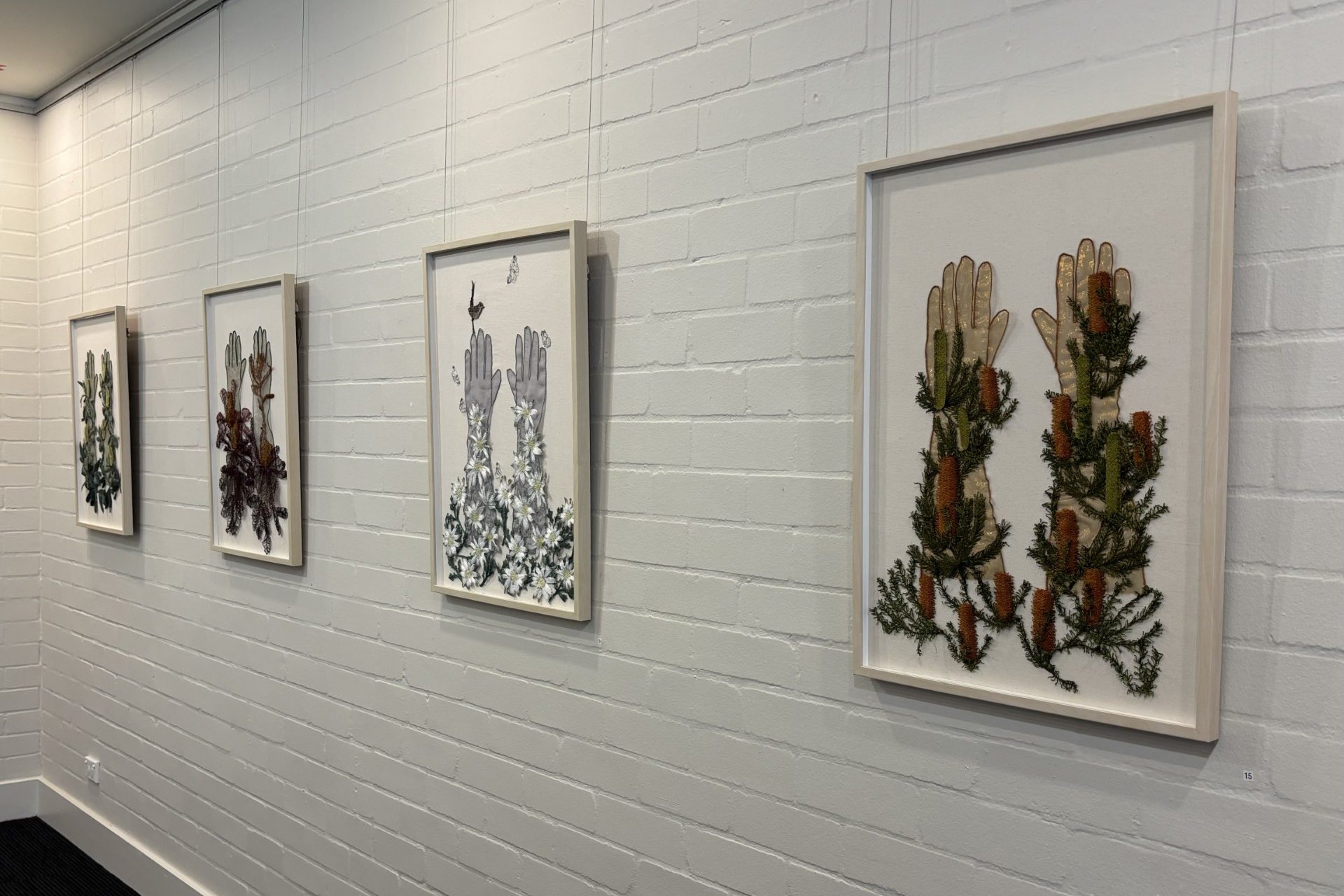
Q: The idea of Sarah Sophia Banks travelling to Australia is such a fascinating ‘what if.’ How did you explore that concept through your textile work? I’d love to hear how you used the plants Joseph Banks collected and the textures in your pieces to imagine her perspective if she had made that journey.
A: Thinking through a feminine perspective on how we reflect what we do: All the indigenous and native plants of Australia were simply gathered into collections and set aside. But perhaps if a woman had examined them, she might have seen their potential for decorative art. Maybe she could have created designs, being a fashion visionary, and recognized the opportunity to reflect her individuality—seeing something truly extraordinary, like plants from the other side of the world, reflected in fashion.
Q: I know you have a background in gender and fashion theory, how did that influence the themes and designs in ‘Garden Promenade’? How did those ideas shape the way you interpreted nature through your work?
A: Australian native plants weren’t incorporated into the decorative arts until the late nineteenth century, with the arrival of the Arts and Crafts movement. William Morris, along with his daughter May Morris, a renowned embroiderer, advocated strongly for the use of indigenous plants, particularly British native plants, which then extended to Australia as well. That’s a significant gap in time from Joseph Banks, who was active at the end of the eighteenth century, to nearly a hundred years later when Australia began using native plants in decorative arts.
Q: You also mentioned in your email that you have a couple connections to UC; you embroidered the academic gowns of the Chancellor and Vice Chancellor back in the 90s. How was that experience for you?
A: I was asked to do that by the head of landscape at the time, Dr Diane Firth, who wanted to use the native bluebell. The ribbons or braids they were originally given featured oak leaves and acorns, and she questioned, ‘Why are we doing this? This is Canberra,’ so she pushed for that. But going back even further, the Embroiderers’ Guild in Canberra had already put forward the native bluebell as our floral emblem. That’s why UC has the native bluebell on their gowns—it’s the ACT’s native flower, and they wanted to truly reflect the local culture, just as UC has always done in their art collections.
It was my first big commission, embroidering around 3,300 native bluebells, before computerised embroidery had really taken off. But it opened the door to larger commissions.
Sharon Peoples’ ‘Garden Promenade’ is now on show in the visitor centre gallery of the Australian National Botanic Gardens until the 29th of October 2024.
See more on Instagram (@SharonPeoplesStudio) or on her official website.
Photos by Jacob Storey