

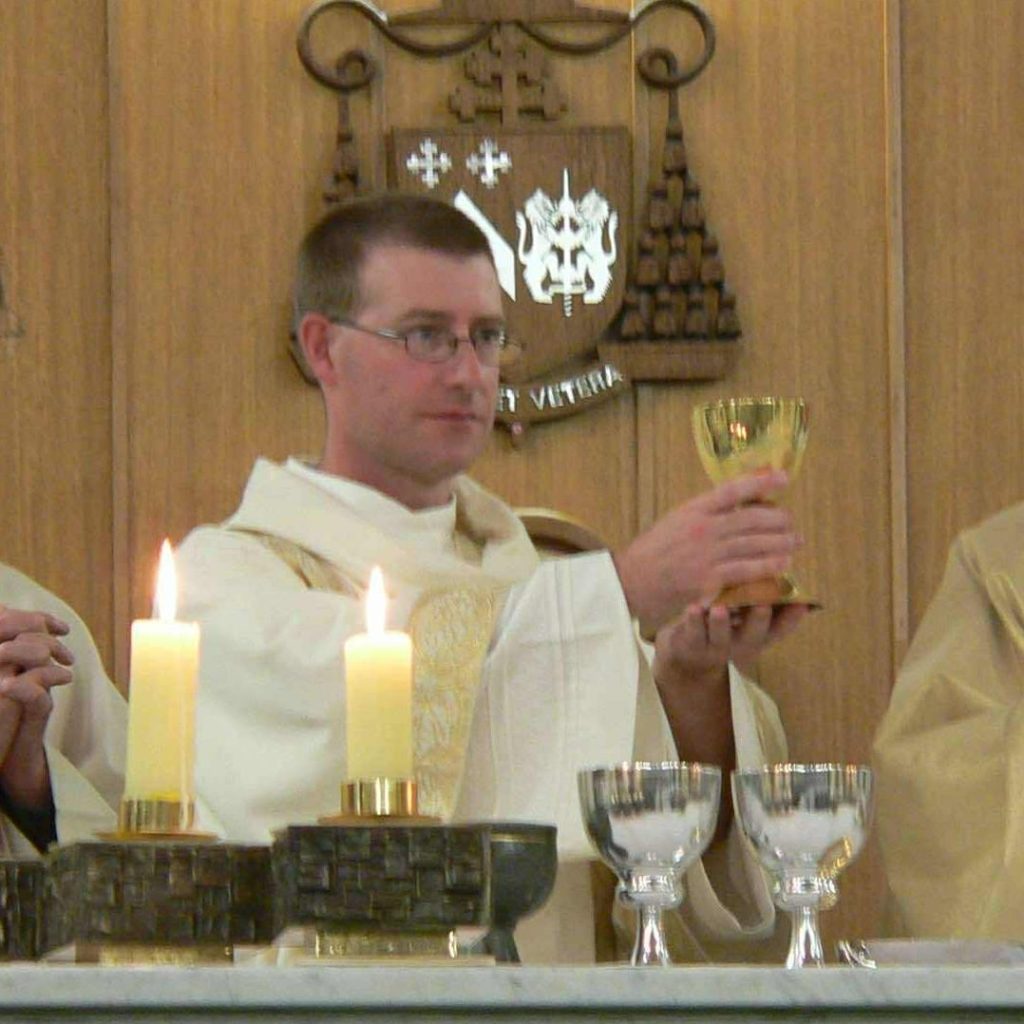
For nearly five years, Benjamin Roberts served as a priest in the Catholic Church.
Ben began his journey as a priest in 1996 and after years of study he was ordained in 2005. Grappling with the opposing views of his identity and the church, Ben left the priesthood towards the end of 2010.
Choosing honesty from the beginning, a few key figures in the Church knew Ben was gay. They accepted his presence, but not his identity.
I spoke with Ben about his experience in the priesthood and how he navigated his own identity throughout controversial times in the Catholic Church.
Q: What prompted you to begin a path of priesthood in the Catholic Church?
A: There were mixed motivations. I would probably put it down to three different things. One was rebellion, which sounds kind of weird, but my family wasn’t super religious. I guess I deliberately sought out the most hardcore group that I could as a way of sort of rebelling against my middle-class, ordinary family life.
Secondly, was sexual identity. Dealing with the knowledge I was gay and at that stage that jarred with my kind of religious convictions. I was kind of thinking, what is something I can do with my life that’s positive and fruitful. At that stage, I thought a relationship was kind of colouring outside the lines.
Third is my desire to help people. There were gifts that I had … that I do have that lend themselves to a kind of caring, healing, teaching sort of role and I had a fair bit of feedback from other people that it would be a path where I could do something positive.
Q: Did you ever feel doubt during your journey as a Priest?
A: Many times, but there were a few key moments. I had no doubt that it was what I was meant to do. The doubt was whether I had the strength and resilience to.
I had a massive crisis when I was ordained as a deacon. It is a step along the way to becoming a priest and once you’ve reached that point where you’ve been ordained as a deacon it’s sort of a point of no turning back.
It was then that this department in the Vatican released a document regarding homosexuality. It said that gay men were not suitable to be priests, young men who were gay should not be accepted into that pathway. Gay men that were already priests, shouldn’t be allowed anywhere near people who were studying to be priests because they might corrupt them.
When this came out, I’d reached this threshold where it was too late to turn back. That threw me into a massive crisis of what is the most honest thing to do.
I made a bit of a mistake then, I trusted the people who had accepted me because they knew about that document and hadn’t said or done anything. So I trusted that if they think it’s okay then it will be okay. Looking back I think there was an opportunity to stop.
Q: How did you navigate your identity in a space that has been known to deny queer identities?
A: It was like sailing into a headwind. Something in me wanted to become at home with who I am. But, there were significant voices saying we’re not quite comfortable with this and we’ll accept you, but we’d like you to be open to reparative therapy.
All along there was this kind of pressure to let people fix me and I wasn’t comfortable with you I was, but I knew I didn’t want that. I didn’t want someone fixing me.
It came to a head right at the end of my training. I said I’m going to be celibate, but I’m gay and I’m comfortable and happy with that. I’m not going to try and change or apologise for that. It started a little bit of a crisis in our leadership, they didn’t know what to do. But, I was in this position where I was much more comfortable with myself and I had a group of friends who were supportive.

It all changed when that document came out. Until that point, I had shown high level academic achievement and everybody had said I should be lecturing philosophy and theology [to seminaries].
I had been led in this direction to teaching seminarians, and all of a sudden it went quiet, and they said instead we need you to do other things and that other people should have the opportunity before me.
It became clear to me that this path I had been on for six years had finished. No one said anything about it, it just became uncomfortable when I raised it. That was the beginning of the end for me, it was not a place where I could be myself.
After that, I started working a lot with young people, and because some of those young people were queer I found myself in this impossible situation where all of my authority to say things came from the church.
The church said as a queer kid you need to be celibate for the rest of your life and I just couldn’t say that, I couldn’t say there is something wrong with you or that it’s a bit of a ‘sickness’.
I found myself in this impossible situation where I couldn’t say what I was authorised to say, and really in that way my identity was kind of the undoing of the whole thing.
Q: Do you think if the church wasn’t as opposed you would have gone further down the path of priesthood?
A: I can’t say for sure, but if there had been openness to me following down that academic path and if I hadn’t found myself in that moral dilemma in counselling people about their sexuality.
But, it wasn’t just about sexuality. It was also the views on sexuality and fertility in general, i.e contraception, masturbation etc.
Q: Do you still carry aspects of faith with you?
A: The first time I went to Hiroshima, I went to the museum commemorating the atomic bomb there. I would have been 24 years old. Something broke in me when I went to that museum … something changed in a way that became part of my identity.
It was seeing our capacity for violence and seeing the horror. I was truly horrified by that and heartbroken by it. Then, seeing our propensity to be kind, generous and good. I walked away from that time with the horror of violence, knowing that it’s in me, and wanting to instead see the things that lead to peace in me, and in the world grow.
My journey into the priesthood was to bring the building of peace into the world and to be a part of that. I also came to believe the church was part of the problem and part of the violence in the world in many ways, and some people won’t agree with that.
My time as a priest gave me some tools for reflecting and understanding. Most importantly trying to become a man of peace and not a man of violence. That’s the journey for my whole life. At its heart, I think the Christian story is about that [peace].
The other thing that stayed with me is the person of Jesus. I am still haunted by the person of Jesus. I don’t consider myself a Christian, not a believer in God, not an athiest, but definitely not a believer in a creator. However, I still consider my life as an attempt to follow Jesus somehow.

Q: What do you do for work now?
A: I teach English as an additional language, I work with adults who have migrated to Australia for various reasons and I help them to build their English language skills to the point where they can contribute and live well in Australia, as much as possible.
Q: Did you feel a sense of “calling” towards your current work?
A: I did, a lot of other people’s words as well as my own feelings drew me towards teaching.
During my training [as a priest] I had lived with men from Papua New Guinea, Indonesia, Phillippines who were also studying to be Priests. They found the tertiary study difficult and I spent time with them boiling down the language and communicating it at the level of their English. I knew that was something I was good at and something I love doing.
When I left the priesthood it was incredibly good timing. There was a massive need for it and funding provided by the government. In that window, I started studying again and someone gave me a job that I wasn’t qualified to do, understanding that I would eventually be qualified. There was a strong sense early on that this is my thing. The way I feel alive in a classroom, is different than anywhere else.