
Content warning: this story discusses themes related to mental wellbeing, such as depression
Have you ever felt lost or alone? DSM6 is here to remind you that you’re not the only one.
Using music to explore themes of heartbreak, depression, and life’s changes, the Canberran indie-alternative band are making a name for themselves in the music scene of a city dominated by head-banging hardcore.
The current landscape of music in Canberra can be described as a lot of “hard-core metal,” at least according to DSM6 lead singer Julia Irene.
“A lot of the city’s younger crowd have really been getting into hardcore and the culture that comes with it,” agrees lead guitarist Adam Corbins.
In the midst of this, Julia and Adam join Halen Kite, Jasper Newbury and Miles Douglas in their band DSM6, pioneering a new generation of indie-alternative music in Canberra.
The band’s songs explore mental health themes, especially feelings of depression, broken hearts and life’s changes.
“Our songs are are different flavours musically, but when it comes to the lyrics I normally write about mental struggles that I’m having,” says Julia, who is also the songwriter for the band.
“[Our song] MDD stands for major depressive disorder ’cause when I wrote it, it was just like the beginning of last year, there was a lot of change going on moving out of home, and I’d just broke up with my boyfriend of 3 years,” she elaborates.
Even the band’s name DSM6 is an allusion to the DSM5, the fifth (and current) edition Diagnostic and Statistical Manual of Mental Disorders.
Ironically, however, the band has five members instead of six.
All of the DSM6 Members are studying at the Canberra Institute of Technology (CIT), Where they each had the choice between a diploma in Sound Production, Music Production, or Music performance.
Julia jokes that as the eldest member of the band and the first to start studying at CIT, she created it by watching all the new CIT students perform and cherry picking the best. While only half true, the band does all agree that they have their institution to thank for helping them meet each other.
“For the most part all of us have very different schedules with schoolwork and stuff, but oftentimes we do get to collaborate at CIT as well which is really fun,” says Adam. “Then outside of that, every Saturday we’re here practicing.”
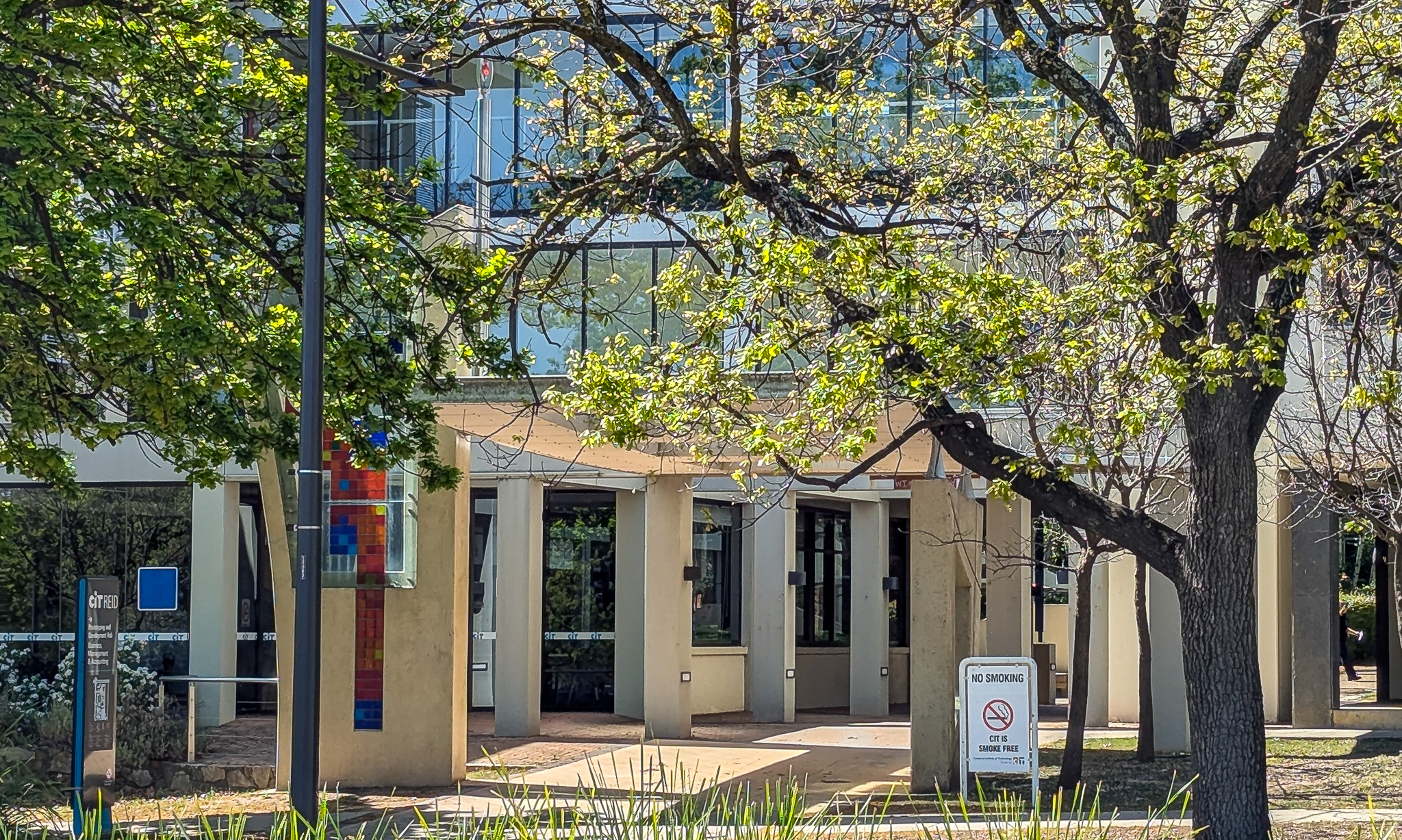
“I try to come here every weekend regardless of whether we have a gig soon or not, just because I like to,” adds Julia. “I kind of like these boys, I like to hang out with them.
“It’s a bit flexible, though, because we do want to finish school and stuff you know? We’re all dedicated but we also understand each other’s workload — sometimes things can be a bit stressful.
“[We all] know how important this is to each other, and how important it is to dedicate time to this. It doesn’t matter how much we’ve got going on. At the same time, though, we’re all in CIT, we all understand each other’s workload. If one of us just can’t do it this week we’re all just kind of, like, that’s totally fine cause neither can I,” Julia laughs.
Although the coursework can lead to some high-demand and high-intensity weeks for DSM6 who need to juggle it all with their regular band commitments and activities, they appreciate the CIT student support for making it more doable.

“We also have the great Canberra people around us. We always have really great turnouts at our gigs,” Adam says.
“Shoutout to the these three people who consistently always show up to every gig. We don’t know them but it’s very nice — seeing people you now recognise from like the past four gigs.”
Despite Canberra’s big music culture, DSM6 feels that the trendiness of hardcore music in the city is making it hard for them to get in the spotlight.
“I’m not especially opposed [to the trend of hardcore music in Canberra], but it is frustrating I guess,” Adam says.
“At the moment its harder to sell ourselves because we’re the complete opposite of that. We’re really about lyrics, about the melody. And the scene here with hardcore, you know, it’s meant to be fast, it’s meant to be exciting and all that. So, that part is hard for us.”
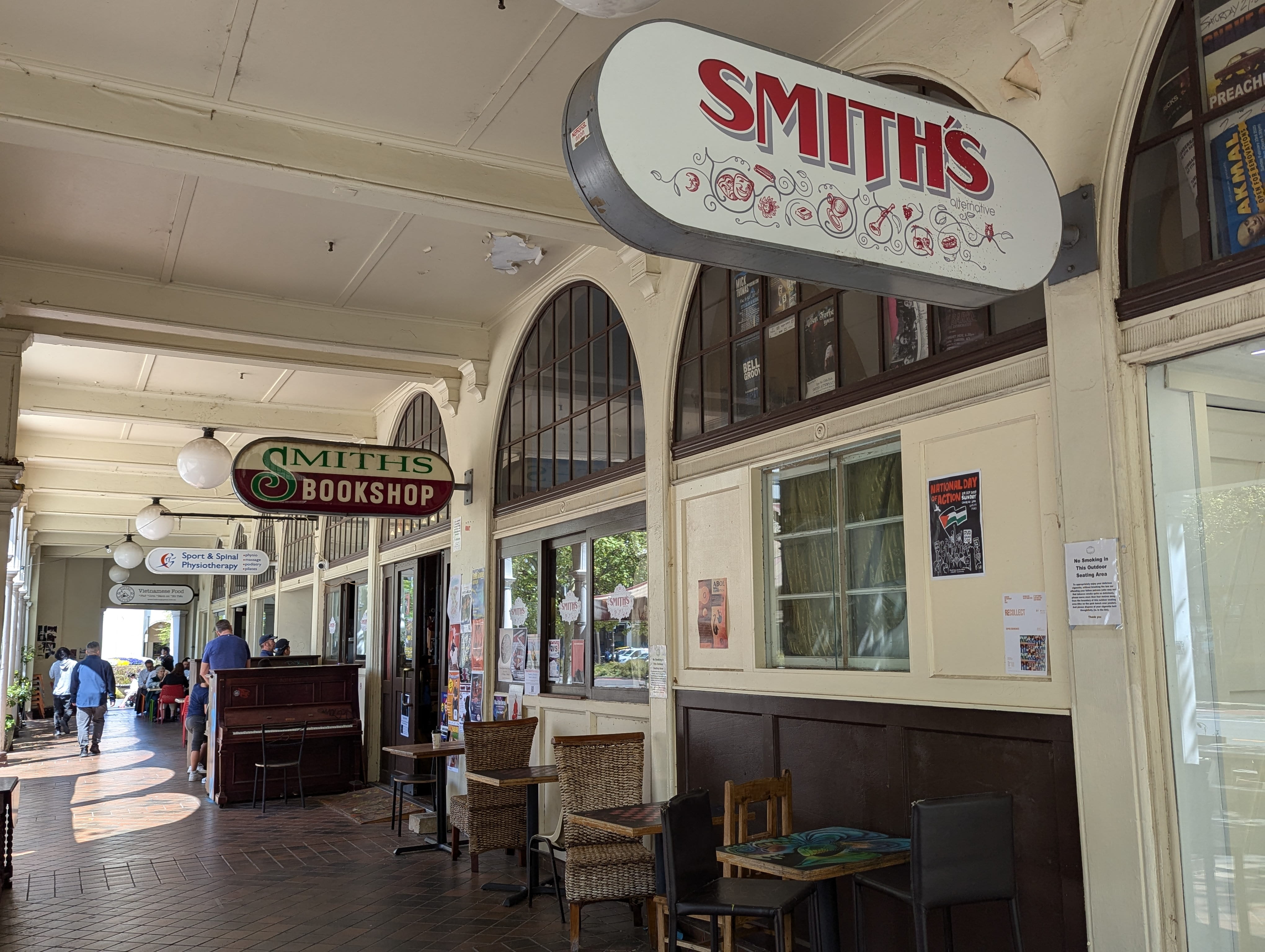
Despite these challenges, Adam is grateful to venues such as Smith’s Alternative and The Baso for always doing their best to run a big variety of different shows. The DSM6 members all agree they love to perform at them.
Reflecting on their time so far in the band, DSM6 believe that it’s mostly been made up of fun and rewarding experiences, far outweighing the occasional challenges.
For Adam in particular, he found it really heartwarming to find himself going from being the only outgoing bandmember who “had to carry a lot of weight up on the stage with crowd interaction,” to now seeing Julia just as comfortable in front of audiences and able to say whatever she wants into the mic without fear holding her back.
Julia attributes her ability to grow so much in that regard to her time with the rest of DSM6.
“I’m really glad that I’m really close and comfortable with these boys because otherwise I’d still be how I was. Especially at the beginning, I was so scared. I remember being scared of having panic attacks,” she says.
Julia also recalls how the rest of the band recognised her effort and work to release their first single MDD before the release show, and how they noticed she was struggling to get it done in time under so much pressure, so they had a custom shirt made for her with one of the band’s inside jokes on it.
“We hid it in the back of my amp literally the entire show — right before we played MDD I pulled it out,” recalls Adam.
“It was such a special memory,” Julia says.
“You know how dudes are, they can feel for you but they won’t tell you. I was always hoping, and then when they showed me that shirt I literally cried.”

DSM6 feel they’ve learned so much while their band is still in early days.
Jasper says that his best advice to young people looking to join or start a band, is “be open to everything.”
“If you’re set on sticking to only one thing, like being a bluegrass swing drummer, you’re probably gonna get maybe two gigs in your entire career. You really need to know pretty much all of the basic mediums available in music, in-depth You have to be very flexible and you have to be adaptable. That’s probably how you’re going to get the most out of this industry,” he adds.
“I would say that in a band, you have to be friends with each other, and you have to have fun when you play. I think that’s the source of creativity,” Miles chimes in.
“If you watch any band play at a really high level, not only are they good but they’re really enjoying themselves on stage and it’s noticeable. It gives the audience that same energy,” agrees Adam.
DSM6 feel this is one of their greatest strengths, too.
“I can just look at at of these guys when I’m playing and they’ll know what I mean — it’s crazy but it’s real and it really works,” Julia says.
The bandmembers agree that this is the result of their commitment and how much they’ve practiced.
“You have to commit in music,” Julia says. Especially for us being in this band it requires a certain level of commitment. If you’re not 100% committed, then it’s not gonna work. Like we said, we’re all students and our workload is pretty stressful because we do want to get our diplomas. But we’re here every Saturday practicing because there’s a level of commitment here.”
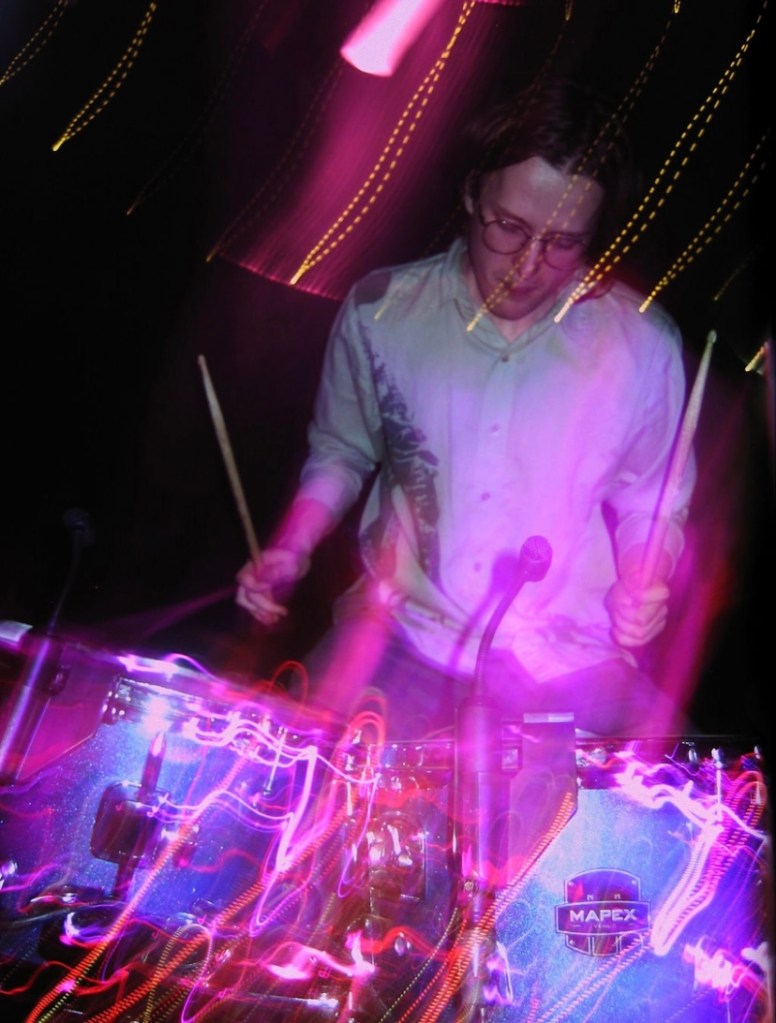
DSM6 have recently released their latest track Mangrove, with another single on the way. They have confirmed that an album is already in works as well.
Photos by DSM6 and Frazer Coustley
Connect with DSM on Instagram, and their songs are available to stream on Spotify and Youtube Music.
If this story’s has raised any concerns for you, the following services are available 24/7
Lifeline – 131 114
Beyond Blue – 1300 224 636
Headspace – 03 9027 0100
Kids Helpline – 1800 551 800
MensLine Australia – 1300 789 978