
CONTENT WARNING: This review contains references to objectionable concepts, including slavery and offensive language
SPOILER ALERT: This review contains plot details
Most people would recommend their favourite movie without a warning, but I can’t in good conscience send someone to watch Django Unchained unprepared.
On that note, let’s get you ready. I hope you have a horse, because it’s a long journey. 2 hours and 45 minutes to be exact.
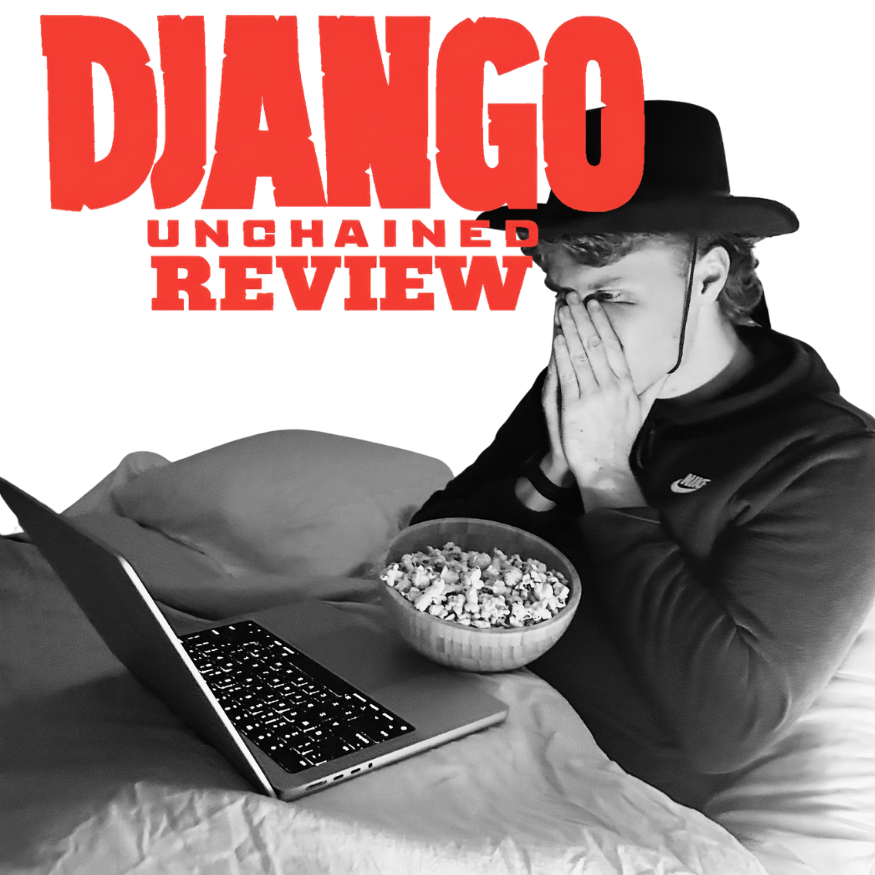
Released in 2012, Django Unchained is set in 1858 America, where slavery is yet to be abolished. It is occurring across the country, but the southern states have become economically dependent on slavery.
Django (Jamie Foxx) is an enslaved man and is forcibly acquired by Dr Schultz (Christoph Waltz), a German bounty hunter, to help identify a set of three outlaw brothers.
Schultz is impressed by Django’s ability to fool slave owners with a persona, and they work together in a bounty-hunting partnership. This breaks the societal norm, with the two becoming near equal partners before they work to rescue Django’s wife from a plantation.
Schultz and the audience are faced with brutal visuals and the inhuman realities of America at the time.
Cinematography: you may want to look away …
The film is known for its confronting scenes of bloody slavery, cruel dialogue, and extreme violence. Director and screenwriter Quentin Tarantino made the movie his own, with extraordinary shots and crude language consistent with his previous work.
This is not the first ‘Django’ Hollywood has seen, with the original being released in 1966. The film followed a very different plot but featured an outcast protagonist who fled from the war. Both movies were criticised over their distasteful and extreme violence, with the original being banned in the UK.
The Original Django (Franco Nero) even cameoed in Tarantino’s film, saying “I know” when being told the D is silent in Django.
Dialogue: they said what?!
The dialogue makes the movie worth the length, with long, still pauses and sharp changes of tone consistent with the spaghetti western genre. These create an unease throughout simple discussions, similar to the tense feeling of a horror film. Additionally, the timing shows the thought the characters put into their wording and actions.
With characters including wealthy and elegant slave owners, such as Calvin Candie (Leonardo DiCaprio), the use of slurs for black enslaved people is jarring, to say the least. Despite the approximate 110 uses of the word, at no point does it lose its impact.
Characters reveal the most about their deeper intentions with tone and small passive-aggressive comments showing their guarded emotions.
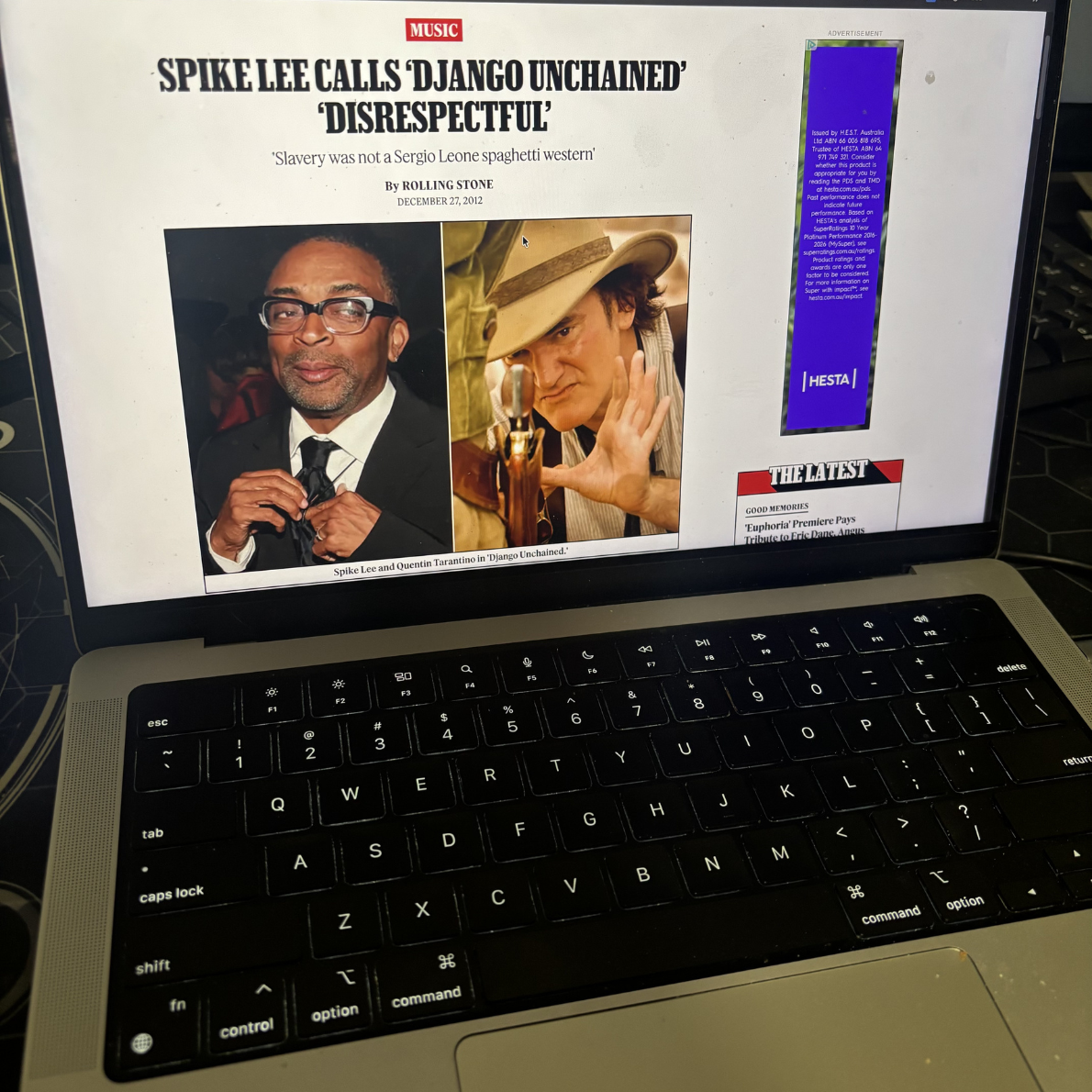
I thought the movie could have expressed a stronger character arc in its harsh environment. In all fairness, I could have missed it the first time because it is covered by the stomach-churning imagery across the screen. I wouldn’t blame you for being distracted from the character development either.
For instance, a passive discussion between Mr Candie and Schultz is contrasted with two enslaved men fighting for their lives on the hardwood floor. As they cheer them on in front of the fireplace, as if they had bet on horse racing, the fight is closed out by the breaking of one man’s head across the floor.
Why would anyone watch this?
Tarantino doesn’t care to hide the pain and death of 1866. From beatings to gun-slinging fights, every wound and gunshot is on display. The western genre is known for its iconic shootouts, but Django removes the glory of winning and displays devastation.
Glory is a core component for many protagonists, especially in Western films such as The Magnificent Seven movies. This film’s characters lack glory or a higher purpose greater than themselves. Instead, they are two self-serving men trying to take what they want from a world that is trying to screw them over.
This self-centred focus draws me towards why I love the movie. From the slave owner Schultz and the ex-enslaved man Django, Django Unchained shows the reality of how each character plays the hand they’re dealt. A true last man standing mentality. To not spoil anything, I recommend taking note of how they navigate the law to see their character development.
There is no doubt that the movie fabricated this dramatic plot that defies many real possibilities. Despite the dramatisation, it is also self-aware, with Schultz labelling Django as being a theatrical, dramatic character. The movie humanises the protagonists’ actions and faults and shows the very real inhumane living conditions many faced at that time.
Now it’s your turn
Django Unchained is not for everyone, and it’s not designed to be.
For those wanting to witness the horrific and deeply uncomfortable truth of slavery in America, this movie does exactly that. It’s a compelling storyline with likeable but not loveable characters.
Saddle up! If you’ve got the guts …
Original photos by James McEachern