
As the world faces increasing instability from climate change, more workers trained in managing the challenges are needed in today and tomorrow’s workforce.
A new LinkedIn Economic Report has identified that demand for employees with “green skills” is a growing trend and outpacing supply.
The report found that urgent action is needed to upskill the workforce to fill the demand, which is that by 2050 “there will be twice as many jobs requiring green skills as there will be people qualified to fill them.”
LinkedIn uses global data from job postings and talent profiles to understand supply and demand imbalances. Listings are surging for new jobs in environmental finance, energy management, agriculture and horticulture, Green IT, urban planning and architecture, and the hospital and health sector.
They identified green skills as the building blocks for a sustainable economy. These skills don’t just apply to technical skills for renewable energy and EVs. They also apply to employees that can enable the transition to more sustainable business practices.
The LinkedIn report builds on the comprehensive “Transitioning to a greener economy“ report from 2023, which outlines the types of green roles that require further education.
Climate change in schools
Concurrently, school curriculum academics have been warning that climate change education has left a generation of students without the skills they’ll need.
The Australian curriculim has not provided teachers with a structure that integrates climate change into students’ learning. It has also left teachers without an educational background to meet the needs of future school students.
Researchers, Brad Gobby (Curtin University) and George Variyan (Monash University) outlined the gaps in Australia’s Federal strategy for the Western Australian parliamentary inquiry into the response of the state’s schools to climate change in 2021.

They argued that Australia has been slow to incorporate structured climate change education into the school curriculum.
However, the lack of action in school curricula is not unique to Australia.
School curricula globally lacks climate education
The United Nations prioritises education as paramount in equipping populations to manage and prepare for climate driven events.
In 2010, UNESCO called for the expansion of climate literacy for primary and secondary school students. Subsequently in 2016, Australia signed the Paris Agreement, which cited education a key objective.
Research from UNESCO in 2021 evaluated curricula documents from 100 countries. The study found that roughly half of these had no climate education content at all. Oceania (including Australia and New Zealand) did poorly, with only minimal content.
Climate curricula progress
The Academy of Social Sciences Australia commissioned a report into Climate Change Education in Australia, led by Honorary Professorial Fellow School of Education, University of Wollongong, Peter Freebody.

The Freebody report (released in March 2023) summarises research reviews, assessments, and ways forward. Like the UNESCO report, the review found school curricula were not giving teachers or students the tools they needed for safe and integrated learning about climate change.
To summarise, this report recommended more holistic education in climate change, using local issues for better engagement with students.
However the writers found that there is a need to step-up teacher training to address the lack of foundational education in schools.
The latest Australian curriculum, introduced in 2023, improves on the previous one. Although, arguably it still does not give teachers and students with enough breadth and scope to prepare for dramatic change and climatic events. This lack of comprehensive climate education has a flow-on effect on the next generation of teachers.
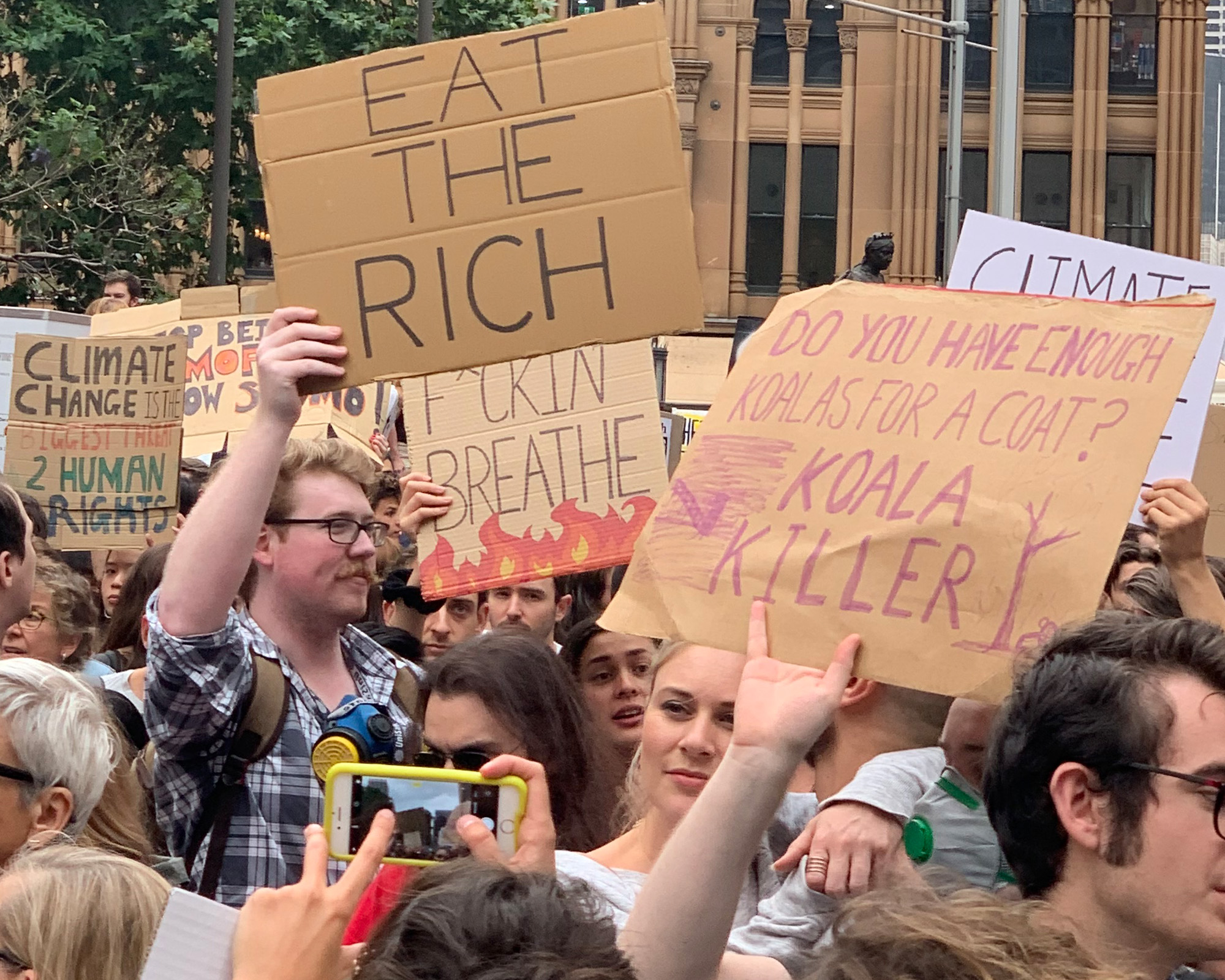
The report found that better teacher training in climate change awareness, issues and opportunities will increase teachers’ confidence in managing complex demands in the classroom, including a politically charged environment.
The way forward
To reverse this trend, there are leading examples where universities have included climate change as a core subject.
Lakehead University in Ontario, Canada, offers this climate education elective for educators, and the University of California, San Diego, mandates students include a climate change course in their education.
Closer to home, the University of Queensland School of Business is offering climate literacy training.
The new Australian curriculum format highlights environmental awareness and sustainability to foster a connection between students and ecosystems.
Climate change education is the greatest opportunity for investment in the future and minds of coming generations. However governments have been slow to act. The Freebody report and other research into school curricula show how interdisciplinary education models will improve climate change education in schools. Meanwhile, job seekers can add green skills to their resumes, tackling large scale and complex environmental issues in the workplace.