
I do not believe I have been in many rooms where every single person present was there out of a selfless drive to help a complete stranger.
On the 12th of March, I attended the Refugee Action Club public meeting at the ANU. The event was chaired by ANU student Trudy Francis and featured speakers Gillian Triggs, William Maley, and John Minns. Over the night, they spoke on the issue: Refugees: Australian Cruelty and the Alternative.
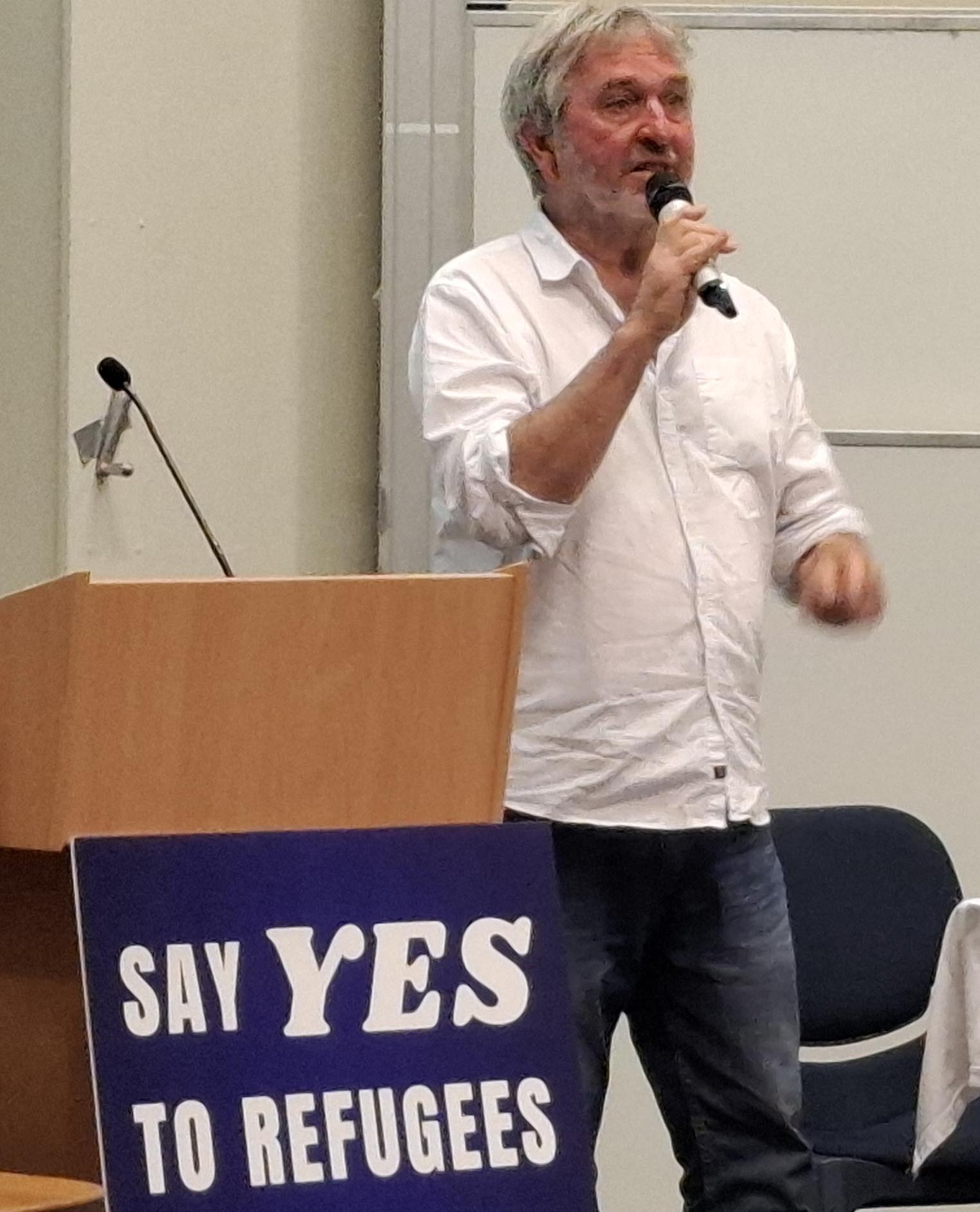
The Copland Lecture Theatre was almost full, with a diverse audience listening attentively. Older attendees made up the largest group, comprising more than 50% of those present. The second most populous group consisted of young university students, with the rest falling somewhere between these two age brackets.
What inspired me to attend was the question: Why was this happening? Why were people giving up their Wednesday evening for this event? The answer I found was simple—outrage at injustice. Not an injustice against them, their friends, family, or community, but an injustice against other human beings. And the people in this room were not okay with that.
The first speaker was Professor William Maley, an ANU professor of diplomacy, a lawyer, and a Member of the Order of Australia. His first point tackled the long-standing justification for Australia’s treatment of refugees—the claim that policies aimed to “save lives” by stopping the boats. He argued there were far better ways to save lives and pointed to the way refugees had been weaponised by the Howard and Abbott governments to instil fear and win votes.

Professor Maley’s second point was that the harsh treatment of refugees was not as popular with the public as some believed. Rather, it was the work of a small but vocal group that drummed up fear in the first place. As for an alternative approach, he put it simply:
“Respect for personal freedom isn’t a bad start… All those loud for freedom are very quiet when it comes to refugee freedom.”
The next speaker was Professor Gillian Triggs. Professor Triggs had recently completed her role as UN Assistant Secretary-General and Assistant High Commissioner for Protection with UNHCR. She was also formerly President of the Australian Human Rights Commission. She began with a clear statement: “Australia’s policies are cruel but also against international law.” That referred to the 1951 Refugee Convention, which prohibits the punishment of refugees for illegal entry or presence—a rule Australia has signed up to.
However, rather than focusing solely on Australia’s policies, Professor Triggs drew on her experience with the UN to discuss the root causes of the issue. She highlighted how a series of failings in providing support to refugees early on forced them into dangerous journeys, including the one to Australia. She suggested that investing in support at the beginning would reduce the need for harsher interventions later.

Her final point echoed Professor Maley’s: act with compassion. Thinking back to this moment, I find myself puzzled. For some reason, which I can’t quite pinpoint, compassion feels almost taboo. It doesn’t seem to fit in our world of politics or our culture. Yet, here was a room full of people advocating for just that—a sense of compassion for others. I cannot recall the last time I witnessed something like it.
In an ironic observation, Professor Triggs pointed out that the very countries turning against refugees and migrants—Australia included—are the same aging nations that desperately need young workers to sustain their economies.
The final speaker was Professor John Minns. He opened with a call to action, emphasising that the fight for the rights of the less fortunate is more important than ever. He warned of the rise of extreme anti-immigrant movements in America and Europe, explaining how fear-mongering had given these groups power while putting countless vulnerable people at risk. Professor Minns was clear:
We must not allow the same to happen here in Australia.
Once the speakers had finished, the audience had the opportunity to ask questions. The most common one was: What can I, as an individual, do? The answer? As an individual, not much—but as part of a group, a great deal. Both Professor Minns and Professor Maley stressed the importance of joining organisations and working together to make the burden lighter.
One question asked about the future of Donald Trump. After some laughter, Professor Triggs admitted she wasn’t a fortune teller but suspected the outcome wouldn’t be good. Professor Maley then drew parallels between Trump’s steps to consolidate power and those of a certain fascist leader in the 1930s.
To close the event, the speakers issued one final call to action. On April 13, the Palm Sunday rally would be held—an annual nationwide protest against Australia’s treatment of refugees. They urged everyone to attend and to spread the word.
To conclude, a statement from Trudy Francis, the student who chaired the meeting:
“I found it especially encouraging to see the number of students attending and wanting to learn more about refugees and the impacts of Australian policies. It feels important to have young people involved in the campaign, and hopefully, the discussions from the public meeting will encourage more students to get involved.”
If you would like to learn more, I encourage you to reach out to the Refugee Action Campaign Canberra. You can find them on Facebook or at their website refugeeaction.org.
Photos by Tenzing Johnson