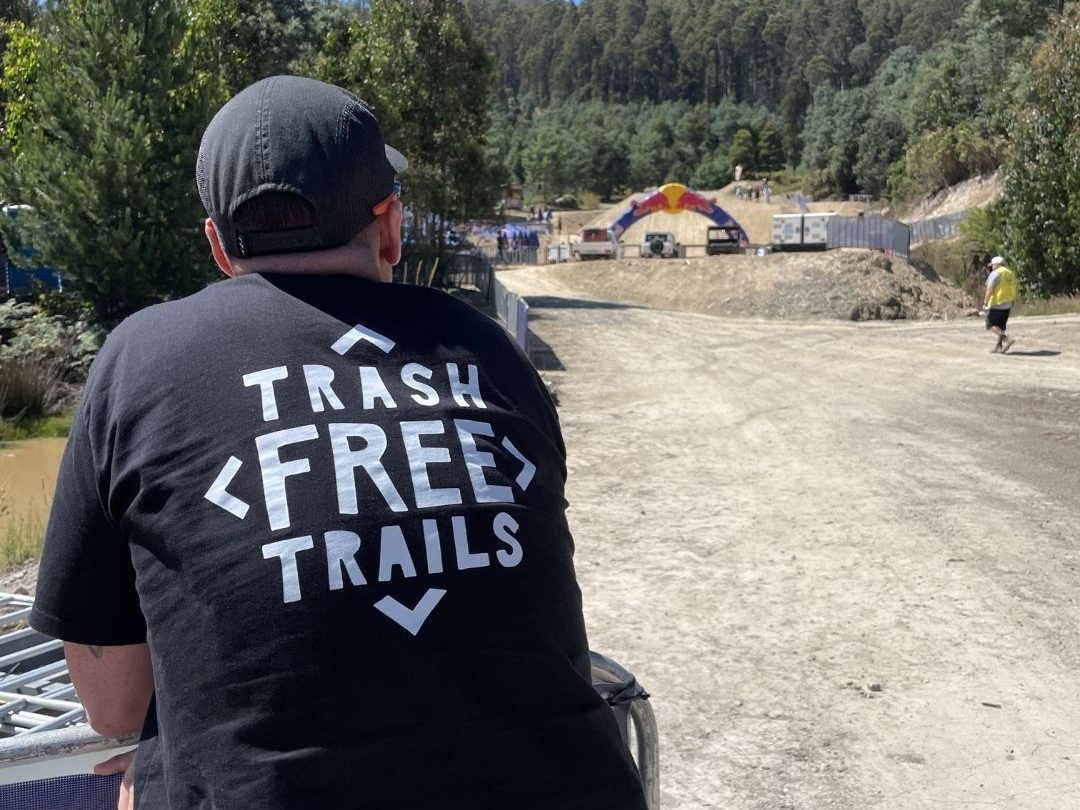
Trash Free Trails (TFT) is an exciting new non-profit organisation promoting sustainability for our beloved mountain biking, hiking, and running trails.
After launching in the UK in 2017 with Dom Ferris, the organisation is opening its first international hub in Australia, led by Tom Hutton and Dan Smith. Tom was nice enough to sit down and chat about the exciting launch of Trash Free Trails Australia.
Q: So Tom, explain what Trash Free Trails is
A: Okay, so Trash Free Trails is pretty simple. It’s a movement within the trail community, and that’s riders, runners, and roamers; mountain bikers, trail runners, bushwalkers.
It’s a framework that allows us all to protect the wild places that we all love through the simple act of removing and reducing single-use pollution from our trails.
Q: Trash Free Trails has a massive footprint in the UK. What was the specific light bulb moment that made you realise it was time to launch Trash Free Trails Australia?
A: I was listening to the Ride Companion Podcast in the UK towards the end of 2024 and they had a guest on there, Manon Carpenter, and she was talking about Trash Free Trails. They were talking about a lot of trail-related issues in the UK, things like access, sanctioning trails, trail building, et cetera.
The whole Trash Free Trails philosophy really resonated with me. As soon as I heard the three words, Trash Free Trails, it hit me as, it’s a call to action. It’s an outcome. It’s a philosophy. It’s what we should be.
Q: How would you describe the difference between a rubbish cleanup and the TFT mission of reconnecting people to nature?
A: We’re very focused on the preventative side of things. So we do do the cleanups, yes, but what we try to do is when we do those cleanups, we try to measure and record and report what we find.
And so what we’re trying to do is protect nature. Not just by taking stuff out, but also by trying to make sure that it doesn’t even get there in the 1st place.
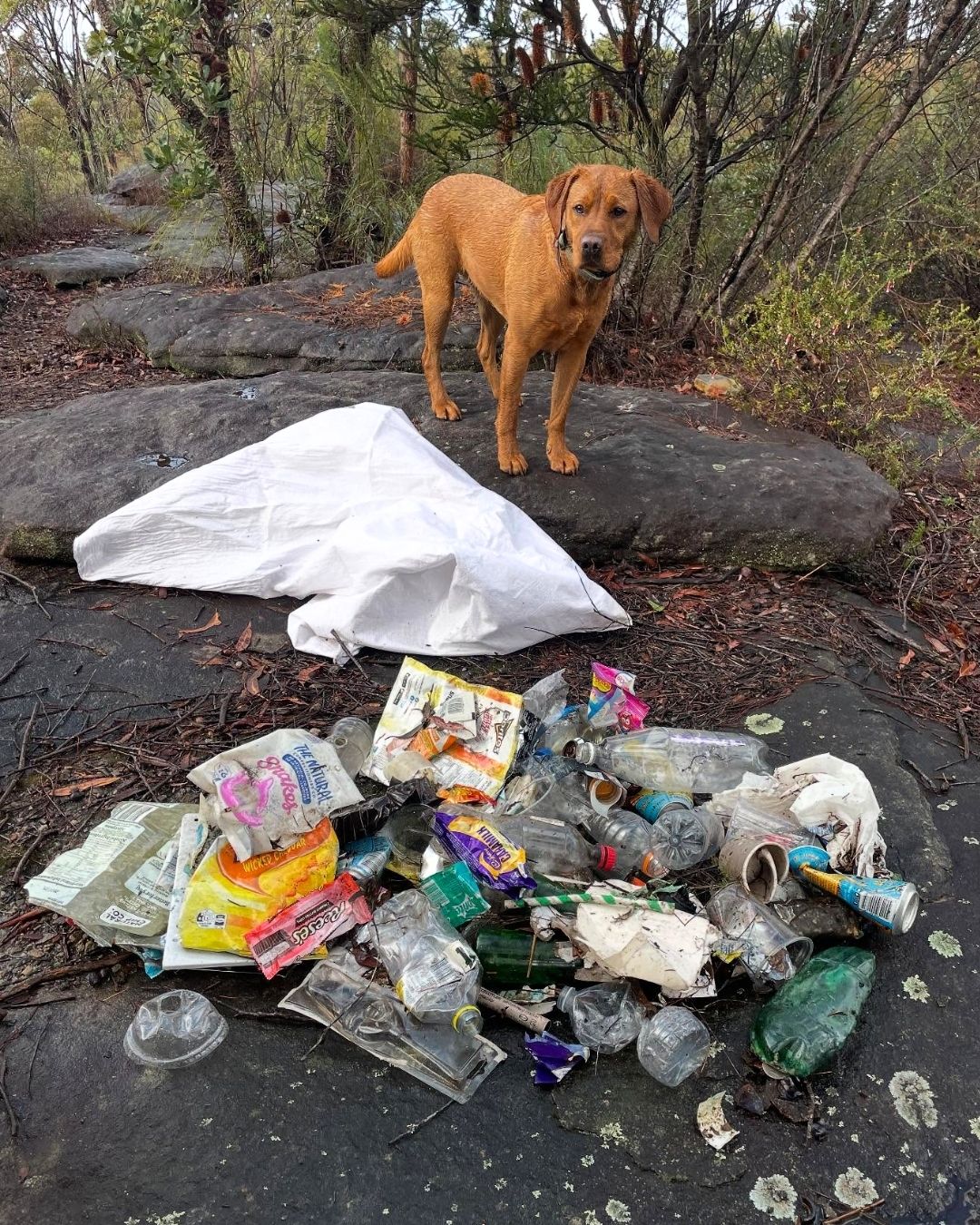
Q: Trash Free Trails is known for its state-of-our-trails report. How will the data collected here in Australia contribute to the global understanding of single-use pollution?
A: Last year, what we call the Sydney North District area, we were the second most impactful community hub for Trash Free Trails in the world. Second only to Loughborough University.
So, what we’re doing hasn’t got into the UK’s data, but it’s gone into global data, and then what we’re doing at the moment is we are creating our own survey for people to record the trash that they find, because the problem with the UK system is, the postcodes are different, the brands are different. The items are even different. So, we are localising that at the moment.
Q: Why does Trash Free Trails specifically use the term single-use pollution instead of just saying litter?
A: Litter is a really interesting phrase and has a lot of negative connotations, and one of the values of Trash Free Trails is positivity, and also not to reprimand, not to finger-point, and not to blame.
Pollution is a systemic issue, and that’s why we’re really clear that we’re dealing with single-use pollution, not litter.
You know, it started with a very passionate cause, which was Trash Free Trails, and as we’ve become more academic in our approach, we started to look at research-based results and things like that. That’s where this whole thought of single-use pollution has risen up.

Q: There are strong links between Trash Free Trails’ work and mental health. How does getting hands-on with trail advocacy improve a person’s connection to their local environment?
A: This is gonna sound so wanky. But nature is a place to be, not a place to visit. So I’ve gotten very top-level there. But ultimately, that is what we’re trying to do.
I think it’s really important that once you get in that flow state, when you’re running or riding your bike through the trails, it’s such a mental relief. When all you think about is the few feet in front of you, everything else kind of melts away and dissolves into the background, and you’re totally in your zone.
It’s such a huge hit to your mental health and well-being in a good way. So the more we can make that happen, and if those trails are clean, then that flow does not get interrupted by, oh, what’s that Coke can doing there or fuck, I’ve got to stop and pick up that lolly wrapper, right? So, I think that’s really important is what we do enhances that flow state.
Q: If a group of students at the University of Canberra wanted to start their own trash collective or community hub, what are the first three steps they should take?
A: It’s pretty simple, really. I mean, we have, as a community hub, you literally just register, and we can help you do that.
Literally all that that group needs to do is have, have some sort of name, or identity, and then commit to doing four cleanups a year. Getting out of their trails and doing a clean-up. And that’s pretty much it.
Q: Now that the Australian launch is live, what are the top three goals you hope to achieve on Aussie trails by the end of 2026?
A: We want as many trail-based events to be Trash Free Trails-approved events. I’d be really happy if we got maybe 20 events.
The second would be that we’re well on our way to establishing our own State-of-our-Trails report. That’s pretty important to me, because that’s where the evidence is.
The third thing is that we will have brought on board two corporate partners. So that’s two organisations, other organisations who see value in what we do, so they’re prepared to help fund what we do.
And if I was to say, a fourth would be to have a membership of maybe 500 people who were signed up to be members of that trash collective.
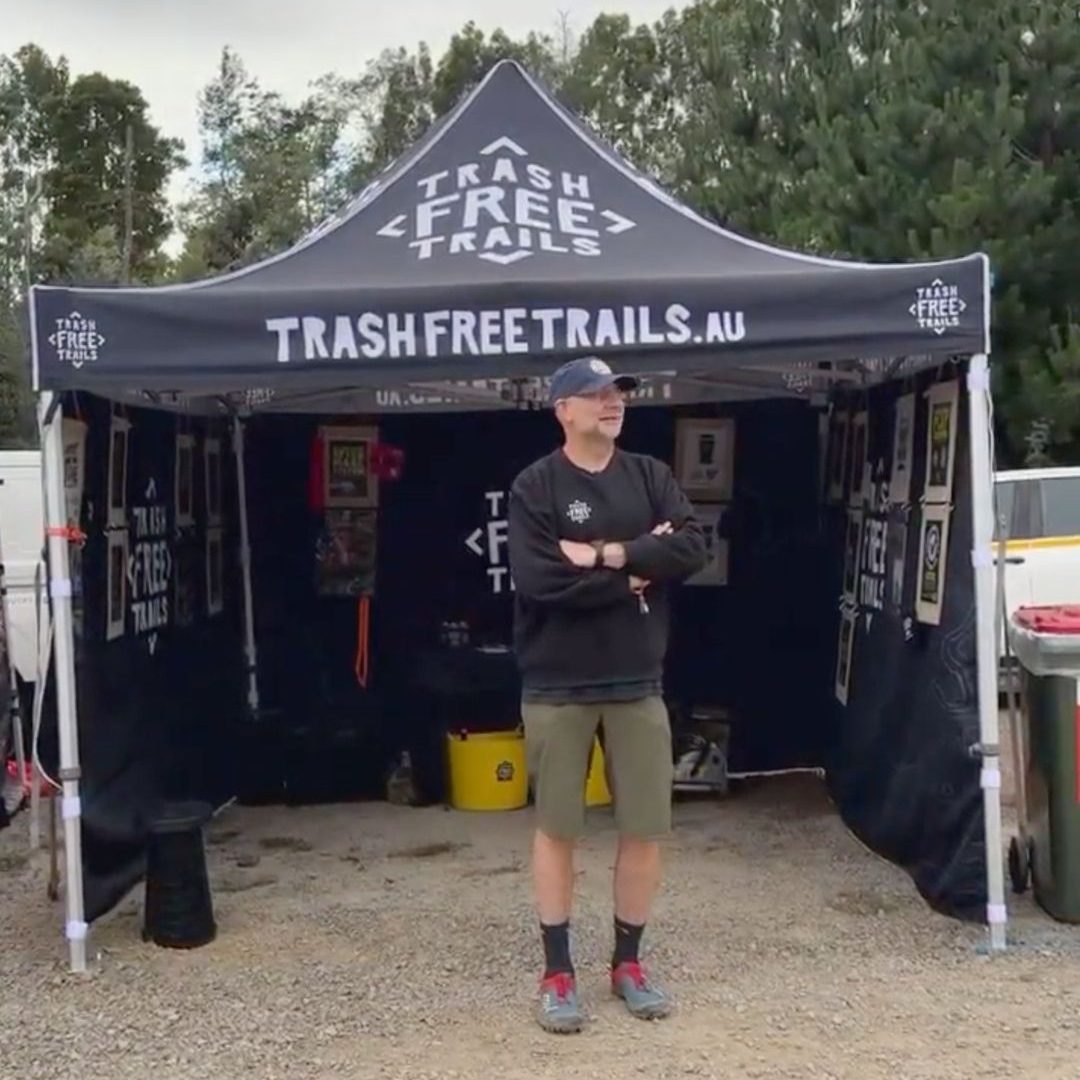
Q: If we fast-forward five years, what does a Trash Free Trail culture look like in Australia?
A: Look, we have a lot of trails and wild spaces in Australia.
So, I’d like us to say that 80% reduction in the trails that we are involved in, who have adopted our framework. And then I would like us to have, in five years’ time, it would be potentially 20,000 members.
And then, to have some sort of impact politically, or socially, in terms of the way that waste and single-use plastics and single-use products are manufactured, and their waste is managed, would be epic.
Well, the guys in the UK are talking about this, so I’ll borrow one of their goals, which is for someone to go and see a doctor with mental health challenges, and part of their prescription is to be told to join a Trash Free Trails community hub, because of the benefit to their well-being.