
It was Christmas 2024, and little did I know that lying under the tree, carefully wrapped by my incredible sister, was a book that would change my life.
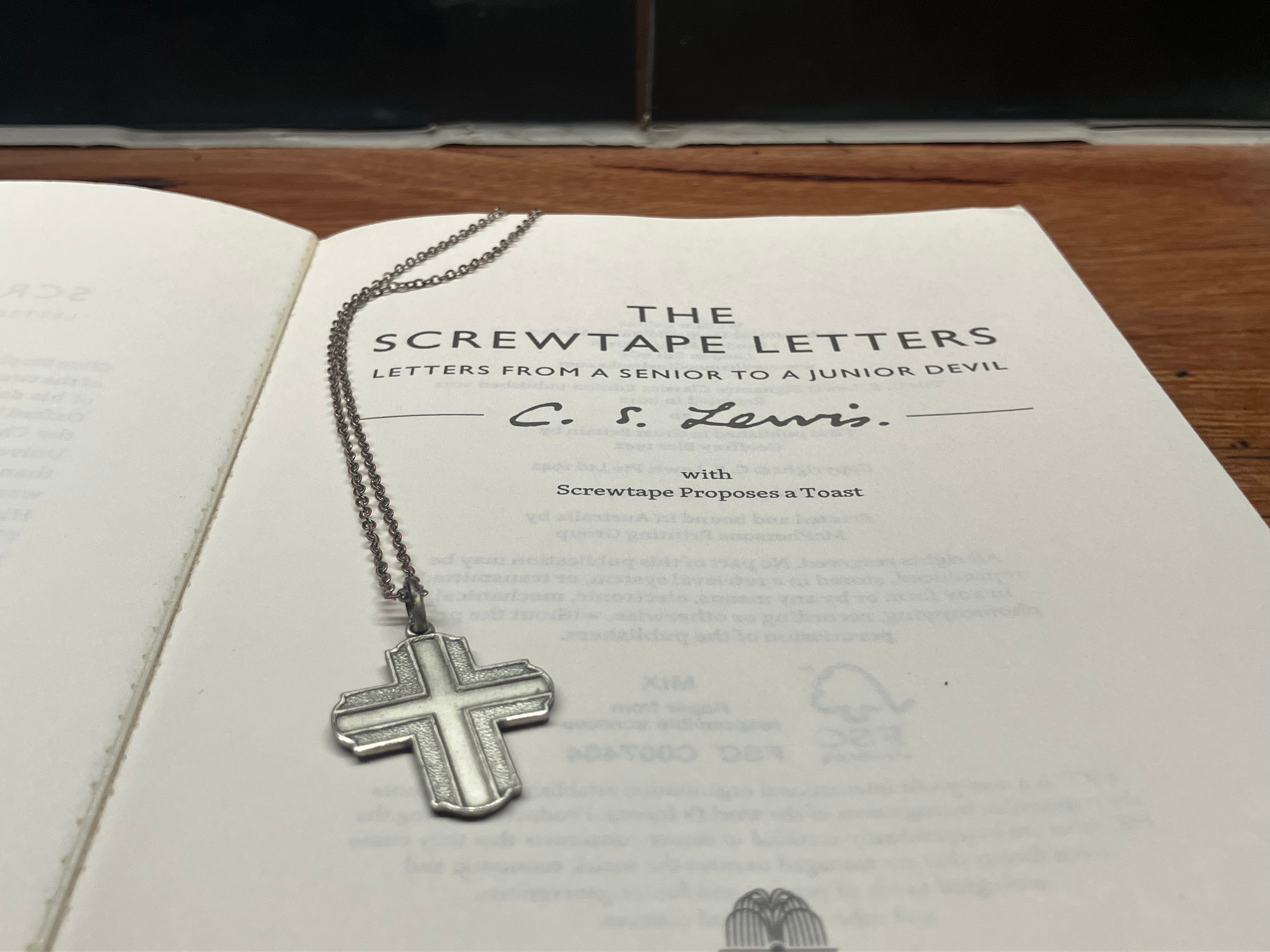
That book was The Screwtape Letters by CS Lewis.

I was a huge fan of The Chronicles of Narnia, also by Lewis, but I had never dug into his more explicitly theological work. In The Screwtape Letters he helped me grow as a Christian, providing new perspective on issues I had never put enough thought into and challenging tenets of my faith I’d taken for granted.
The 1942 novel is a series of satirical letters written by the titular devil Screwtape. Addressed to his nephew Wormwood, they detail methods to draw humans away from God or as Screwtape writes, “the Enemy.” Set during the early years of World War II, it provides a fascinating insight into temptation during one of history’s darkest periods.
It was announced last June that acclaimed American-Christian stage actor and producer, Max Maclean, would be producing a movie adaptation of the book. In anticipation of the movie, let’s dive back into the book and see what makes it movie-worthy.
The good
Lewis possesses a way with words few can compare to. This is on full display in The Screwtape Letters. From the very first chapter Lewis drew me in with his complex yet elegant writing. His ability to convey intricate ideas in such an understandable manner is quite frankly mind blowing.
Further it truly feels like the letters are written by a devil. Writing in the first person from a perspective other than your own can be difficult. To do it from a non-human perspective is much more so. This is testament to how much thought and self-reflection Lewis put into his writing.

The way in which Lewis writes makes the book really accessible to those with many different world views. Christians from all different belief systems can connect with, and take differing messages from, his writing. My father read and loved the book when he was planning on becoming a Catholic priest, but my ultra evangelical Baptist relatives also love the book from a vastly different perspective.
Lewis also wrote in a way that his writing could be appreciated by those who didn’t share his religious beliefs. For example his use of “the Enemy” rather than God cleverly allows those who don’t believe in a God to envision their own morals as those which Screwtape detests.
The not so bad
There’s not too much I think is wrong with the book. My only real gripe comes from the mouth of Lewis himself. He lamented the fact that he could not write a partner novel from the perspective of an angel.
In the preface to a 1961 publication of the book he wrote: “Mere advice would be no good; every sentence would have to smell of Heaven.” It would have been truly spectacular if he had been able to execute but it’s admirable that Lewis both acknowledged and respected his limitations.
The ugly
Now having discussed why I utterly love the book, and what I really wish we could have had … it’s time to discuss the upcoming movie. To begin, let’s be upfront: I’m not excited.
My ambivalence comes from from two main avenues. Firstly, the movie would be much better served if it was being made from a secular perspective.
You might be asking yourself, “Tobias, you’re a Christian, why would you think that?” And to respond I say: the beauty of Lewis’ work is it’s subtlety and interpretability. I don’t believe there is a Christian film-maker out there who won’t just force upon the viewer their own interpretation of both the text itself, and of the Bible.
While there’s an argument a secular film-maker would do the same, just from a different perspective, history begs to differ. Other of Lewis’ work such as The Lion, The Witch and The Wardrobe received brilliant treatment. Amazing Grace is another example of a secular film-maker doing a Christianity centred story due diligence.
My second qualm is about the upcoming movie’s film-maker, Max Maclean. Since 2006 he has directed and starred in a stage show adaptation of the book, and it does not fill me with hope.
While I was unable to access the full show, I watched several clips and found it to be quite distasteful. I was unimpressed by how Maclean tried to drag grandeur out of a book that is not grand.
Marketing from Maclean’s organisation, The Fellowship for Performing Arts, claiming that “If you loved the book, you will love this show” couldn’t be further from the truth.
In his review The Guardian’s Michael Billington summarised it aptly saying “there is not much trace of subtlety in McLean’s performance” and that he found himself “craving more simplicity, directness and faith in the power of the word.”

Encapsulation
Well, that’s quite a lot to wrap up, but here we are. Is The Screwtape Letters worth a read? Absolutely. Beyond absolutely. I’m not sure I’ve ever received a better present. It’s an 11/10 book and highly worth a read, no matter your walk of life.
If you do read the book and enjoy it, I would not, however, hold out hope for the movie. I struggle to envision a world where it even creates an enjoyable standalone experience, let alone pays respect to Lewis’ masterpiece.
Original photos by Tobias Ostini