

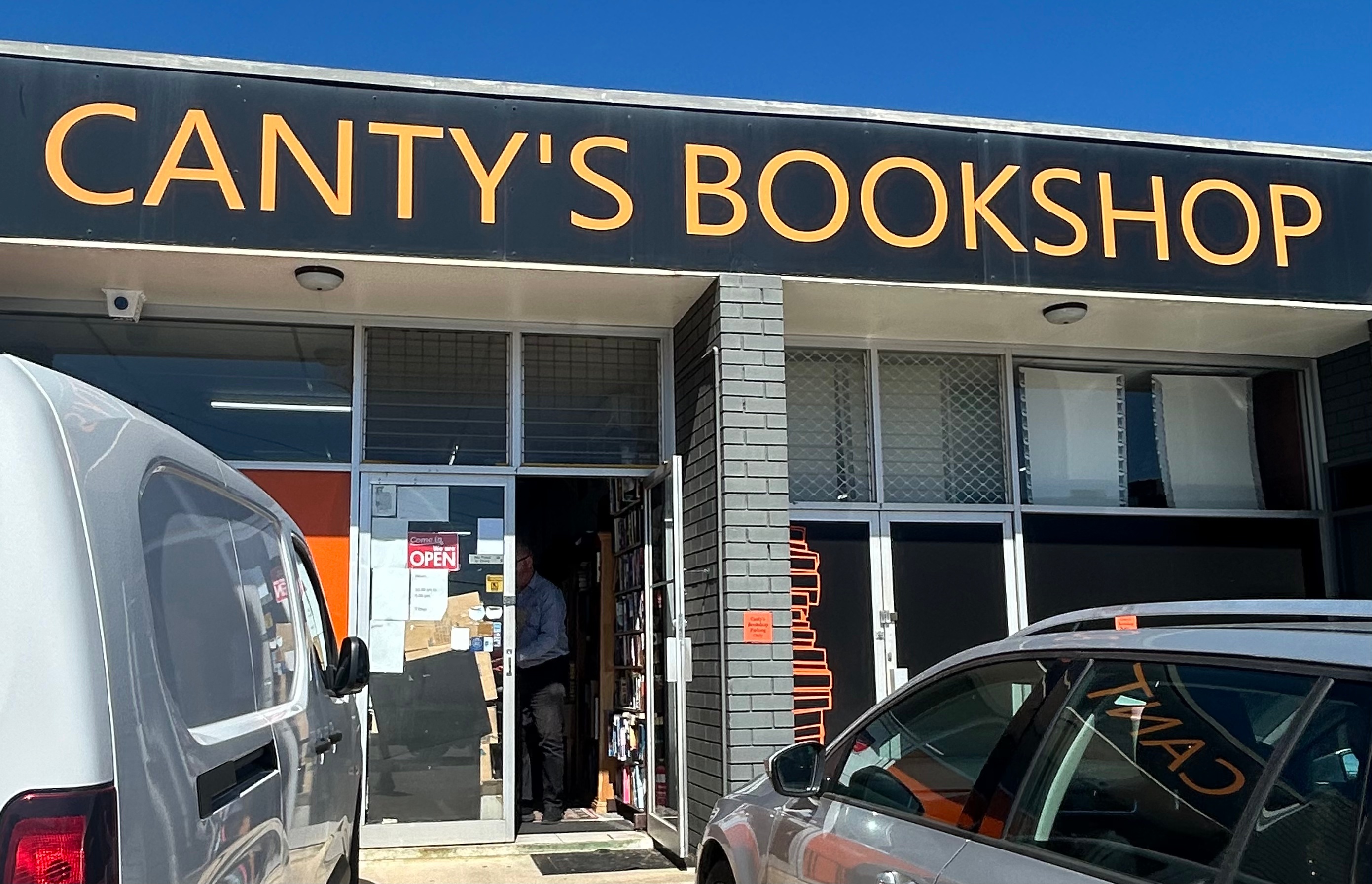
Tucked away in the streets of Fyshwick lies one of Canberra’s hidden gems, Canty’s Bookshop. For thousands of avid readers, Canty’s provides a sense of nostalgia, peace and discovery. They offer the experience of browsing shelves filled with stories that have already lived many lives, an experience the digital world cannot replicate.
Owned by Luke and Laura Canty, the bookshop was first established by Luke’s parents in 1992 and has since grown into a Canberra icon. For over three decades, it has built a reputation for its extensive range of books spanning all genres, ages and eras that are often hard to find.
Their lasting success comes despite significant shifts in the book industry, with the rise of e-readers and online shopping forcing many independent bookstores to close their doors.
However, for traditional readers who love the experience of browsing the shelves, secondhand bookshops provide affordable and sustainable options. There’s a unique sense of discovery that comes from finding an unexpected title tucked between the shelves.
Luke Canty reflects on owning a secondhand bookshop. From rare and surprising finds to deeply personal customer connections, his insights reveal why places like Canty’s remain not only relevant but necessary.
Q: You took Canty’s Bookshop over from your parents. What motivated this decision?
A: We bought it from the folks about 19 years ago now. My parents are getting older, and it’s one thing that we’re both good at. Laura worked in the book industry beforehand as well, so it seemed an opportunity. They thought about retiring, and we were the people most likely to buy it from them.
Q: How has Canty’s bookshops evolved since it was established, and how do you manage those difficulties with the rise of new technologies?
A: Things went gradually downhill from 2009 to about 2013. The Kindle started coming into effect, and everyone got smartphones, so they didn’t need dictionaries, atlases or cookbooks as much as they used to.
There used to be four bookshops just in this court, not to mention all the other ones, all scattered throughout Canberra. Now, there’s pretty much two generalist bookshops, us and Booklore.
Around 2013, we’re thinking, “Oh god, if this continues in that trajectory, we’re going to have to think about reskilling and maybe find something else to do.” But to turn this around and steer it into the online direction would be quite a challenge.
Q: What do you think secondhand books have to offer that brand new covers or Kindles do not?
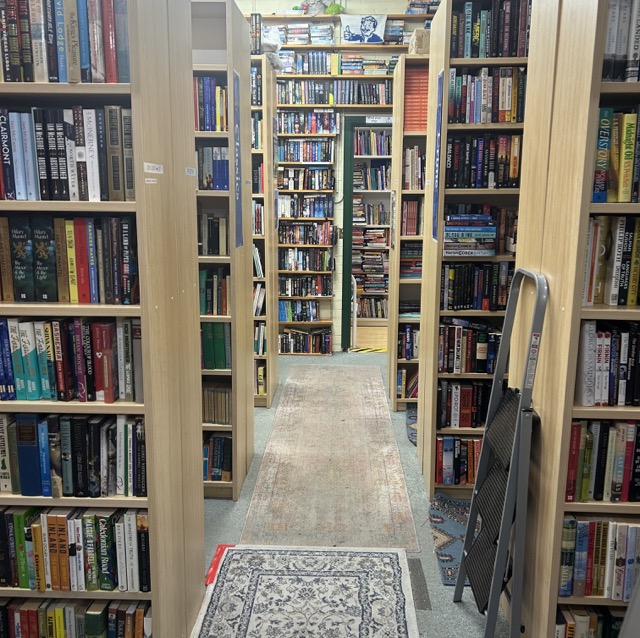
A: I think the rise of the Kindle has given us a fresh appreciation for how nice it is to have an actual book. We’re finding these days there are nice copies of books in publishing with the trend of decorated edges and special editions.
Reading a book in the edition from around the time when it was published gives you a different feel and ambience to a Kindle file or a modern reprint. People enjoy finding things that they may have had at different times of their lives. They have that kind of emotional attachment to the physical object as well, so they try to find something that’s not available anymore but reminds them of special times in their lives.
It’s the serendipity as well of coming into a bookshop, and you’re not sure what you’re going to find. I always find things that I didn’t even know existed.
Q: Have you ever had a standout book that took you by surprise or really loved come through?
A: It happens fairly regularly. Something will tickle us, and we’ll just be like, “Is this gorgeous?”
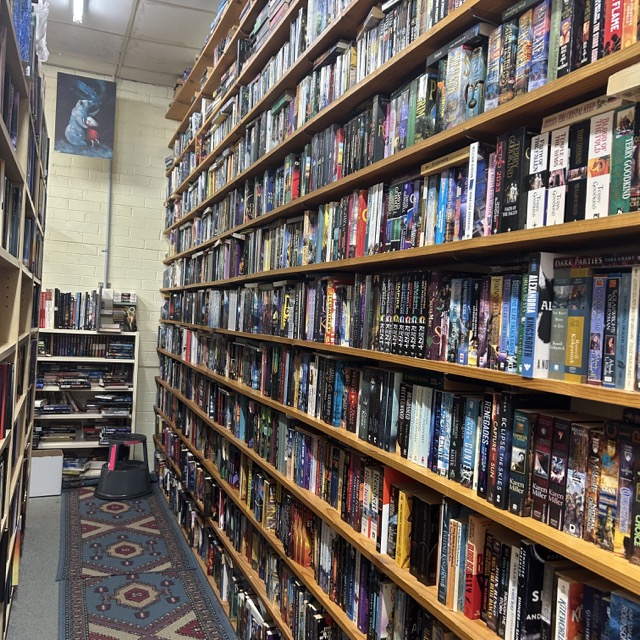
We may get very niche things, and the number of people who might be interested in this particular topic is microscopically small, then we’ll be surprised because it will have sold within a week.
It’s getting more interesting these days with the internet. Before, there might be a specialist aeroplane bookshop in London, so people would have to get their catalogue, write them a letter and send away an international money order. Now with online platforms, it’s just like, “Oh, that’s cool!” or “Oh, they’ve got those as well!” The stock that’s circulating in the country is getting more interesting all the time.
Q: You have over 6,000 followers on Facebook and a 98% recommendation rate. What do you think drives this loyalty?
A: A fear of losing the few book clubs they have left. The range and reasonable prices as well, because a lot of people know where we are now, and we get repeat customers and generational customers as well.
We’ve had people meet in the early 90s, get together, have babies, who have grown up and are bringing their own babies in here to buy books now. One of the things I love about that is you get the diaspora from Canberra. People grow up, and they go to Sydney or Melbourne, but when they come back to Canberra to visit, they pop into the bookshop while they’re here.
We’ve had people have first dates at Canty’s bookshop as well. Sometimes we feel like we should be walking around with canapés.
Q: What do you predict the bookshop will look like in another decade’s time?
A: Pretty much exactly the same. Nothing much moves because moving anything is difficult and it takes decades for people to get used to it being in a different spot. I still get some people saying, “You used to have motor manuals over here,” but the motor manuals haven’t been there for 20 years.
Hopefully we’ll get tidier, but we have so many books, and there’s only so much space you can put them. In the 90s, it was really quite a scramble to try and find enough books to keep you going, but now there’s so few bookshops in town that we’re offered a lot of stock. Every now and then, stock just turns up that you didn’t plan on, but you can’t say no to. I probably should say learn to say no to books; I think it’s a genetic disorder. It’s just exciting like Christmas though.
Q: Do you have a favourite book-related memory, either growing up or since you have owned the bookshop?
A: I remember when I was a kid, my dad was in charge of the books at the school fete before we had a bookshop. At the school fete one year, we were putting price stickers on books until the wee hours of the morning, and that was good fun.
We’re lucky because we deal in something that makes people really happy. It’s a still environment, whereas you go to shopping malls and there’s music being pumped out at you, people getting in your way, and everyone is in a rush going places. Then you come in here, and things are quiet and still and the sound gets absorbed by all the books on the shelves.
People feel like they’re in their happy place.
Original photos by Kiara Lucock