
For many Australians, a trip to the supermarket means choosing between dinner and dignity. Period poverty isn’t a distant issue; it’s happening here, in one of the world’s wealthiest countries.

Period products have been essential to the health, comfort, and dignity of people who menstruate. However, for many Australians, the rising cost and limited affordability of these products have become a growing concern.
In 2024, Share the Dignity conducted a Bloody Big Survey, where it was reported that 64% of menstruators in Australia struggled to afford period products. Unfortunately, this number continues to rise for certain communities.
Researchers and advocates attribute this crisis to a combination of social, educational, and economic factors, including stigma, inadequate menstrual education, financial inequality, and limited access to affordable products.

Periods come with more than just physical pain, they carry a financial burden. It’s not only the cost of pads and tampons that add up, but also pain relief medication and hormonal contraceptives, which quickly increases the overall expense. For many, the impact extends even further when there are missed days of school or work, which lead to lost income and opportunity.
Over the course of a woman’s reproductive life, managing menstruation can cost up to $10,000, and that’s without factoring in the additional expenses. Periods are not a choice, yet the cost of simply existing with one or even choosing to stop it continues to place an unfair financial burden on women and menstruators across Australia.
Despite these challenges, there are many community organisations and activists who are working to break the silence and push for change. One leading not-for-profit organisation in Australia is Share the Dignity, founded in 2015 by Rochelle Courtenay after she discovered that homeless women were having to use socks, toilet paper, and even newspapers to manage their periods. Shocked by this reality, Courtney began collecting over 450 period products within her local community, only to realise the need extended far beyond a single collection drive. What started as a small act of compassion quickly grew into a nationwide movement. Today, Share the Dignity operates all over Australia with the help of over 3,000 volunteers and charity partners. They have collected more than 5.4 million period products for people in need.
I spoke with Brittiny, an Advocacy and Communications Specialist at Share The Dignity, about the ongoing challenges surrounding period poverty in Australia. She explained that University and TAFE students are among the most at-risk groups. The results from the Bloody Big Survey conducted in 2024 revealed that 25% of students have resorted to using items such as socks, toilet paper, or newspapers to manage their periods.
Someone actually had to drop out of university because they couldn’t afford period products.
However, this issue doesn’t stop there, it extends further across many other vulnerable groups.
- 83% of Aboriginal and Torres Strait Islander People
- 78% of people with a disability or chronic condition
- 83% of the gender-diverse community
Beyond affordability, Brittiny highlighted a significant gap in menstrual education, with only 36% of survey respondents feeling well-informed before their first period. To combat this, Share The Dignity is developing period pride education programs that aim to reduce shame, involve men in the conversation, and reframe how society views menstruation. This organisation is also advocating for free period products in hospitals, TAFEs, and schools nationwide and through their partnership with Woolworths, they continue to install more Dignity Vending Machines to increase accessibility.
If there’s toilet paper in every toilet, there should also be period products too.
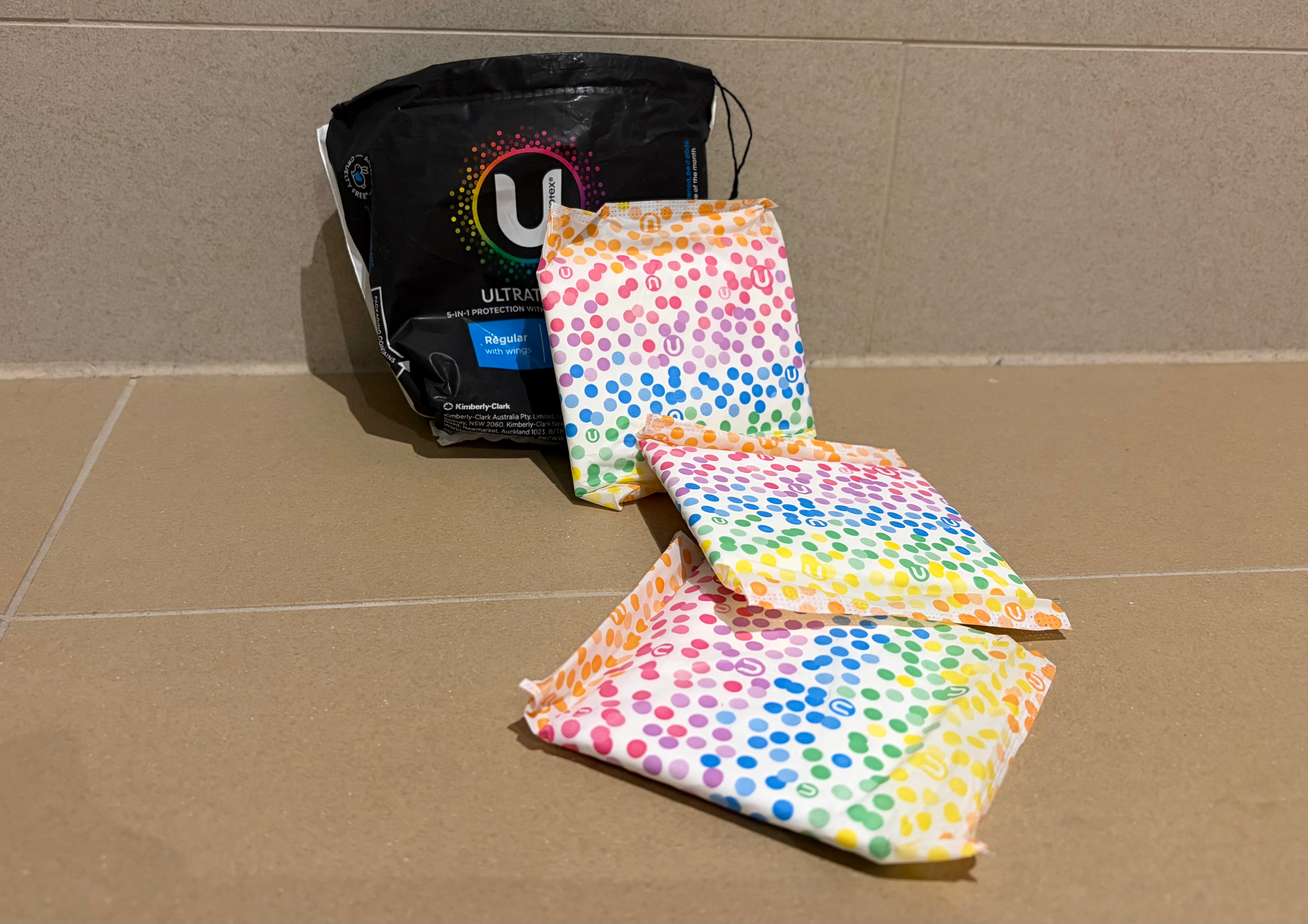
What is the Government doing?
While awareness around period poverty is growing across Australia, the ACT remains the only jurisdiction to enact legislation guaranteeing access to free period products for students in public schools, through the Period Products and Facilities (Access) Act 2023. Over the next few years, the ACT Government plans to expand this initiative to include more community locations.
However, there are policy directives rather than laws enacted in other states such as:
Victoria: Began providing free menstrual products in public locations in 2022 as part of a government policy initiative, and has since expanded programs into public schools.
New South Wales: NSW Health mandates that all public health services provide free period products to patients.
Queensland: The government has funded the installation of “Dignity Vending Machines” in public schools, providing free access to menstrual products.
Period poverty isn’t about luxury, it’s about access, respect, and dignity. By challenging stigma, expanding education, and ensuring nationwide access to free products, we can create a future where periods are managed with pride, not shame.
Photos by Emma Iirilli