

It was just another ordinary day, when Frishta Hussaini found herself sitting in a library.
Unbeknownst to her, in a few moments, something very powerful would happen.
“I saw this girl — she had a headscarf on. She was just reading a book … and then I saw a couple of guys walking past her, and then telling her some ‘jokes’.”
But these weren’t just ‘jokes’. They were racially charged comments, attacking the girl’s background and religion.
“I didn’t know what was really going on, because I was a bit far away … but then from her face, I could see that she was not comfortable, something was going on.”
As Frishta watched the scene unfold, she felt her heart plummet when the reality dawned on her:
“Oh, they’re making fun of her hijab.”
Frishta felt an internal battle catalyse within her.
As an aspiring human rights lawyer, she had spent hours poring over cases of injustice, and their repercussive solutions.
But an antagonising thought crept into her mind: “[I’m] the one who’s wearing hijab as well.”
Which risk was worth taking?
Jeopardising her safety to protest against discriminatory acts, or protecting herself at the cost of letting racism flow freely?
As an Afghan immigrant dedicating her life to establishing equality, Frishta’s wealth of life experience and determination culminated in a single answer: do something.
“There’s no way I’m going to let it slide.”
“I confronted the boys and was like, ‘What you are doing is completely wrong. Don’t do it. It’s not good.’”
As Frishta comforted the girl afterward, she shared a valuable piece of advice that rang true for the two of them: “don’t let this change you in a negative way.”
Frishta Hussaini’s story is one of power and perspective. It is a cry for equality, and a wake-up call in the face of an ever-shifting world.
Because with Frishta’s intrinsic desire to be “a voice for the voiceless,” perhaps humanity has more hope after all.
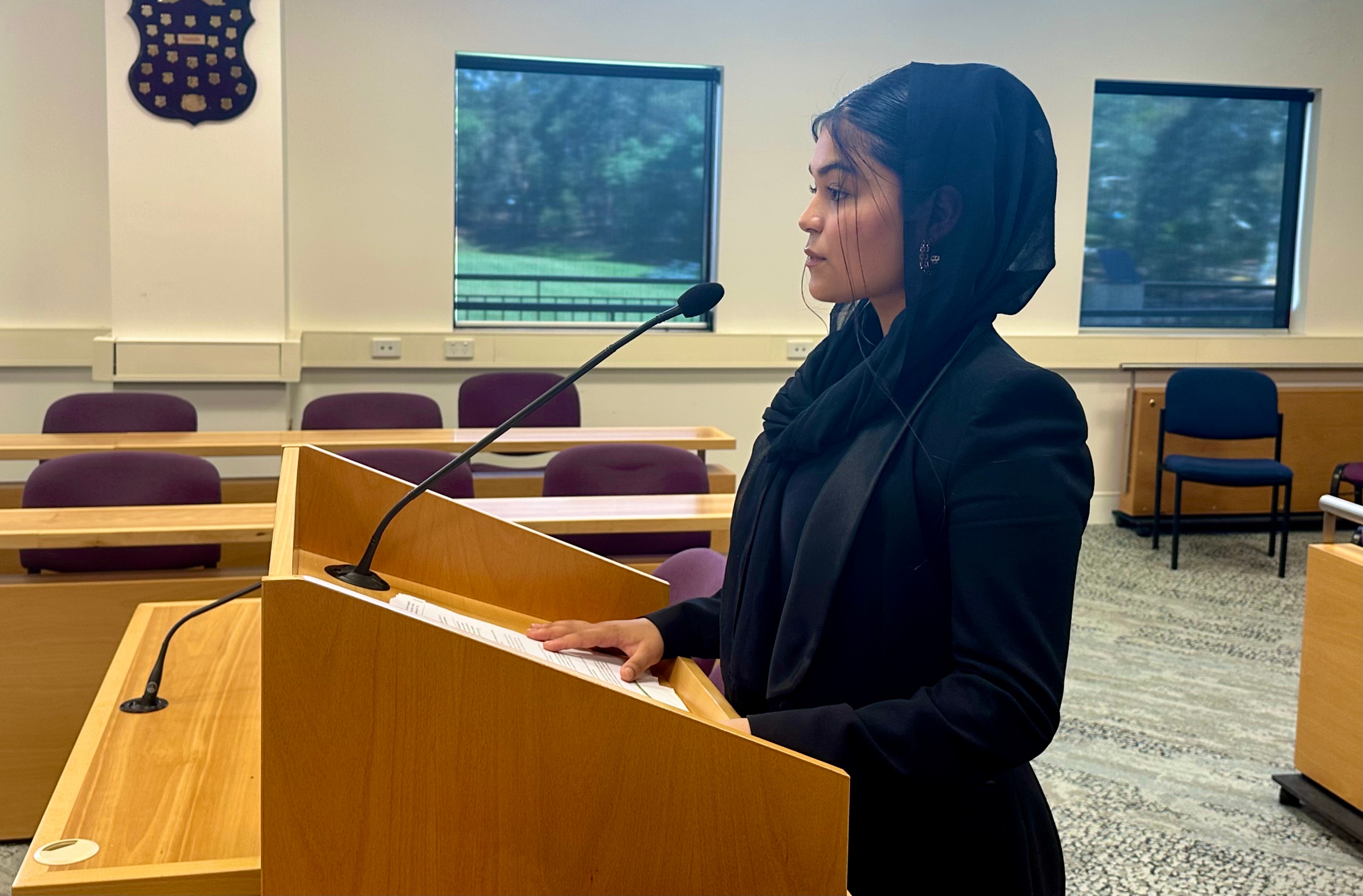
“When issues like inequality are left unchallenged, they do not fade. They grow.”
Frishta first arrived in Australia at the end of 2019.
Excited for a fresh start at life, it was not long before she was struck by the reality of her new world.
Despite the introduction of several laws, such as the Racial Discrimination Act 1975, discrimination continues to seep into our society, plaguing the diverse nation we claim to be.
Racism, for instance, is hard to track due to its often-subtle nature.
However, research by the University of Victoria found that a significant majority of non-white Australians had experienced or witnessed racism in some form.
In most cases, it occurs in public spaces, like work, school, or on public transport.
“I quickly noticed that inequality is still existent in many forms,” Frishta says, “but rather than staying silent, I took initiative.”

Rather than putting up with a culture of hate, Frishta established a human rights group at her college.
It was a space where “young people could come together, raise awareness, and take meaningful steps towards justice and equity.”
Frishta used the group as a safe forum for discussions about inequality.
By sharing stories of girls and young women in Afghanistan being continuously denied basic humans rights, such as access to education, each meeting served as a reminder for gratitude.
While some view school as a chore, for many, it is merely a faraway dream.
Currently, over 2.5 million Afghan girls have been stripped of their right to attend school, under the Taliban’s rule.
After founding the human rights group, Frishta “watched those around [her] grow in both understanding and compassion.”
“That’s when I realised I saw an issue and I did something about it.”
“It may not have been a global movement, but it was a real change, and that matters.”
Dedicating her spare time to imbuing other young people with real drive and inspiration, Frishta didn’t stop there.
Rather, this set off a wildfire inside her; a fire in which she continues to move forward in a blaze of change.
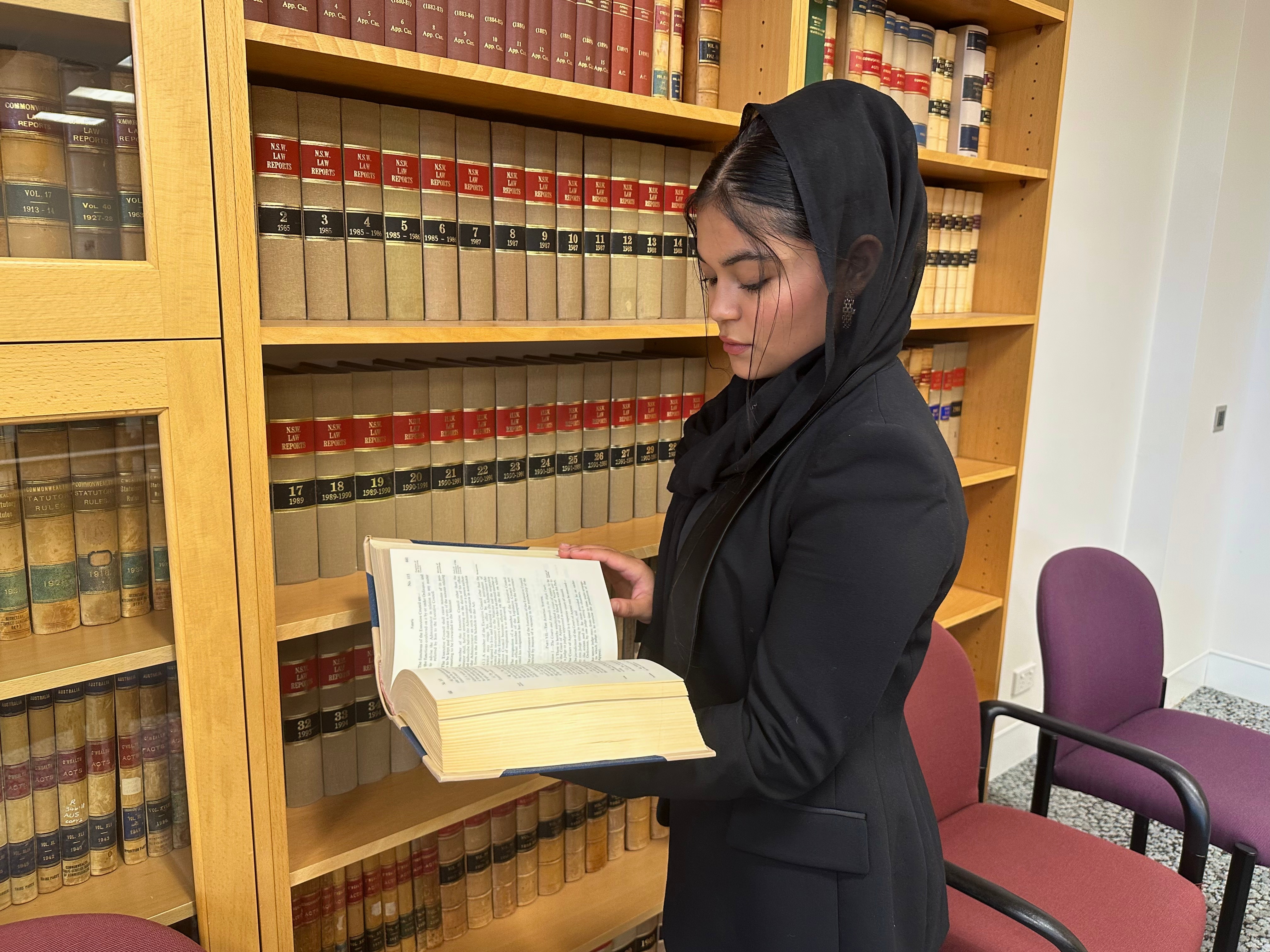
“When young people are taught that their words don’t count, it doesn’t just hurt them, it hurts our future.”
A year later, Frishta received a phone call.
This call transformed into an invitation to spend two months in the Philippines, working as a translator and team leader for the International Organisation for Migration (IOM).
With a bigger platform, and a larger scale, it was a gateway to having “the authority to make a real change,” and a step closer to her dream of becoming a human rights lawyer.
From getting woken up in the middle of the night to answer questions from her team, to listening to the stories of people from all over the world, Frishta quickly realised that true change requires conversation and sacrifice.
But although taking action is often a collaborative process, while working for the IOM, Frishta learned it is pointless to wait for someone to hold your hand along the way.
“You are born alone and you die alone, so don’t rely on people to get something.”
Without first taking the initiative to move halfway across the globe, teach herself English, found a human rights group, and work for a myriad of change-driven organisations, Frishta wouldn’t be where she is now.
And she encourages others to also take matters into their own hands, rather than waiting for change to fall into their lap.
“Take action, face your fears, believe in yourselves. […] You may not change the world in a day, but every step forward matters.”
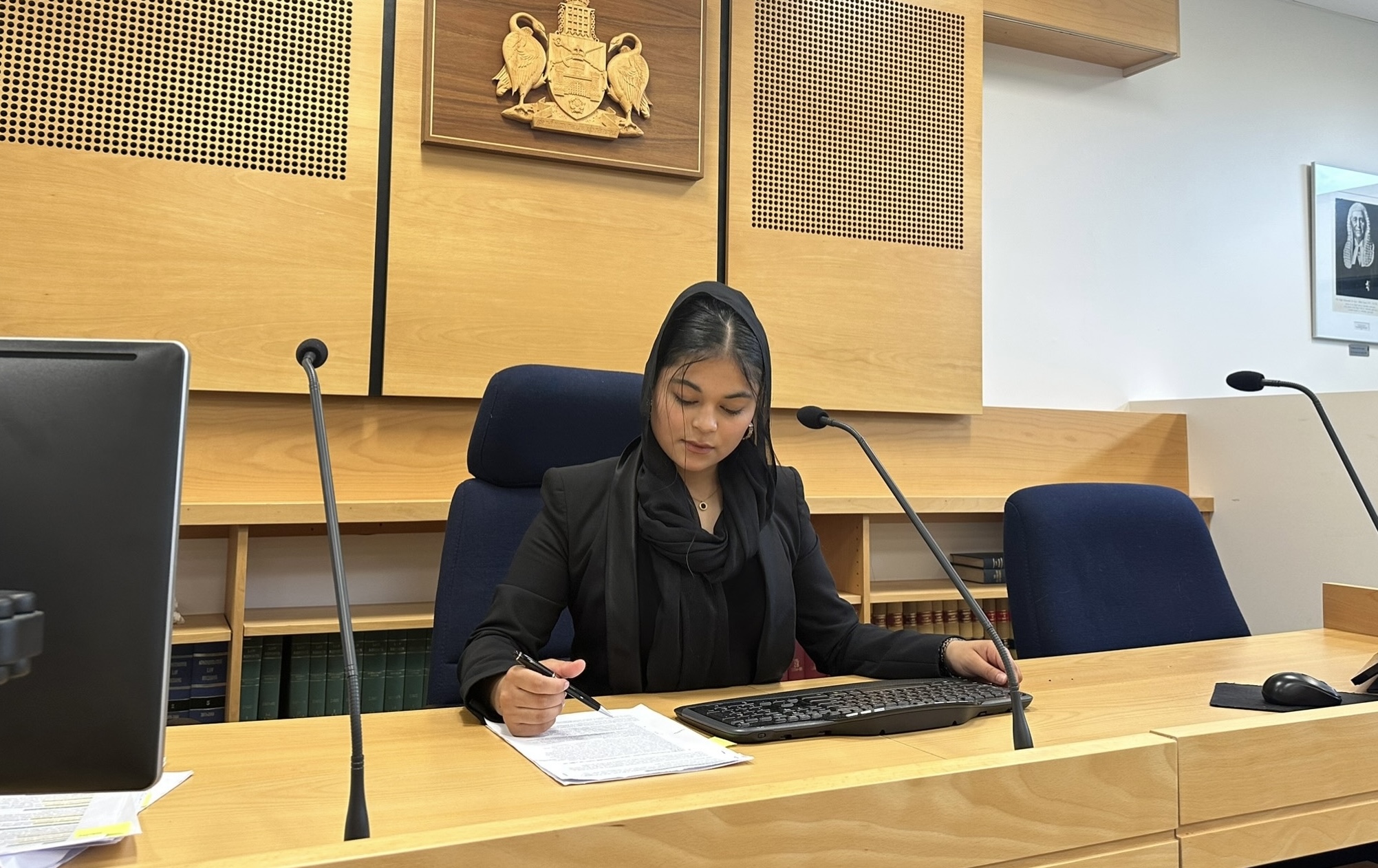
“Through action, you can be part of the change we all need.”
Rather than turning a blind eye to discrimination, like many of us sheepishly do, Frishta urges people to take a stand.
Lend your voice to someone who needs it, and as a collective, we can chip away at the behemoth of discrimination.
“There are people out there who don’t have a voice…it’s just tragic.”
Moving closer to her dream of becoming a human rights lawyer, Frishta looks forward to a future in which she brings equality into the world.
Her main goal: granting all women—especially those impacted by the Taliban’s rule—free access to education.
“I don’t want young women or young girls sitting in their homes thinking that they’re not worth it, or thinking that they can’t do anything. I want all of them to sort of fly.”

The world is a big place, filled with big problems.
Despite being motivated, it can be intimidating or overwhelming to actually do something about the issues closest to heart.
But from Frishta Hussaini’s wisened perspective, “change doesn’t always have to be big.”
“It’s small steps taken with courage and purpose that truly make a difference.”
Photos by Alison Kennelly