
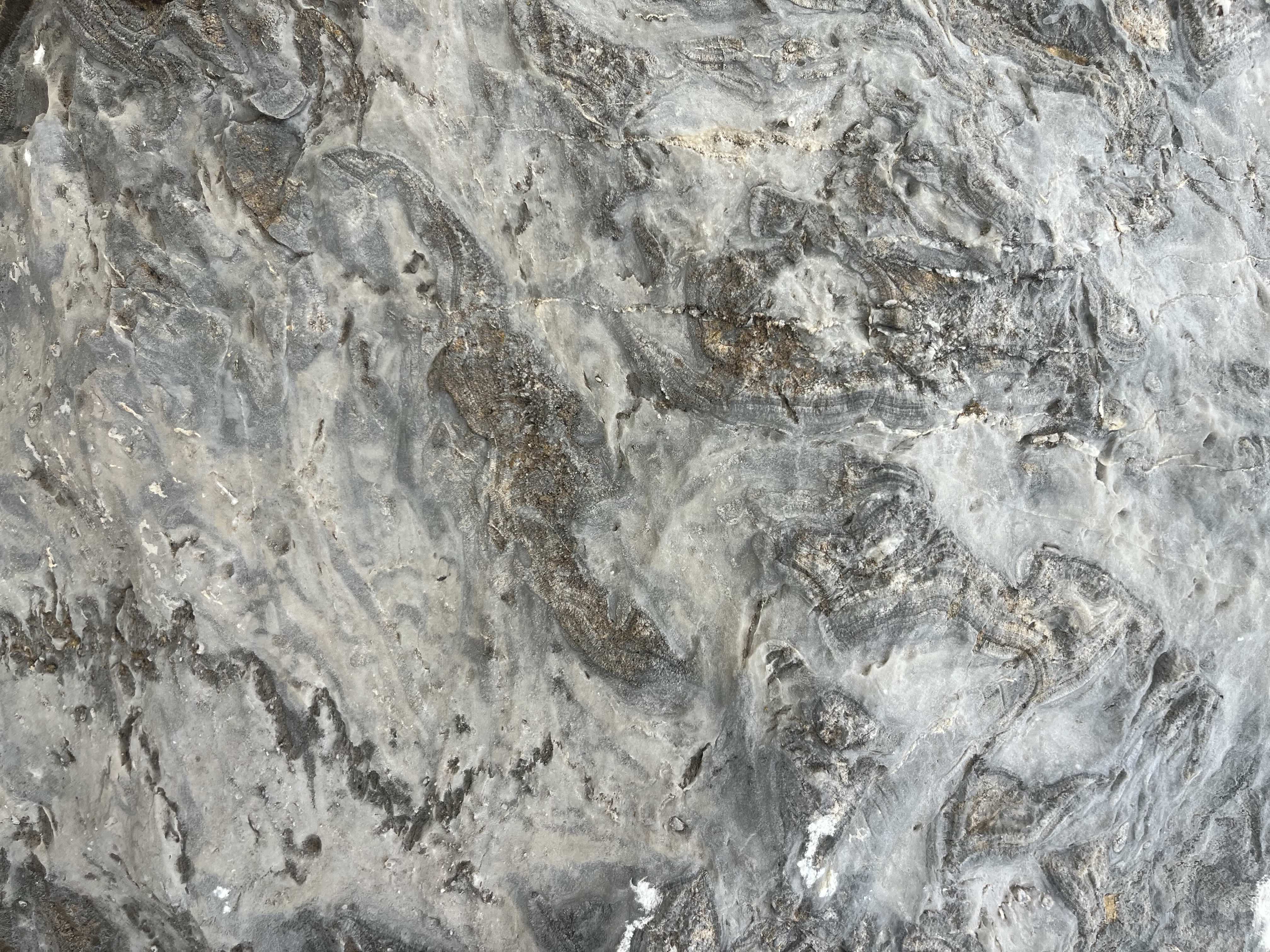
Under the surface of central Canberra lies a curious history which few have ever explored.
For a long time now, rumours and stories have spread across the city about ‘the caves under Canberra’.
These included recorded stories of a cave under Acton, disappearing pillars under King’s Avenue bridge and thousands of litres of water spilling out of rocks!
Equal parts confused and intrigued, I began researching the topic and came across the extensive Limestone history of the region, and one man who appeared to know all about it: Mark Butz.

Mark is a Canberra historian, environmental scientist, and geology lover.
I spoke to him about the importance of Limestone to the history of Canberra, and to answer the age-old question of whether there are caves under Canberra?
Yeah, there’s bound to be caves under Canberra, depending on your definition of a cave.
Unfortunately, the definition of a cave is somewhat confusing.
The Cambridge dictionary describes a cave as being “a large hole in the side of a hill, cliff or mountain, or one that is underground.” Which doesn’t really fit with what is under Canberra. It does with caves nearby.

Mark told me that Canberra’s caves wouldn’t be like this. You might be able to crawl into some, but they would all be pretty small and have never opened to the surface.
Instead, Mark suggests we take a different interpretation and approach to the definition of what a cave is.
If we take the definition of cave as being a cavity, then definitely there are cavities under Canberra. Some of them are tiny and some of them could be quite big, and have been shown to be quite big.
The Canberra region was known for its limestone, which is synonymous with caves.
As no caves were open to the surface, no one truly knew what was going on underground.
When people started to build bigger buildings in central Canberra, they started to encounter ‘tricky limestone’.
They kept drilling to find solid rock, but only found limestone with all these cavities in it. This forced many Canberra buildings to have their foundation plans changed in order to support the building.

The other issue was when they found good limestone that wasn’t cavernous; they got lured into a false sense of security by the rock.
They found out quickly that it was sitting on pools of dissolved limestone, which had turned into mud but hadn’t washed out into a cave.
What often occurred was drilling into this rock burst, and an aquifer and water would come rushing out. Mark shared a story about this happening at the now Treasury Building.

They started to put foundations down in that and they had so much water there, the figures ran at something like 180,000 liters per hour they had to pump out.
The water had sat there waiting until it got connected to the surface. The aquifer had been continuously collecting water for millennia, so the pressure it was under was immense.
They used it as a learning experience, and it gave them a lot of valuable information about building around the National triangle, up Northbourne Avenue all the way to Lyneham.
Exploring the limestone caves under Canberra
In the 1830s, the northern banks of the Molonglo River, now central Canberra, became affectionately known as the limestone plains. This was because of the sheer abundance of limestone outcrops dotted across the landscape.
The early settlers were very excited about the discovery of limestone, as it could be easily utilised as a building material, which was rare for inland places. So they settled in Canberra and quarried limestone to build the city.
There were many stories about people going into some of the caves they found whilst quarrying the limestone. Mark had some interesting insight on this.
When people started quarrying limestone to make lime, such as at Acton – they would have encountered cavities. And in fact, the only recorded cave. – It was called Limestone Plains Cave, or Lennox House Cave because it sat immediately below Lennox House.
The cave was relatively small. It was recorded as being eight meters long, just shy of half a cricket pitch.
The cave was flooded after the damming of the Molonglo in the ’60s. The significance of this cave was never fully explored.
Multiple reports say there were areas of limestone caves, along the Molonglo, now under Lake Burley Griffin, which were significant to the local Indigenous Peoples, with some saying there were artworks in the caves.
Where can you find it now?
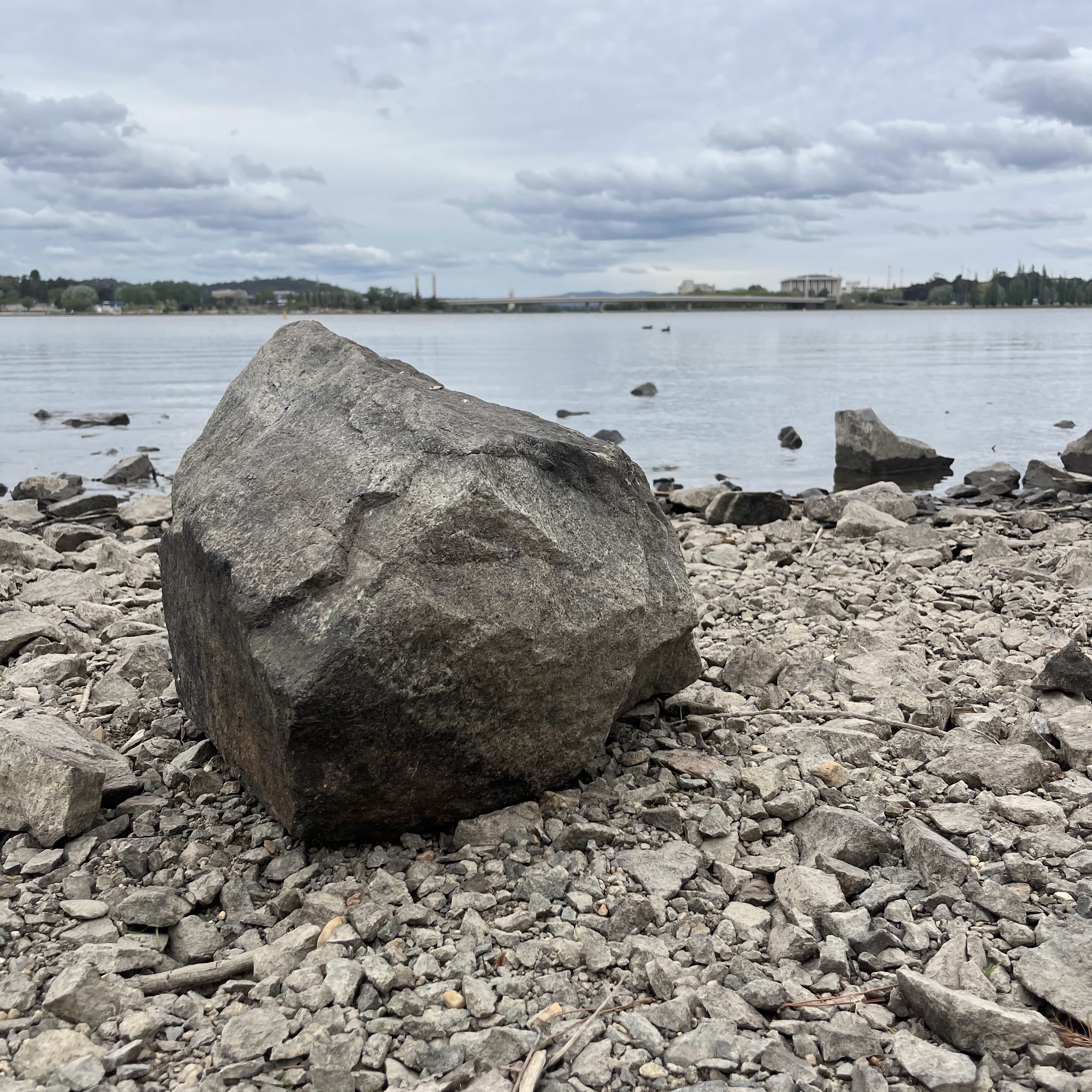
You might be thinking, where can I find this limestone now? I’ve never seen it or the outcrops around Canberra! Well, unfortunately, that would most likely be correct.
They got exploited and then buried or landscaped out of existence. That’s essentially it, and they left only that handful that we can now go and visit and have a look at and poke around.
Of all the ones that are left, very few are protected for their important historical value to the city and region.
Although on the other side of it, a few examples of the limestone and quartz, which came out of these quarries, can be found around Canberra.
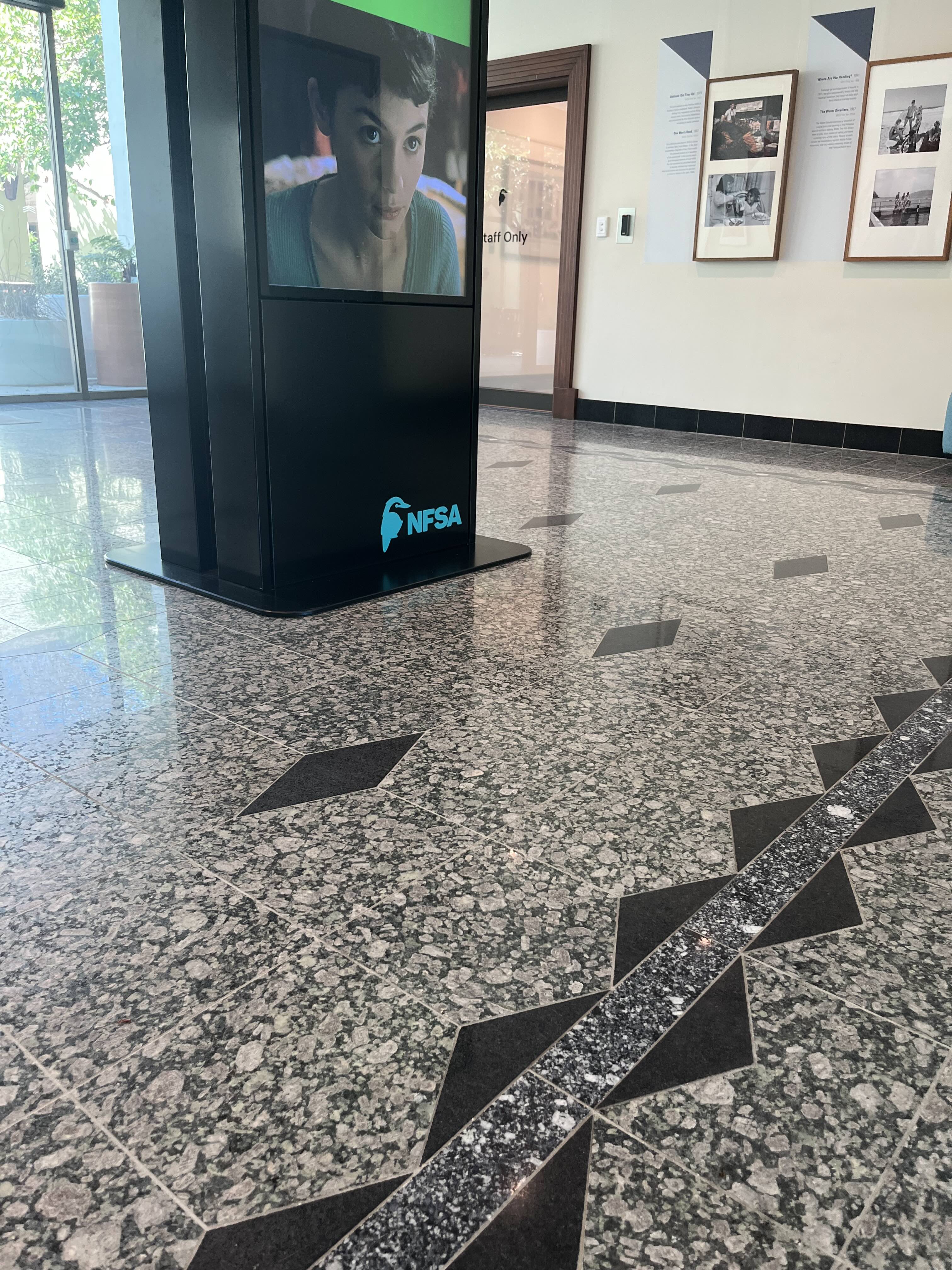
If you go in the foyer of the National Film and Sound archive, all the black marble that’s inlaid in the foyer there, that all came from the Acton limestone quarry. Very few people actually get that, but that was locally quarried and considered to be a really good black marble.
In fact, a lot of the limestone from around Canberra that was dug up has found its way back to the surface.
Most of the time, it is used as added security surrounding important Government or University buildings.
When you start to look for it, you can see boulders of this extracted limestone all over the place. They were often dug up from the foundations of the buildings they sit next to.
A lot of them with fossils jumping out of them. If people only stop and have a look. It’s not just a rock. It’s got, you know, four-hundred and twenty million year old life. Looking at you going, yay, I’m here!

There’s a rich history under our feet in Canberra, and a lot of it is still waiting to be discovered.
Unfortunately, some of it will never see the light of day, but hopefully, people can now go and see the history around the landscape and not just walk past that rock in front of the building.
Original photos by James Vandermee